If you are an African policymaker/technocrat/leader who has been following the World Bank’s development advice for the last say 30 years, this finding would shock you.
The World Bank, Industrial Policy, and Africa by Dr Fikayo Akeredolu



Reporting News and Opinions
If you are an African policymaker/technocrat/leader who has been following the World Bank’s development advice for the last say 30 years, this finding would shock you.

To outlast a prime minister always counts as some kind of achievement for an opposition leader, although Kemi Badenoch cannot claim credit for Sir Keir Starmer’s downfall. Sir Keir’s wounds were mostly self-inflicted. To the extent that opposition pressure was involved, it was electoral threats from Reform UK and the Green party that stoked Labour party frustration to a regicidal pitch. The Tory leader’s role was largely as a spectator.

The framers of the United States Constitution expected conflict. They expected ambition. They expected rivalry between the executive, legislative and judicial branches of government.
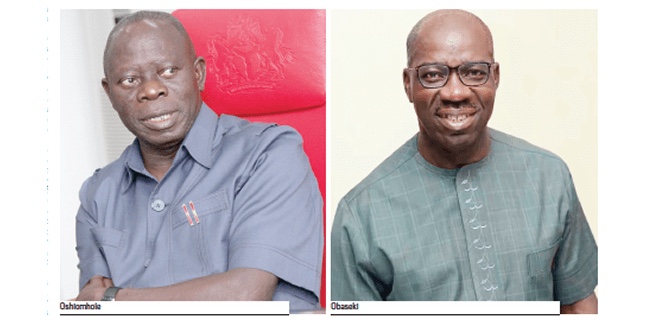
Ah, Edo State, the ancient kingdom of Benin, where bronze casters once made art that still makes the British Museum sweat, and modern politicians make drama that makes Nollywood blush. If Nigerian politics is a never-ending telenovela, Edo is the season where everyone keeps switching wigs, parties, and loyalties faster than a market woman dodging rain. Let’s stroll through this glorious chaos, shall we?

Scotland has a parliament, a flag, a football team that loses with tremendous dignity, and roughly the population of Lagos’s Ikeja Local Government Area. The Yoruba nation and I use the word advisedly has an empire’s worth of history, a written and oral constitutional tradition running from Ile-Ife through the Oyo Mesi and the Alaafin’s checks and balances, a diaspora spanning three continents, and something in the region of forty million native speakers. One of these is routinely described in the Financial Times as a nation debating its constitutional future. The other is routinely described, by the same publication, as a tribe engaged in an ethnic dispute. I invite the reader to spot the empirical difference. I have been looking for thirty years and have found only prejudice wearing a monocle.

