

The Faithful Disciple Meets the Wrong Employer
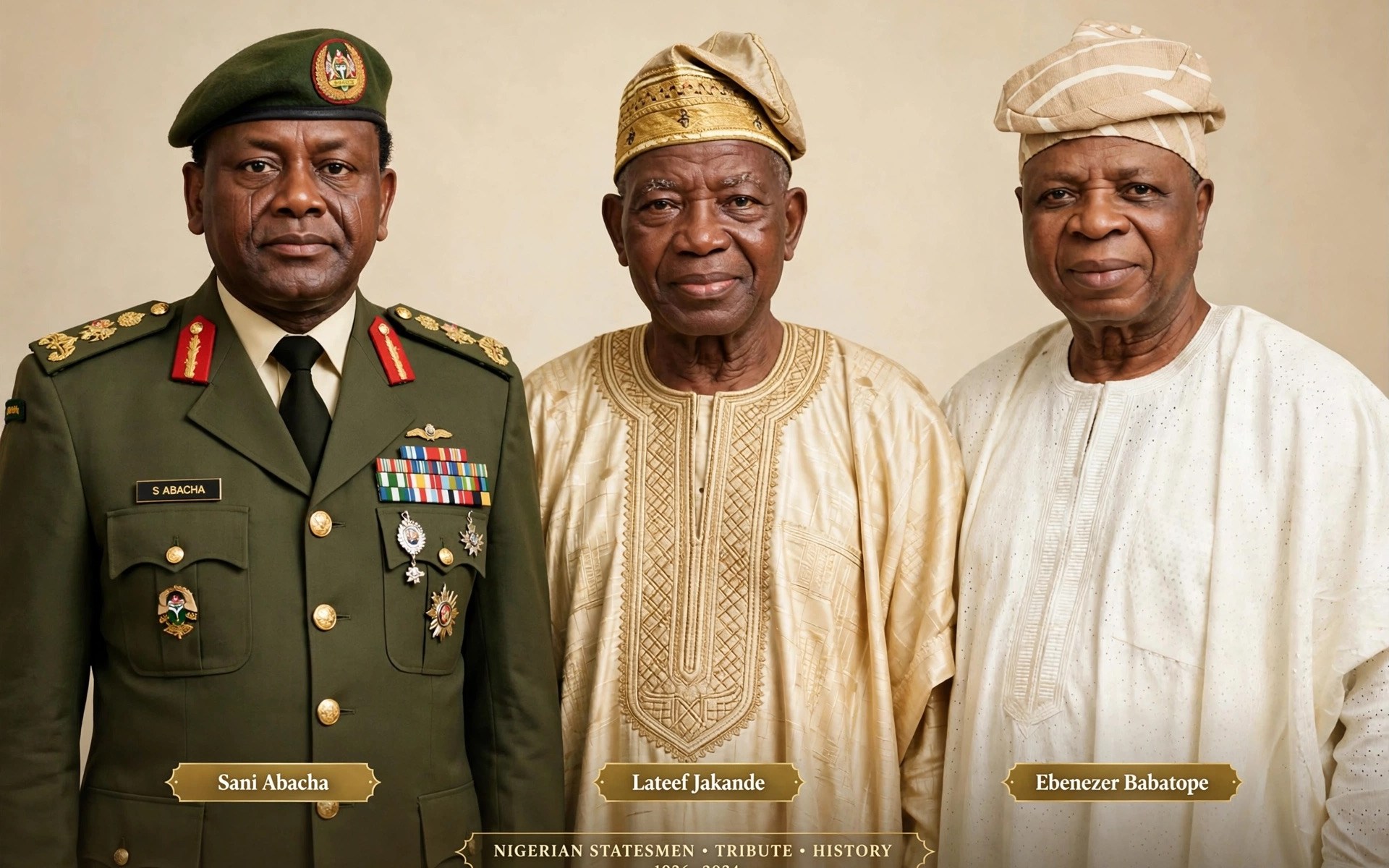
Every faith has its parable of the believer who walks into the wrong building. For Awoism, a doctrine built on discipline, planning and a near-liturgical suspicion of the Nigerian military, the parable arrived in November 1993. General Sani Abacha forced Ernest Shonekan to resign on 17 November 1993 and took over as head of state, and within days the high priests of the progressive tradition were queuing for ministerial briefs.
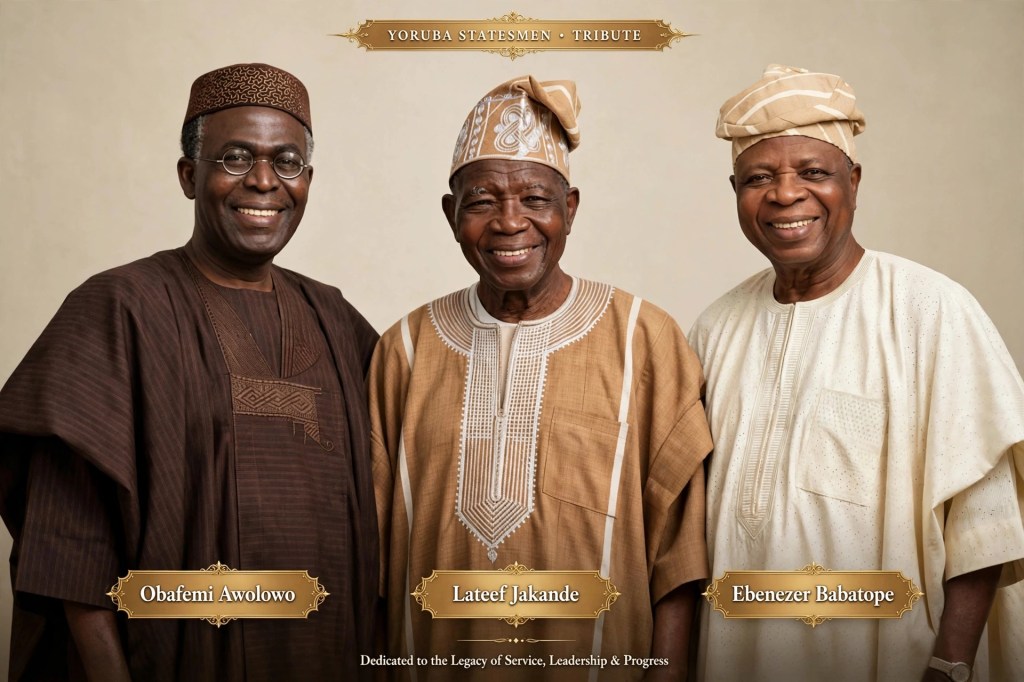
Lateef Jakande, the man the faithful called Baba Kekere, little father to Awolowo’s big one, took the Works portfolio. Ebenezer Babatope, the UPN’s old spokesman, took Transport. Their defenders say they went in to save the furniture. Their critics say they helped the arsonist rearrange the sofas.
The Defence Case, Which Deserves a Fair Hearing
Be fair, because the defence is not frivolous. The most interesting claim is that this was collective policy rather than individual appetite. One senior commentator recalls that Abiola’s inner caucus agreed members could serve in the new Abacha government, and that the Awoists, meeting at Alfred Rewane’s Ikeja home, agreed to send candidates. Another account says SDP leaders believed Abacha would hand power to Abiola once the polity had stabilised.
Olusegun Osoba has argued that the thinking was that pro-June 12 supporters should have a foot in the Abacha government, and that Jakande worked for Abiola’s bail. Babatope was blunter, insisting that the narrative that they betrayed the people by serving was wrong. Jakande himself reportedly described the call to serve as a divine summons and said Abacha did not strike him as a thief.
There is also the whataboutery, which is not worthless. Awolowo himself sat in a military government under Gowon, so a purist test would have disqualified the saint along with the disciples.
Why the Defence Fails the Cross-Examination
Here is where the brief collapses. Awolowo served Gowon during a war and a federation in crisis, under a regime that had not just annulled the freest election the country had ever held. Abacha’s government was built on that annulment. Joining it was not entering a hard government. It was accepting a post inside the crime scene.
Then there is the theory of the foot in the door. A foot in the door is only useful if the door opens inwards. By all accounts the door opened onto a corridor of arrests. Abiola declared himself president on 11 June 1994 and was arrested on 23 June. Whatever leverage the ministers carried in was spent by the time the handcuffs arrived. Abacha, meanwhile, had reached out to Jakande directly, knowing he had fallen out with the Awoist vanguard and Afenifere. The general was shopping for credibility, and a man with Jakande’s housing record, over 30,000 units in Lagos, was a very good shelf item.
Jakande also knew the inside of a cell. He was convicted of treason in 1983 after the Buhari takeover. A man who has been jailed by soldiers should not need a briefing note on what soldiers do with political prisoners.
The Exit Door Nobody Used
The real damage was not the entry. It was the lingering. Afenifere asked its members to resign, and Jakande stayed on regardless. Babatope’s explanation, as one columnist summarises it, was that quitting at that point would have put him and his family in mortal danger. Perhaps so. But a progressive movement whose senior figures cannot leave a cabinet for fear of the cabinet has not infiltrated a regime. It has been taken hostage by it, with a ministerial car and a salary as the ransom.
Meanwhile the body count rose with an indifference to portfolio. Rewane was killed at his Ikeja home on 6 October 1995, the very house where the Awoists had reportedly agreed to send men into Abacha’s government. Kudirat Abiola was shot dead on 4 June 1996. Abiola himself died in detention on 7 July 1998. Some irony is delicious. This was not.
Not everyone in the tradition took the cabinet seats. Ajasin led his team into detention in 1983, and Afenifere leaders such as Fasoranti stood with him in NADECO against Abacha. That contrast is the sharpest argument against the defence. The movement had a clean alternative, and its own stalwarts demonstrated it.
The Brand Damage, Itemised
The ledger is long. First, the brand promised principle and delivered pragmatism with a transport allowance. Awoism’s whole selling point was that it was the one tradition in Nigerian politics you could not buy. After 1993 critics could say, with some justification, that it could be hired on a short lease.
Second, it fractured the Southwest’s moral authority. Jakande drifted away from Afenifere, and by 1999 he was on the margins of partisan politics. A standard biographical account says his association with Abacha handicapped his career after the restoration of democracy in 1999. Babatope’s later reputation, in the words of one columnist, was one of decline, with many tracing it to his decision to accept the Transport portfolio under Abacha.
Third, and most corrosive, it normalised the thought that every government is a government you can serve. Once a tradition has shown that its apostles will take ministerial office under the man who annulled their candidate’s mandate, every later defection to every later ruling party arrives with a ready-made alibi: if the saints did it, why shouldn’t I?
The Verdict
Were they traitors? That is the lazy question, and the evidence does not support the full indictment. Several of them seem to have believed, on the advice of colleagues, that they were serving a cause. Jakande, in particular, was a man of demonstrable personal austerity.
But sincerity is not a defence to bad judgment. The tradition that Awolowo built taught that planning beats improvisation, and that no one should hand a general a seat at the table on the strength of his promise to leave. Jakande, Babatope and the rest improvised, and the general kept the table. The apostles went in to convert the empire. The empire sent them to the Ministry of Works.

