Shares for the Many, Not the Few: What Dangote’s IPO Owes to Margaret Thatcher, and What It Might Teach Her Country by Lawson Akhigbe

The theory behind all of it, gas, telecoms, water, rail, was called popular capitalism, and it rested on a wager: that if enough ordinary Britons held shares directly, they would develop a stake, literal and psychological, in the fiscal health of the nation. Capitalism would stop being something done to people and start being something done by them.

Austerity: Britain’s Longest-Running Political Fancy Dress by Lawson Akhigbe

There is an old British habit that refuses to die. When the public finances look awkward, someone reaches for the national costume box, pulls out the Union Jack, and declares that the only patriotic course is to ask the people with the least to tighten their belts a little more. The word of the hour is always “austerity.” The justification is always necessity. The result is almost always the same.

The Safe Place for Bigotry and Crime by Lawson Akhigbe

It has no postcode. It does not appear on Google Maps. There are no street signs pointing towards it. Yet, whenever one of its inhabitants is caught saying something outrageous or doing something politically or legally questionable, suddenly we are told that the offending words or conduct belonged there.

Rejoinder: BOOK REVIEW: Yakubu Gowon’s “My Life of Duty and Allegiance”, – Aburi Accord failed due to federal backtracking, not Ojukwu’s intransigence,’ says Onoh by Oluyemi Ogunseyin

Drawing from over a decade of deep, personal discussions with his late brother-in-law, Ojukwu, in his private residence and office, as well as his personal interactions with late Col. Achuzie and particularly his 1998–1999 conversations with late Maj. Gen. Philip Effiong, Onoh said his narrative is a firsthand account of the events.

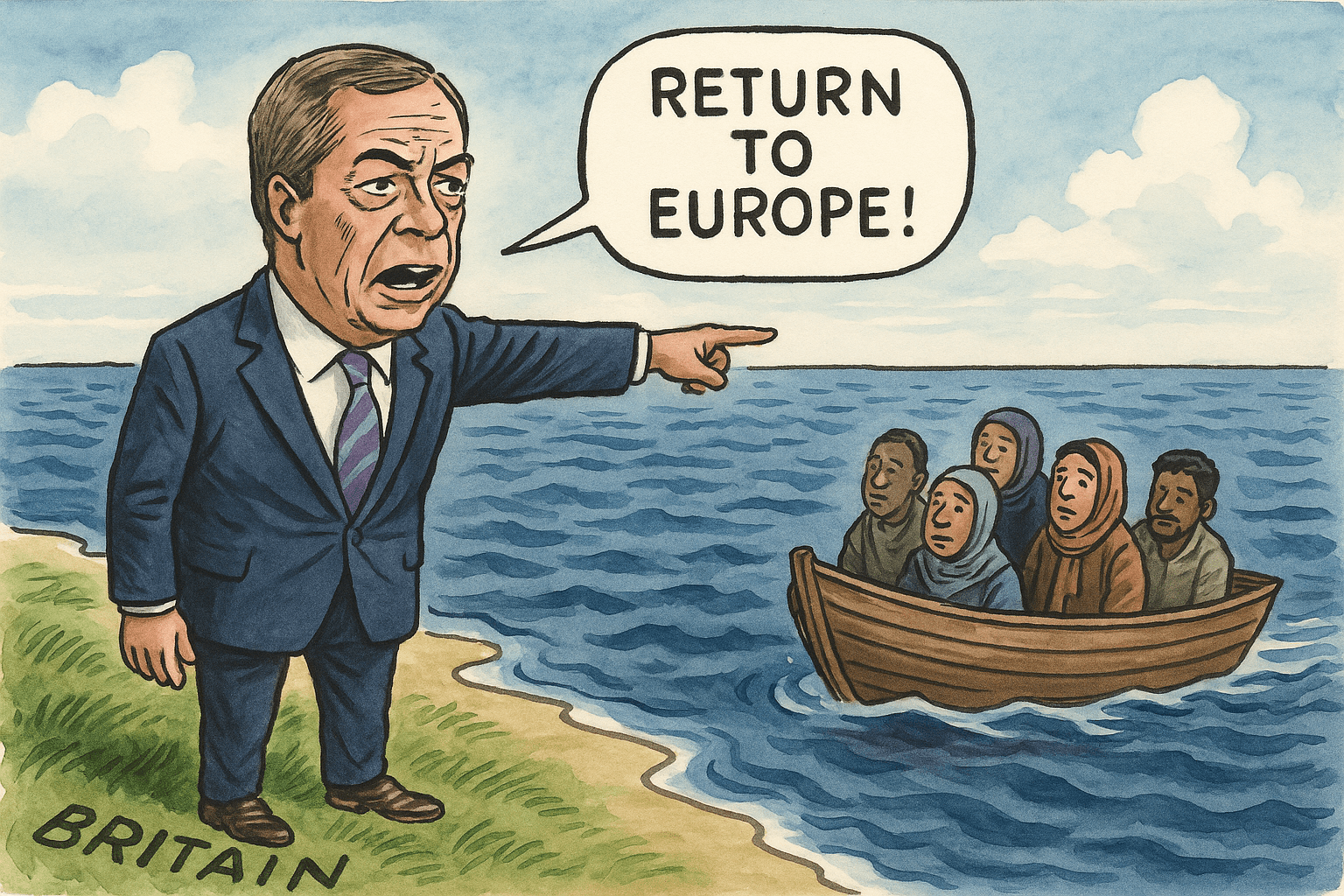
Schrödinger’s Immigrant: The Convenient Villain for Every Failure by Lawson Akhigbe

The immigrant today exists simultaneously as two incompatible creatures. On one hand, he is portrayed as a lazy welfare dependent draining public resources, crowding hospitals, filling council housing lists and surviving on benefits paid by hardworking natives. On the other hand, that same immigrant is somehow an unstoppable economic superhuman taking all the jobs, dominating industries, suppressing wages and outcompeting local workers in both skilled and unskilled sectors.