

Shares for the Many, Not the Few: What Dangote’s IPO Owes to Margaret Thatcher, and What It Might Teach Her Country by Lawson Akhigbe
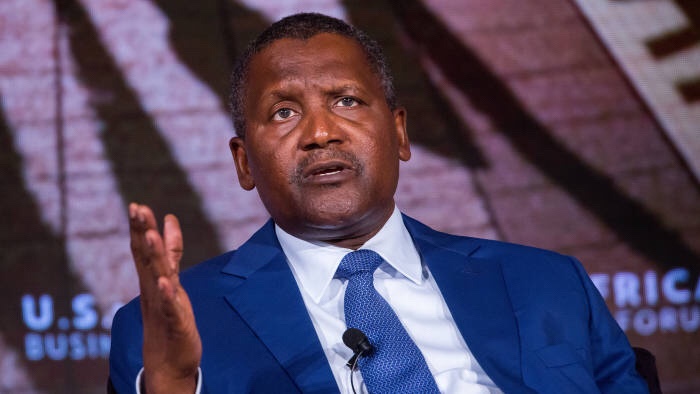
The theory behind all of it, gas, telecoms, water, rail, was called popular capitalism, and it rested on a wager: that if enough ordinary Britons held shares directly, they would develop a stake, literal and psychological, in the fiscal health of the nation. Capitalism would stop being something done to people and start being something done by them.

NATIONS, TRIBES, AND THE GRAMMAR OF EMPIRE: On why the Scots get a parliament and the Yoruba get an anthropologist By Lawson Akhigbe

Scotland has a parliament, a flag, a football team that loses with tremendous dignity, and roughly the population of Lagos’s Ikeja Local Government Area. The Yoruba nation and I use the word advisedly has an empire’s worth of history, a written and oral constitutional tradition running from Ile-Ife through the Oyo Mesi and the Alaafin’s checks and balances, a diaspora spanning three continents, and something in the region of forty million native speakers. One of these is routinely described in the Financial Times as a nation debating its constitutional future. The other is routinely described, by the same publication, as a tribe engaged in an ethnic dispute. I invite the reader to spot the empirical difference. I have been looking for thirty years and have found only prejudice wearing a monocle.