

The Gospel According to Sid
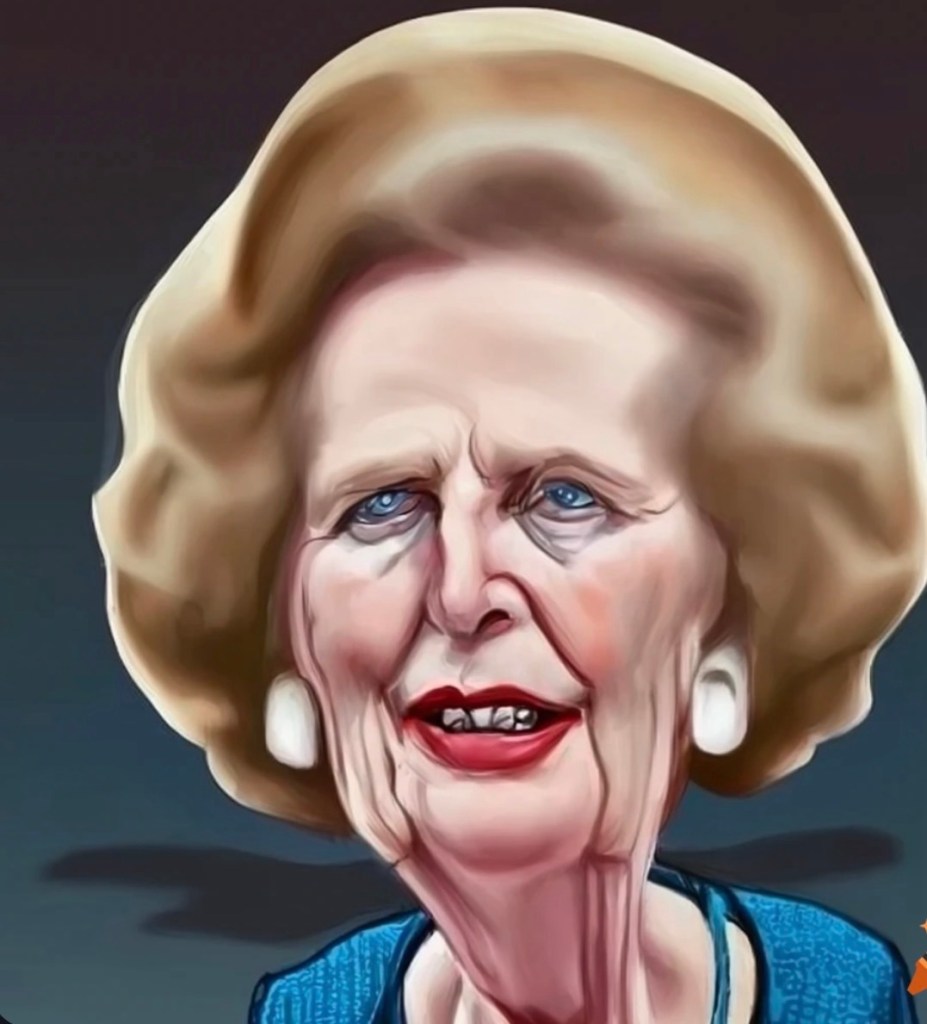
In 1986, a fictional plumber named Sid became the unlikely evangelist of British capitalism. “Tell Sid” was the advertising campaign built around the British Gas privatisation, urging ordinary citizens, plumbers, shopkeepers, the man on the Clapham omnibus, to buy shares in something that used to belong to the state and now belonged, notionally, to everyone with a few hundred pounds and a postal application form. British Telecom had gone the same way in 1984. Water followed in 1989. This was Thatcherism’s most ambitious act of persuasion: not merely selling industries, but selling the idea that owning a piece of them was a civic duty, practically a form of patriotism with a dividend attached.
The theory behind all of it, gas, telecoms, water, rail, was called popular capitalism, and it rested on a wager: that if enough ordinary Britons held shares directly, they would develop a stake, literal and psychological, in the fiscal health of the nation. Capitalism would stop being something done to people and start being something done by them.
The Wager Called In
Forty years on, the receipts are in, and they make for uncomfortable reading for anyone who believed in Sid. The individual shareholder has been steadily evicted from the register, replaced by pension funds, sovereign wealth vehicles, and asset managers who hold shares the way a warehouse holds pallets, efficiently, anonymously, and without sentiment. Direct retail share ownership in the UK has collapsed from the levels seen at the height of the privatisation wave to a fraction of that today, while institutional and overseas investors now dominate the register of practically every FTSE company Sid was once invited to feel patriotic about.
Shareholder democracy, in other words, did not so much fail as quietly retire, taking its ISA statements with it. The public were invited to the party, took the free drinks, and then, over several decades of demutualisation, takeovers, and the sheer administrative tedium of managing a small shareholding, drifted home. What remains is a stock market that functions perfectly well as a market and rather poorly as a democracy.
Lagos Sounds Its Own Gong
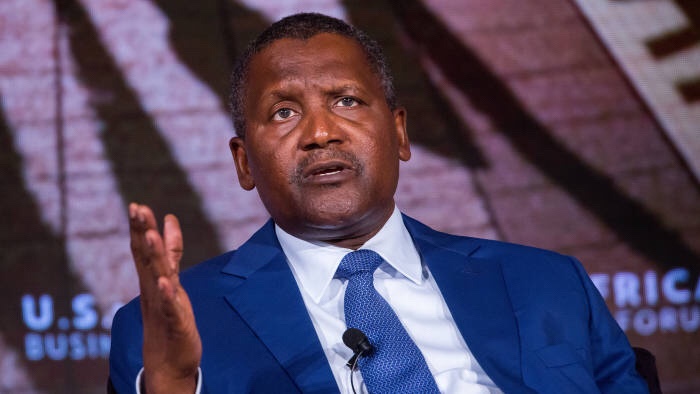
Which brings us to Lagos, and to Aliko Dangote, standing on the trading floor of the Nigerian Exchange sounding a ceremonial gong for an occasion that has been thirty years in the imagining and rather less in the executing. On 14 September 2026, the Dangote Petroleum Refinery and Petrochemicals opened its initial public offering: 4.1 billion new ordinary shares at 525 naira each, a minimum subscription of just ten shares for 5,250 naira, low enough that this is not merely an offer to institutional Nigeria but a genuine invitation to the clerk, the trader, the civil servant. The offer closes on 13 October, and depending on which valuation you trust, it stands somewhere between 1.6 and 2 billion dollars, the largest corporate equity offering in African history.
Dangote himself has framed this explicitly as democratisation rather than mere capital-raising, which is either admirably candid or shrewdly borrowed from the Sid playbook, possibly both. There has been no government advertising campaign urging Nigerians to do their patriotic duty by subscribing, no equivalent of a fictional plumber. And yet public interest has genuinely spiked, less through orchestrated civic messaging than through the simple, old-fashioned appeal of a household name offering a piece of itself at a price the household can actually afford.
The Refinery That Wasn’t the State’s to Sell
Here the comparison develops an asterisk worth dwelling on. The NNPC, Nigeria’s state oil company, holds a 20 per cent stake in the Dangote refinery, but this was never a state asset being privatised in the Thatcherite sense of the term. It is a private industrial project opening its books to public capital, not a sovereign holding being surrendered to the market. If the ghost of Thatcherism hovers over Lagos this autumn, it is present in spirit rather than in mechanism.
Which raises the counterfactual instinct rightly reached for. Had NNPCL itself been floated, the actual state colossus, decades of subsidy politics, opacity, and fuel-queue folklore bundled into a single prospectus, the psychological effect on the Nigerian public might have rivalled anything British Gas managed with Sid. There is something almost wistful in imagining it: millions of Nigerians queuing not for petrol but for share application forms, finally owning a fragment of the entity that has spent generations failing to reliably fuel their cars. Dangote’s refinery, for all its scale, is still a private empire opening a side door to the public. NNPCL’s front door, gold-plated and heavily guarded, remains resolutely shut.
Two Nations, One Question
So the question you pose deserves to be taken seriously rather than answered with a slogan. Britain’s experiment shows that mass share ownership, once launched, does not sustain itself on ideology alone; it needs infrastructure, low transaction costs, tax incentives, and a culture of retail investing that Britain itself allowed to atrophy once the initial marketing budget ran dry. Nigeria’s financial infrastructure, mobile-first, increasingly digitised, arguably has better tools available in 2026 than Britain did in 1986, even if its capital markets remain thinner and its retail investing culture younger.
Whether the Dangote IPO becomes a genuine gateway drug into a broader culture of Nigerian retail investing, or simply a one-off spectacle that fades once the gong stops echoing, depends less on Dangote than on what follows him. One successful flotation does not make a shareholder democracy any more than one popular plumber made Britain a nation of capitalists. Sid, after all, eventually sold up too.
Nigeria does not need to imitate the British trajectory to its melancholy conclusion. It has the advantage of watching someone else’s forty-year experiment play out before deciding which parts are worth repeating and which are worth quietly avoiding. Whether it takes that advantage, or simply reruns the British sequence at Lagos speed, boom, dilution, institutional capture, is the more interesting question than the one about Thatcher’s ghost. History rarely repeats. It occasionally reissues, at a different exchange rate.

