The EFCC’s Selective Deafness: When ‘Naira Abuse’ Meets Political Convenience by Lawson Akhigbe

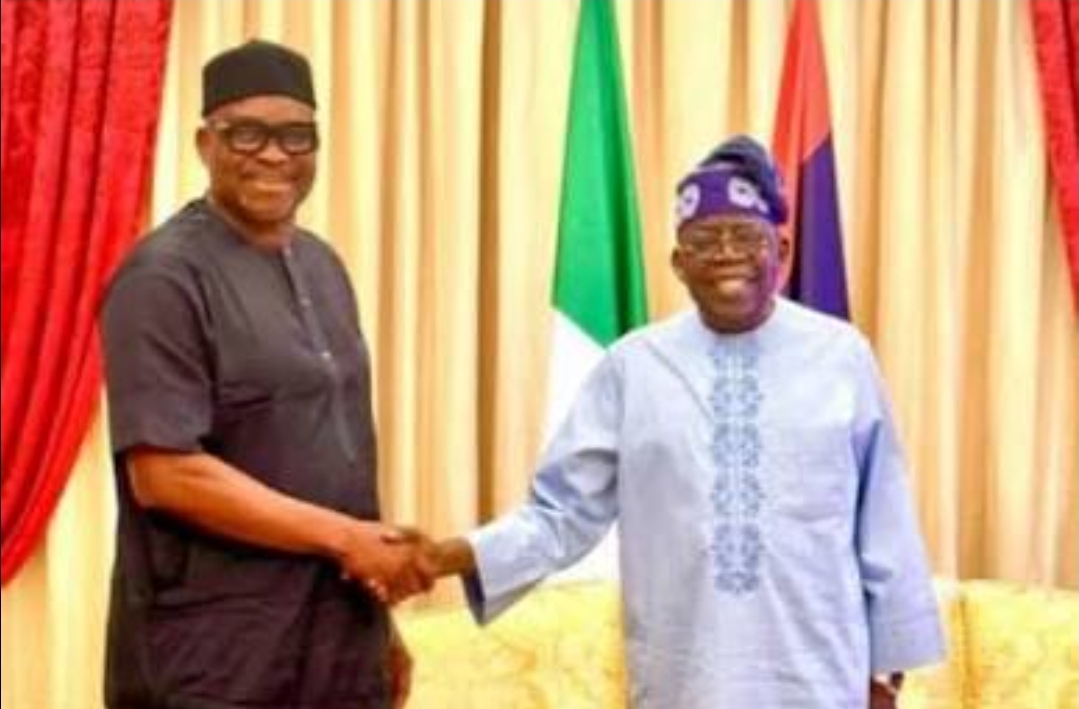
Of course not. Tompolo did not fly to Abuja; Abuja knows better than to disturb the peace of Oporoza. In Tompolo's case, the EFCC suddenly discovered a highly sophisticated, deeply sensitive legal tool known as prosecutorial discretion. This is the common-sense power of law enforcement to say: "Yes, technically a rule was broken, but pursuing this would be silly, counterproductive, or trivial."

The Trump World by Lawson Akhigbe

There is a particular cruelty in a medical report. Unlike a political speech, a budget forecast, or an election manifesto all genres of creative literature to which democratic publics have made a resigned peace a medical report carries with it the residual authority of science. When a doctor speaks, we are conditioned, in some prelinguistic way, to believe them. Which is precisely why what has happened to American presidential medicine under Donald Trump is so arresting. The clinic has been converted into a theatre, the stethoscope swapped for a megaphone, and the diagnosis subordinated entirely to the demands of the narrative.

When “We Had No Choice” Becomes a Legal Doctrine: The Doctrine of Necessity in Nigerian Constitutional Law by Lawson Akhigbe

Nigerian public life has a tradition of justifying questionable legal actions with the doctrine of necessity, a principle originating from the UK's unwritten constitution. This doctrine allows for actions deemed unlawful under normal circumstances if they are necessary to prevent greater harm, such as escaping a burning building. However, Nigeria, with its codified Constitution of 1999, presents a stark contrast. The constitution, seen as the supreme law, renders any act inconsistent with it void. The article questions how the doctrine of necessity can coexist within a constitutional democracy like Nigeria, highlighting the tension between the flexible nature of UK law and the rigid framework of Nigeria's constitution.

Edo State’s CCTV Mandate: When Government Decides Shop Owners Are the New Police Force by Lawson Akhigbe

Shops is now an extension of the state’s security infrastructure. Congratulations! You’ve been promoted from entrepreneur to unpaid auxiliary detective. Pay for the cameras, the electricity (when NEPA remembers you exist), the cloud storage or DVRs, the maintenance, and the inevitable technician who speaks only in riddles. All so the government can claim progress while the actual primary purpose of government remains… whatever it was doing before this.

Spells vs. Supplications: How Language Decides Who is “Holy” and Who is “Voodoo”

Oba of Benin gathers his chiefs, raises a ceremonial staff, and recites a rhythmic Edo formula to combat insecurity within his domain, the Western-trained mind instinctively shifts its vocabulary. Suddenly, it’s not a prayer. It’s an incantation. It’s a spell. It’s juju. Why does one man commune with the divine while the other plays with magic? The difference isn't actually in the action; it’s in the vocabulary of power, race, and who owns the dictionary.