


There is a particular kind of Nigerian who writes passionately about the deportation of the poor from Lagos while composing his thoughts from a flat in Peckham or a suburb of New York. He has not paid Nigerian taxes in eleven years. He sends remittances home at Christmas, which he spends in Nigeria displaying a foreign accent he has carefully curated. He will tell you, with great feeling, that the Almajiri system is a disgrace and he is not entirely wrong but he will not pause long enough to notice the irony lodged in his own passport.
This rejoinder is addressed to him. And to the Governor of Lagos State. And to everyone who applauded.
What the Constitution Actually Says
Before the celebrations continue, it is worth consulting a document that predates Governor Sanwo-Olu’s press releases: the Constitution of the Federal Republic of Nigeria 1999 (as amended).
Section 41(1) is unambiguous. It provides that every citizen of Nigeria is entitled to move freely throughout Nigeria and to reside in any part thereof. This is not a suggestion. It is not a privilege extended by state governors to citizens they find aesthetically agreeable. It is a fundamental right, enforceable in a court of law, and it does not contain a footnote exempting the poor.
The persons removed from Lagos streets whether they were begging, hawking, or simply existing in conditions of visible poverty are Nigerian citizens. They hold the same constitutional status as the Aso Rock resident, the Lagos Island lawyer, and the diaspora commentator typing approvingly from abroad. Their poverty does not suspend their citizenship. Their region of origin does not diminish their rights. The Federal Republic does not operate a residential permit system for the destitute.
What Governor Sanwo-Olu’s administration did, whatever language is used to describe it, was to remove Nigerian citizens from Nigerian soil on the basis of their economic condition and regional identity. That is not governance. That is, at minimum, a constitutional tort.
The Irony That Nobody Wants to Name
Let us speak plainly about the class of people most enthusiastically endorsing this policy.
Many of them live in the United Kingdom, the United States, and Canada. They arrived in those countries, in many cases, with little more than a student visa, a borrowed suit, and a cousin’s sofa to sleep on. Some of them sent money home for years before they stabilised. Some of them have not stabilised. Some of them are overstaying visas while writing lengthy Facebook posts about Nigerian street beggars undermining national dignity.
The British did not deport them when they were poor. The Americans did not bus them back to Lagos because they were clustered in immigrant neighbourhoods, working three jobs and sending money to parents they had not seen in five years. The welfare states of Western Europe extended services to them NHS appointments, council housing queues, social security systems that their own governments never built.
And yet, the argument being made, with apparent sincerity, is that a Fulani child begging in Lagos should be returned to Kano, while a Yoruba man begging in Birmingham should be given every opportunity to rebuild his life.
The internal consistency of this position is, to put it charitably, elusive.
On the Question of Who Bears Responsibility
The article under rejoinder argues for rehabilitation, reform, and investment in the North. On this point, there is no disagreement. The Almajiri system is a structural failure. The absence of functional public education across swathes of northern Nigeria is a political catastrophe that northern governors and federal legislators have perpetuated across decades. These are real critiques and they deserve sustained attention.
But here is the critical error in the logic: the answer to structural failure in Kano is not to deny Kano’s children the freedom to move. The answer is to fix Kano.
More importantly, under any serious reading of Nigerian fiscal federalism, a citizen who resides in Lagos however temporarily, however visibly poor is the welfare responsibility of Lagos State. The internally generated revenue of Lagos, the federal allocations it receives, the VAT derivation it collects, all contemplate a population that includes the vulnerable. The social contract does not begin at the point where citizens are well-dressed.
If Lagos finds a beggar on its streets, the constitutional and moral obligation is to provide welfare support, engage rehabilitation services, or at minimum, leave the person alone. It is not to load them onto a bus and treat Nigerian geography as a sorting mechanism for human beings who have committed the offence of poverty.
The moment state governments begin deciding which Nigerians may reside within their borders, based on economic condition or state of origin, Nigeria ceases to function as a federation and begins to resemble a collection of ethnic homelands with a shared currency. That is a direction no serious nationalist diaspora or otherwise should be comfortable endorsing.
A Word on Courage
The article praises Governor Sanwo-Olu for courage. This framing deserves scrutiny.
Courage, in governance, is building the infrastructure that makes poverty less likely. Courage is reforming land tenure so that the urban poor can afford shelter. Courage is demanding that federal allocations be accounted for in the northern states that produce these migration flows. Courage is telling your own constituents that Lagos cannot sustain its housing deficit while spending political capital on deportation theatre.
What is not courage is removing visibly poor people from camera range in one of Africa’s wealthiest cities and calling it leadership. That is aesthetics. That is the management of optics. That is, at its most generous interpretation, an admission that Lagos has failed to build the welfare architecture its tax revenues should have funded.
The bold step, governor, is not the bus. The bold step is the policy that makes the bus unnecessary.
The Children
One final point, and it is the most important.
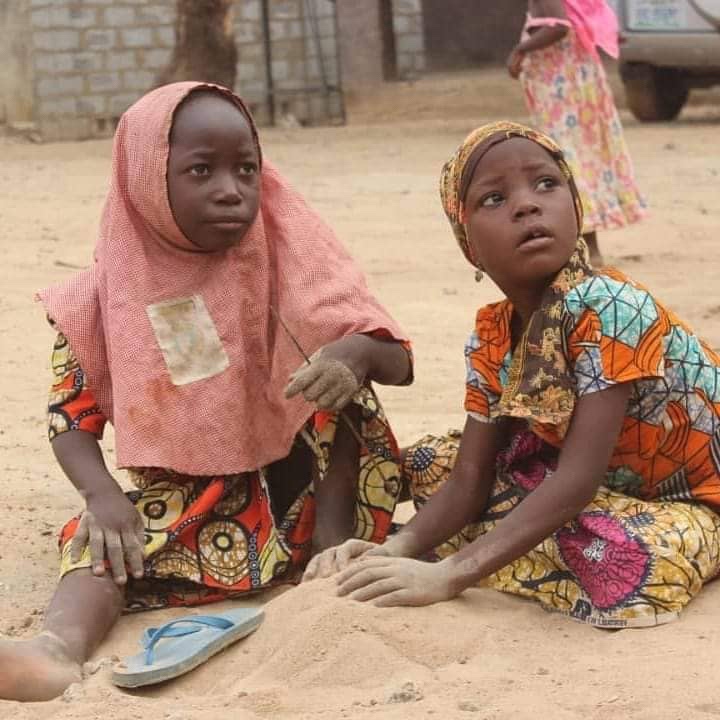
The children begging on Lagos streets are Nigerian children. They are not foreign nationals. They are not enemy combatants. They are not, despite the unfortunate implications of some of the commentary, representatives of a security threat to be neutralised.
They are children in a federation that has failed them failed them in Kano, failed them in Kaduna, failed them in Lagos, and failed them in Abuja. The federal government that should have built schools did not. The state governments that should have regulated the Almajiri system did not. The local governments that should have maintained social registers do not. And the diaspora that should be pressuring all of the above is, instead, writing Facebook posts praising deportation.
If you want to help these children, the Constitution provides a framework. Fund the states that produce them. Demand accountability from the governors who send them out. Advocate for a federal welfare system that treats poverty as a national problem rather than a regional embarrassment.
What the Constitution does not permit what no amount of rhetorical elegance about “begging bowls versus futures” can justify is treating Nigerian citizenship as a residence qualification that the poor must earn.
Section 41 of the Constitution does not ask whether you are rich enough to deserve it. Neither should we.

