

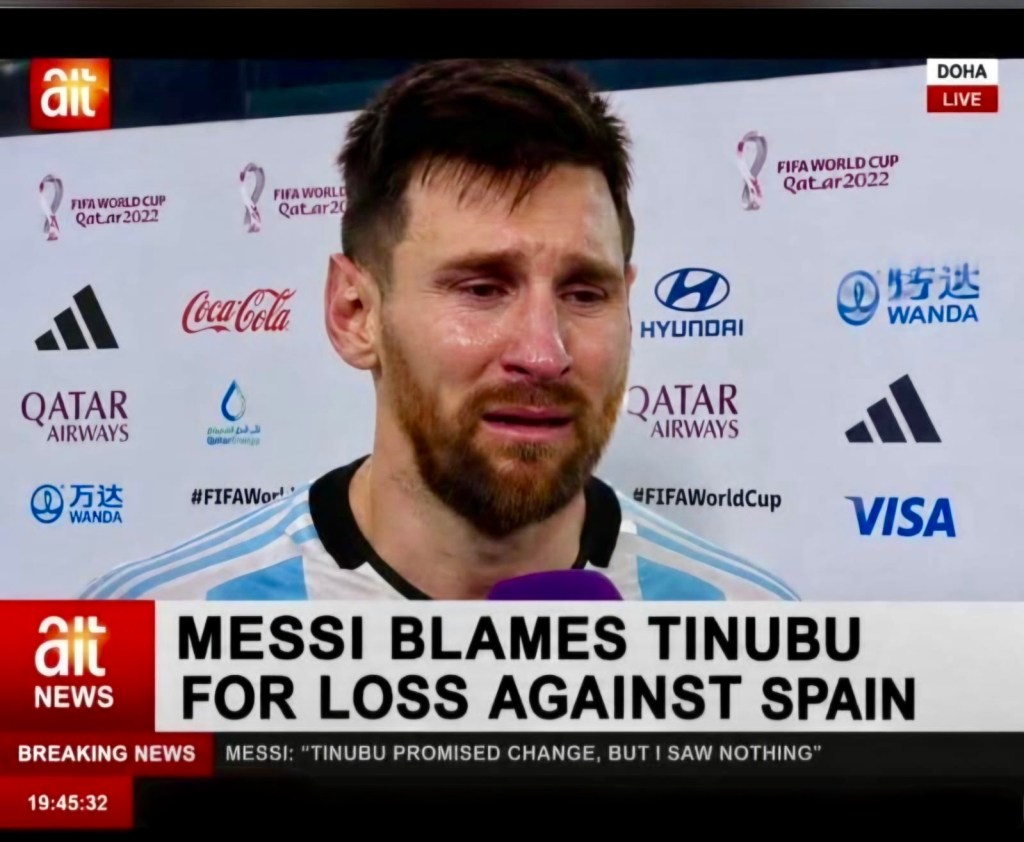
If there is one thing Nigerian governance never fails to deliver, it is world-class plot twists.
Imagine buying a VIP ticket to a concert that ended three weeks ago, paying full price at the gate, and then convincing your friends that you’re just double-checking whether the stage lights still work. That is essentially the energy behind a newly discovered line item in Nigeria’s approved 2026 national budget.
Deep within the National Sports Commission’s (NSC) approved allocation sits a stunning figure: ₦6,440,317,645.
Its official description? “Special (Presidential) Support Group for 2026 World Cup Qualifiers.”
There’s just one small, tiny, slightly awkward detail: The Super Eagles had already been eliminated.
The Ultimate Bureaucratic Offside
To truly appreciate the comedic tragedy of this line item, we have to look at the timeline. Bureaucracy moves slowly, but this particular budget item seems to have traveled through a temporal wormhole where facts simply do not apply.
November 16, 2025: Nigeria loses to DR Congo (Eliminated)
       │
       ▼
December 19, 2025: 2026 Budget presented to NASS (₦6.44B included)
       │
       ▼
  April 17, 2026: President Tinubu signs Budget into Law (₦6.44B approved)
- November 16, 2025: The Super Eagles played their decisive qualifier against the Democratic Republic of Congo. They lost. Heartbreaks were had, fan tear ducts were exhausted, and Nigeria’s dreams of marching into the 2026 World Cup officially evaporated.
- December 19, 2025: More than a month after millions of Nigerians watched the team get knocked out, President Bola Tinubu rolled up to the National Assembly to present the 2026 Appropriation Bill. Tucked inside was the ₦6.44 billion request to support… the qualifiers.
- April 17, 2026: Five months after elimination, the President officially signed the 2026 budget into law. The ₦6.44 billion remained intact, approved, and ready for deployment.
Whether this money is intended to build a time machine, fund a parallel universe where the Super Eagles actually won, or simply pay for front-row seats on the couch, the official documents don’t say.
Why Is This Money in the Budget?
If you ask the government for an official rationale, you’ll be met with the soothing sound of silence. The budget documentation offers no explanation for why a multi-billion naira qualification fund was retained long after the team was disqualified.
So, how does a ghost allocation like this happen?
1. The Classic “Copy-Paste” Governance
The most generous interpretation is pure administrative inertia. Budgeting in public institutions often relies heavily on recycled templates from previous fiscal years. A civil servant sits at a computer, copies last year’s line items, adjusts the numbers for inflation, and hits send. Nobody in the chain—from the sports ministry to the budget office—bothered to check if the team was, you know, actually still playing.
2. The Budget Padding Mystery
The less generous—and far more popular—interpretation across Nigerian civil society is that this is classic budget padding. In a system where ghost workers draw monthly salaries, it shouldn’t come as a surprise that “ghost tournaments” now receive multi-billion naira funding lines.
The Cost of “Oops”
In isolation, administrative blunders are funny. But context makes this one sting.
Nigeria is currently navigating one of its toughest economic stretches in decades. Inflation remains steep, public infrastructure is starved of funds, and ordinary citizens are being asked to tighten their belts at every turn. Watching over ₦6.4 billion float toward a tournament that Nigeria will be watching from home isn’t just an accounting error—it’s a stark reflection of how little oversight exists when public funds are on the table.
Opposition political leaders, investigative outlets, and policy analysts have rightly called out the allocation as a masterclass in fiscal carelessness.
Final Thoughts
The next time someone tells you that Nigerian football lacks funding, gently remind them that the Super Eagles managed to score a ₦6.4 billion allocation after losing the match.
If only that level of performance happened on the pitch.

