


When major corporate milestones unfold, they often bring complex legal questions in their wake. Recently, discussion has swirled around whether public-private partnerships involving state governments and philanthropic foundations to buy shares in the historic Dangote Petroleum Refinery and Petrochemicals Initial Public Offering (IPO) run afoul of corporate laws—specifically regarding a company financing its own shares.
To unpack this, we need to look closely at what Nigerian law actually prohibits, how the Women Share Subscription Grant Initiative is structured, and why this setup stays entirely on the right side of regulatory compliance.
The Legal Baseline: Can a Company Finance Its Own Shares?
Under Nigerian corporate law—governed primarily by the Companies and Allied Matters Act (CAMA 2020)—the rules regarding a company buying or financing its own shares are strict:
- The Financial Assistance Prohibition: As a foundational rule, a company is legally barred from providing financial assistance (directly or indirectly via loans, guarantees, or security) to anyone for the purpose of purchasing its own shares or those of its holding company. This safeguard prevents market manipulation, artificial share-price inflation, and conflicts of interest.
- Share Buybacks: While a company can theoretically buy back its own shares under tight statutory constraints (such as out of distributable profits or through court-approved schemes), it must navigate rigorous regulatory hurdles set by the Corporate Affairs Commission (CAC) and the Securities and Exchange Commission (SEC).
When a corporate entity attempts to bypass these frameworks—such as using internal corporate reserves to secretly absorb an IPO or manufacture artificial demand—it violates statutory provisions. But does the multi-state women’s empowerment initiative cross this line? No.
Anatomy of the Initiative: Breaking Down the Mechanics
The initiative driving conversation features a distinct public-private collaborative structure:
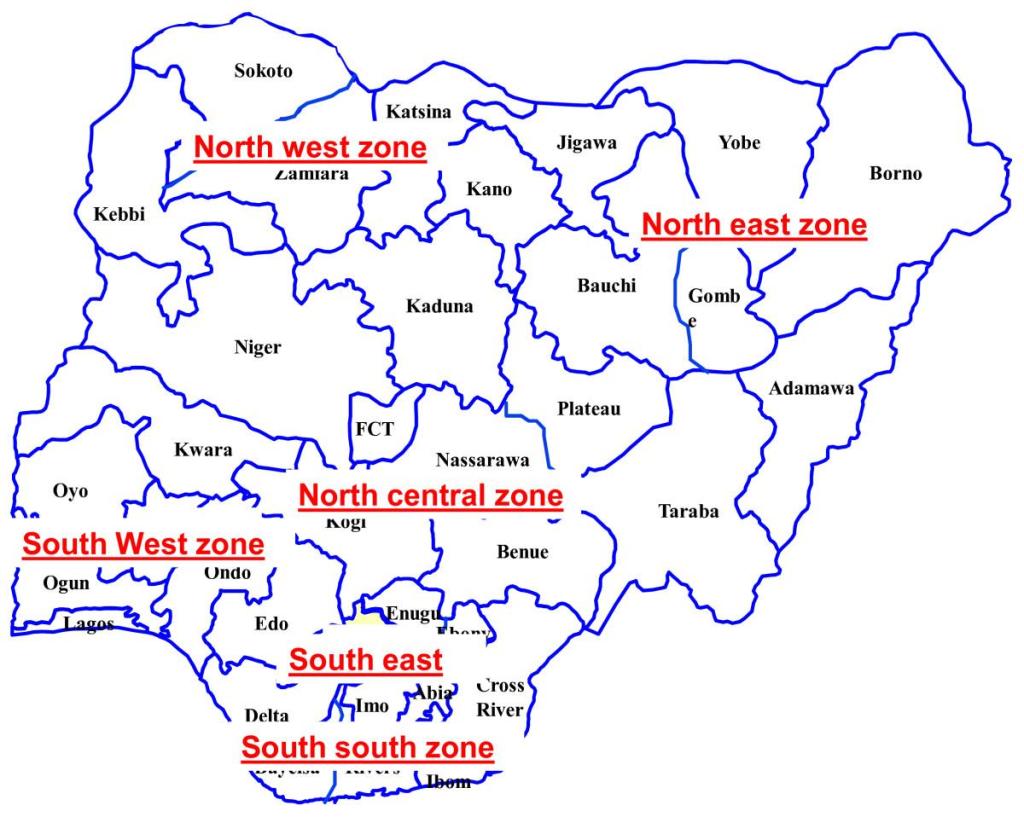
- The Share Partnership Mechanics: Under the Women Share Subscription Grant Initiative, 15 state governments have committed funds to co-finance a total of 15.56 million shares for 777,907 underprivileged women.
- The Cost-Split: Each state government finances 10 shares per beneficiary, and the Aliko Dangote Foundation (ADF) matches it by providing another 10 shares, gifting each woman a packet of 20 shares completely free. At the IPO offer price of ₦525 per share, each package is valued at ₦10,500.
- Participating States: The program spans states including Abia, Anambra, Borno, Ebonyi, Enugu, Gombe, Imo, Kebbi, Kwara, Lagos, Nasarawa, Niger, Plateau, Yobe, and Zamfara (with independent state civil service schemes also emerging, such as Adamawa’s package for female civil servants and retirees). Ultimately, the foundation aims to scale this to two million vulnerable women across all 36 states and the FCT.
Why the Arrangement is Legally Sound
Reviewing this framework through the lens of securities regulations and corporate law reveals why it avoids breaching anti-manipulation rules:
1. Separation of Entities (The Issuer vs. The Foundation and States)
CAMA restricts the company itself (Dangote Petroleum Refinery and Petrochemicals) from deploying corporate capital or credit lines to purchase or artificially finance its own equity.
In this initiative, the capital is coming from independent third-party actors: the Aliko Dangote Foundation (a separate philanthropic legal entity distinct from the refinery’s corporate balance sheet) and state governments utilizing public grant and social welfare budgets. Because the refinery company is not dipping into its own operational revenue or reserves to fund buyers, the corporate financial assistance prohibition is not triggered.
2. Genuine Philanthropy vs. Artificial Market Manipulation
Market regulations target corporate buybacks or backroom schemes designed to secretly prop up share prices or park shares with friendly entities using company funds.
Conversely, this mechanism operates as an open-market social intervention tied to a fully regulated, SEC-approved IPO. The funds injected by the state governments and the foundation function identically to a government welfare stipend, scholarship grant, or developmental subsidy—paid directly into the IPO subscription account to secure primary shares for marginalized citizens.
3. Regulatory Transparency and Direct Allotment
Rather than funneling cash through opaque political channels, grant funds are processed transparently via the designated issuing houses managing the IPO. The shares are allotted directly and registered securely in the individual names of the vulnerable women beneficiaries, expanding retail financial inclusion rather than concentrating power or manipulating market metrics.
Final Thoughts
Far from being an illegal corporate maneuver, the Women Share Subscription Grant Initiative functions as a hybrid public-private social welfare model. By blending philanthropic capital with state-level development grants, it opens up capital market participation to low-income citizens who would otherwise be left out of historic national wealth-creation events.
From a strict legal standpoint, because the refinery issuer itself is financing none of it, the initiative remains fully compliant with Nigerian corporate and securities law.

