

Urban Nigerians still speak a fantastic blend of languages, and the mixture has only grown richer, louder and more useful with time.
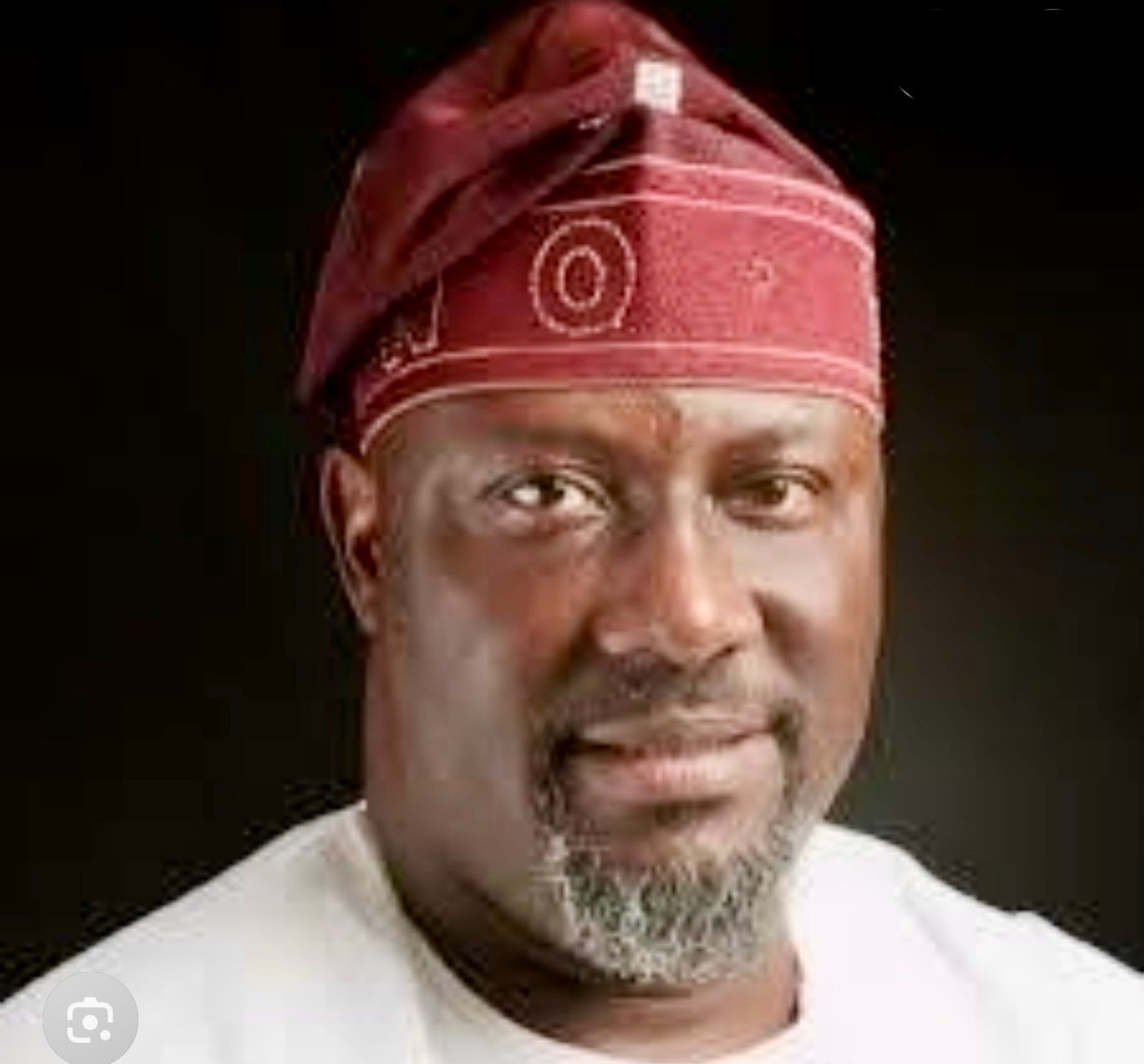
No compliment was too flowery at the launch years ago of Antidotes for Corruption, a book by Dino Melaye, the former senator who has spent a career batting away graft allegations with the energy of a man swatting mosquitoes. “What is being launched today is, ipso facto, a new potent Intercontinental Ballistic-cum-Cruise missile, an unassailable Assault weapon against, arguably, Mankind’s Enemy Number One: Corruption,” declared the leaflet. The politician himself was hailed as a “unique, strong-willed, opinionated, stubborn, determined, intelligent, prolific and even sexy young man in his prime.” The prose was pure Nigerian English: English that had been detained at the border, thoroughly searched, and then released with a few extra adjectives sewn into the lining.
It is not only politics that dresses itself in verbal excess. Airlines have long blamed “epileptic” fuel supplies for cancellations. Traffic remains a “go-slow.” Gossip is “gist,” whether noun or verb. A night out is “catching fun.” A younger girlfriend is still, with cheerful precision, a “side chick.” Nigerians took the colonial language, stripped it of its stiff upper lip, and taught it to dance.
The vocabulary keeps expanding with the economy, the internet and the music. When the money vanishes, one is in “sapa,” a state of financial drought so widespread that citizens of “Sapa Nation” claim membership with grim pride. When the money finally arrives, “pepper don rest.” To make it big is to “hammer.” To flee the country in search of better prospects is to “japa.” Something overwhelming, whether a new car or a national scandal, simply “e choke.” Stand your ground and refuse to be cheated and you are practising “no gree for anybody,” the unofficial anthem of recent years. Effortless cool is “steeze.” A beautiful woman worth the investment of time and attention might be called “Achalugo.” The person who inserts himself into every conversation where he has no business is a “ganusi.” And when the situation confuses or overwhelms, “everything go first blur.”
Even the high and mighty sometimes struggle with the finer points of delivery. In 2026 the Minister of Works, David Umahi, found himself baffled by the polished British-inflected accent of Arise News correspondent Laila Johnson-Salami during a stakeholders’ meeting. “Sister, I was raised in the village,” he declared, “me I no dey hear phoné.” He requested an interpreter. The journalist, unfazed, pointed out that he already had enough aides around him. The exchange was pure Nigerian theatre: a senior official claiming linguistic distance from a fellow Nigerian who simply spoke with the crisp cadence of someone who had spent time abroad. It was a reminder that accent, like politics, remains a contact sport.
Arise News itself has become a showcase of this linguistic variety. Its studios, both local and international, feature an array of presenters and correspondents whose accents range from pure Lagos to polished British, American-tinged and everything in between. The channel’s global ambitions have produced a newsroom where the Queen’s English sits comfortably beside Nigerian English, and where the viewer is expected to keep up. Some find it impressive. Others find it a little disorienting. Both reactions are typically Nigerian.
Meanwhile the language keeps conquering new territory. The Oxford English Dictionary has formally welcomed a stream of Nigerian-origin words. “Wahala” now sits in the OED as a recognised term for trouble or problem, complete with pronunciation guides. Recent updates have added “japa,” “agbero,” “eba,” “419,” “yahoo boy” and a host of others. What began as street talk and market banter has earned a place in the global lexicon. The dictionary, once the gatekeeper of imperial English, now records the inventions of the former colony with scholarly seriousness.
In a country of more than 500 languages, Pidgin English remains the true national lubricant. It is the language of the market, the bus park, the WhatsApp group and the comedy skit. Fela Kuti once insisted you cannot sing African music in proper English. Nollywood producers still seem to agree. The old slogan “Naija no dey carry last” continues to serve as unofficial motto, half boast, half warning.
Radio stations such as Wazobia FM have long spoken the people’s tongue. BBC Pidgin, once a rumour, is now a fully fledged service delivering news in the same fluid, elastic English that ordinary Nigerians actually use. Politicians switch registers with practised ease, sliding from polished standard English for the cameras into Pidgin when they need to sound like the crowd. Social media has accelerated the process. New coinages appear, spread, and either stick or vanish within weeks. Words and phases such as “abeg” and “oga at the top” have acquired fresh layers of meaning online, serving as plea, intensifier, power marker or polite insult depending on the moment. “Omo” can express shock, frustration or simple recognition of shared suffering. “Chakam” turns the act of taking a screenshot into a public declaration of proof.
The result is not linguistic chaos but a living, adaptive code. Standard English remains the language of official documents, courtrooms and the more self-conscious elite. Pidgin is the language of connection, comedy, complaint and everyday survival. Many urban Nigerians move between the two without thinking, code-switching the way others change lanes in Lagos traffic: suddenly, with confidence, and sometimes with a blaring horn.
Chinua Achebe once defended writing in English rather than his native Igbo by saying Nigerians intended to do unheard-of things with it. They have. They have taken the language of the former coloniser, mixed it with the rhythms of home, and produced something that is neither pure English nor pure anything else, but unmistakably Nigerian. It is flexible enough for a senator’s book launch, an airline excuse, a Nollywood romance, a BBC news bulletin, a minister’s request for an interpreter, and a Twitter thread about the latest national wahala. It is democratic in the best and most disorderly sense of the word. And it shows no sign of slowing down.

