


There is something wonderfully revealing about living in Britain as a Nigerian.
Every now and again, Britain will introduce you to a rule that makes you stop, stare and ask yourself: “Is this really the law?”
And then comes the second surprise.
Yes, it is.
And, more remarkably, people actually obey it.
I have written before about Nigeria’s rather complicated relationship with the law. In Nigeria, the law can sometimes appear to be less of a command and more of a suggestion, particularly when obedience becomes inconvenient for those who are supposed to enforce it.
Britain offers the opposite spectacle.
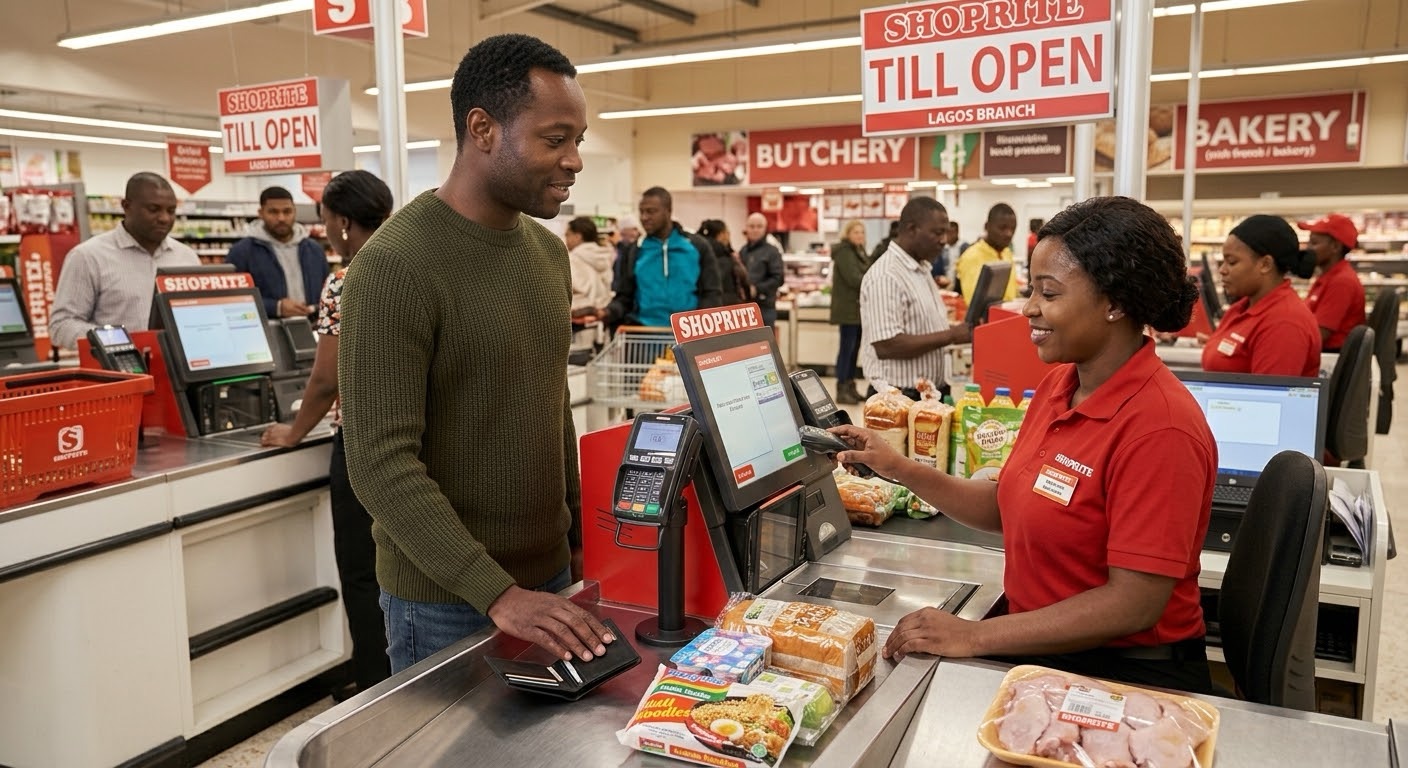
Here, you can arrive at a supermarket, select your groceries, stand at the till with your debit card ready and still be told:
“No. The law says you have to wait.”
And the till will wait with you.
The Great Sunday Supermarket Stand-Off
A Nigerian recently discovered this in rather amusing circumstances.
He arrived at Sainsbury’s at about 9:30 on a Sunday morning. He did what any efficient shopper might do. He picked up his items, completed his shopping in about ten minutes and proceeded to the till.
There was only one till open.
He scanned his purchases and was about to make payment when a member of staff politely intervened.
Stop.
You cannot pay yet.
Why?
Because the law says the shop cannot trade yet.
The till had apparently been left open by mistake.
So the transaction had to be cancelled.
The customer was left standing in the supermarket with his groceries, his shopping completed and his payment legally postponed.
He then had to wait another 25 minutes until 10am.
For a Nigerian, this is almost a cultural experience.
In Nigeria, the first instinct might be to ask:
“Which law?”
The second might be:
“Who is enforcing it?”
The third might be:
“Can we not just pay and everybody goes home?”
In Britain, apparently, the answer to all three questions is:
The law, the supermarket and no.
Yes, There Really Is Such a Law
The explanation lies in the Sunday Trading Act 1994.
The legislation regulates Sunday trading by large shops in England and Wales. Large shops, generally those exceeding 280 square metres, are restricted to trading for six consecutive hours between 10am and 6pm on Sundays.
That creates the slightly bizarre spectacle encountered by our shopper.
A large supermarket may open its doors before 10am, allowing customers to enter, browse and even select their purchases.
But the actual trading period cannot begin before the statutory time.
In practical terms, therefore, the supermarket can say:
“Come in.”
It can allow you to wander around.
You can pick up the bread.
You can select the milk.
You can put the sausages in your trolley.
You can stand patiently at the checkout.
But if it is 9:59am, the law has not yet given the till permission to finish the job.
At 10am, the economic machinery of capitalism is switched back on.
Beep.
Beep.
Beep.
“Card or cash?”
Britain has many strange traditions. This one is written into legislation.
Why Six Hours?
The Sunday Trading Act was essentially a compromise.
Before the 1990s, Sunday trading was heavily restricted. The 1994 legislation liberalised Sunday shopping but stopped short of allowing large retailers to operate without limitation.
Large shops were permitted to trade, but only for six hours on Sundays.
There was a policy argument behind this.
If huge supermarkets could open all day on Sunday, small independent retailers could potentially be overwhelmed by their purchasing power, premises, advertising budgets and economies of scale.
So the law drew a line.
If your shop is large enough to fall within the statutory definition, you get six hours.
If your shop is below the relevant threshold, you are not subject to the same Sunday trading-hour restriction.
The result is an unusual piece of British economic regulation in which the size of your shop determines how much Sunday capitalism you are permitted to practise.
It is protectionism dressed in opening hours.
The Nigerian Question: But Why Open at 9:30?
This is where the Nigerian brain starts looking for the loophole.
If the shop cannot actually trade until 10am, why open at 9:30?
Because browsing is not necessarily the same thing as trading.
Large supermarkets can open their doors before the permitted trading period so customers can enter and prepare their purchases.
But the tills remain closed.
That creates a peculiar half-hour in which Britain allows you to shop without actually shopping.
You can select the goods.
You can queue.
You can reconsider your choice of biscuits.
You can read the nutritional information on twelve packets of cereal.
You can even contemplate the meaning of life in aisle seven.
But you cannot complete the commercial transaction until the law says you can.
And that is precisely what happened.
The Real Lesson Is Not About Supermarkets
The amusing part of this story is not really the Sunday Trading Act.
It is the relationship between citizens, businesses and the law.
The supermarket employee could have looked at the situation and thought:
“The customer is already here. The till is already open. It is only half an hour. Let us just take the payment.”
Apparently, no.
The employee did not negotiate with the law.
The customer did not negotiate with the employee.
The supermarket did not decide that the legislation was inconvenient and therefore optional.
The transaction was cancelled.
Everyone waited.
At 10am, business resumed.
That is what the rule of law looks like in its most mundane form.
Not necessarily grand constitutional litigation.
Not necessarily a Supreme Court judgment.
Sometimes it is simply a supermarket employee saying:
“I’m sorry, but you cannot pay yet.”
And then actually meaning it.
Imagine This Happening in Nigeria
Now transpose the same situation to Nigeria.
A supermarket is open.
The customer has selected his goods.
The till is functioning.
The employee is standing there.
The only thing standing between the customer and his purchase is a statutory restriction on trading hours.
The Nigerian instinct might be to ask whether there is a practical way around it.
Perhaps the manager could authorise it.
Perhaps the attendant could simply process the transaction.
Perhaps the law is not being enforced today.
Perhaps nobody will know.
Perhaps everybody will know and nobody will care.
That is the deeper problem I have written about repeatedly.
Nigeria does not suffer from a shortage of laws.
Nigeria suffers from an inconsistent relationship with them.
We legislate extensively.
We establish agencies.
We create regulations.
We publish rules.
We hold public officials to statutory duties.
And then, remarkably often, somebody discovers that compliance is inconvenient.
At that point, the law can become negotiable.
Britain’s Law Is Not Always Sensible
None of this means every British law is sensible.
The Sunday Trading Act can reasonably be criticised as an anachronism.
Why should a supermarket of 279 square metres have greater Sunday freedom than one of 281 square metres?
Why should customers be allowed to enter a shop at 9:30 but be prohibited from completing their purchases?
And why should the law care how many hours Tesco, Sainsbury’s or Asda wants to sell somebody a loaf of bread on a Sunday?
Those are perfectly legitimate questions.
Laws should be questioned.
Bad laws should be amended.
Outdated laws should be repealed.
But there is a crucial difference between disagreeing with the law and ignoring it.
The British system provides lawful mechanisms for changing the law.
Until it is changed, however, the law applies.
That distinction is the foundation of a functioning constitutional democracy.
The Till Does Not Have an Opinion
The supermarket employee did not decide whether the Sunday Trading Act was good policy.
The employee’s job was simply to comply with it.
That is an important lesson.
The rule of law does not depend upon everyone loving the law.
It depends upon institutions and individuals respecting the legal framework within which they operate.
The employee does not need to agree with Parliament.
The customer does not need to agree with Parliament.
The supermarket certainly does not need to agree with Parliament.
But Parliament made the law.
Until Parliament changes it, the till waits.
Even the till obeys the law.
And perhaps that is what astonished our Nigerian shopper most.
Not that Britain has a law governing supermarket opening hours.
Nigeria has laws governing practically everything from the sublime to the ridiculous.
The astonishing thing is that somebody actually stopped a perfectly ordinary transaction because the law said so.
No phone call to a powerful person.
No suggestion that the rule could be ignored.
No wink.
No “just this once”.
No creative interpretation.
Just:
“Sorry. It is not 10am yet.”
And so everybody waited.
The Larger Nigerian Problem
This is why my continuing concern about Nigeria’s relationship with the law is not simply about whether Nigeria has good laws.
It is about whether Nigerians can reasonably expect the law to mean what it says.
A country governed by the rule of law cannot operate on the principle that laws apply rigorously to ordinary citizens but become flexible when powerful people, institutions or commercial interests encounter them.
Nor can government officials selectively enforce laws according to convenience.
The law must be predictable.
It must be applied consistently.
And, crucially, citizens must believe that it will be applied consistently.
That is what creates the strange phenomenon the Nigerian shopper encountered in Britain:
obedience without negotiation.
The law says 10am.
It is 9:30am.
Therefore, you wait.
There is something almost revolutionary about that simplicity.
And Then the Clock Struck Ten
At 9:59am, nothing could happen.
At 10:00am, everything could happen.
The difference was sixty seconds.
Not because the supermarket manager had suddenly become more efficient.
Not because the customer had become more deserving.
Not because the till had suddenly acquired a new software update.
But because the law permitted the transaction.
And that, in a rather ordinary supermarket on a Sunday morning, provides a remarkably good lesson in constitutional government.
Sometimes the rule of law is found in the courtroom.
Sometimes it is found in Parliament.
And sometimes it is standing beside a supermarket till telling a slightly bewildered Nigerian:
“You will have to wait.”
The Nigerian may wonder why.
The British law may itself deserve another look.
But the principle is beautifully simple:
Until the law changes, the law applies.
Perhaps Nigeria’s problem is not that we need more laws.
Perhaps, occasionally, we simply need our tills to start obeying the ones we already have.

