

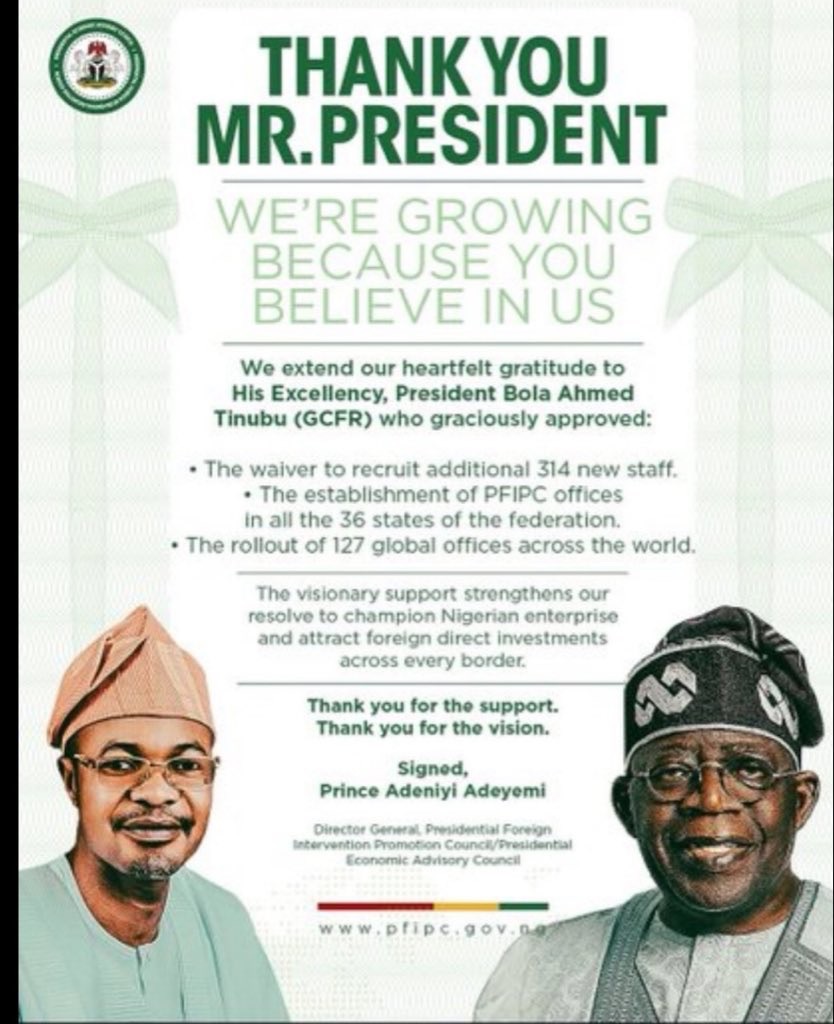
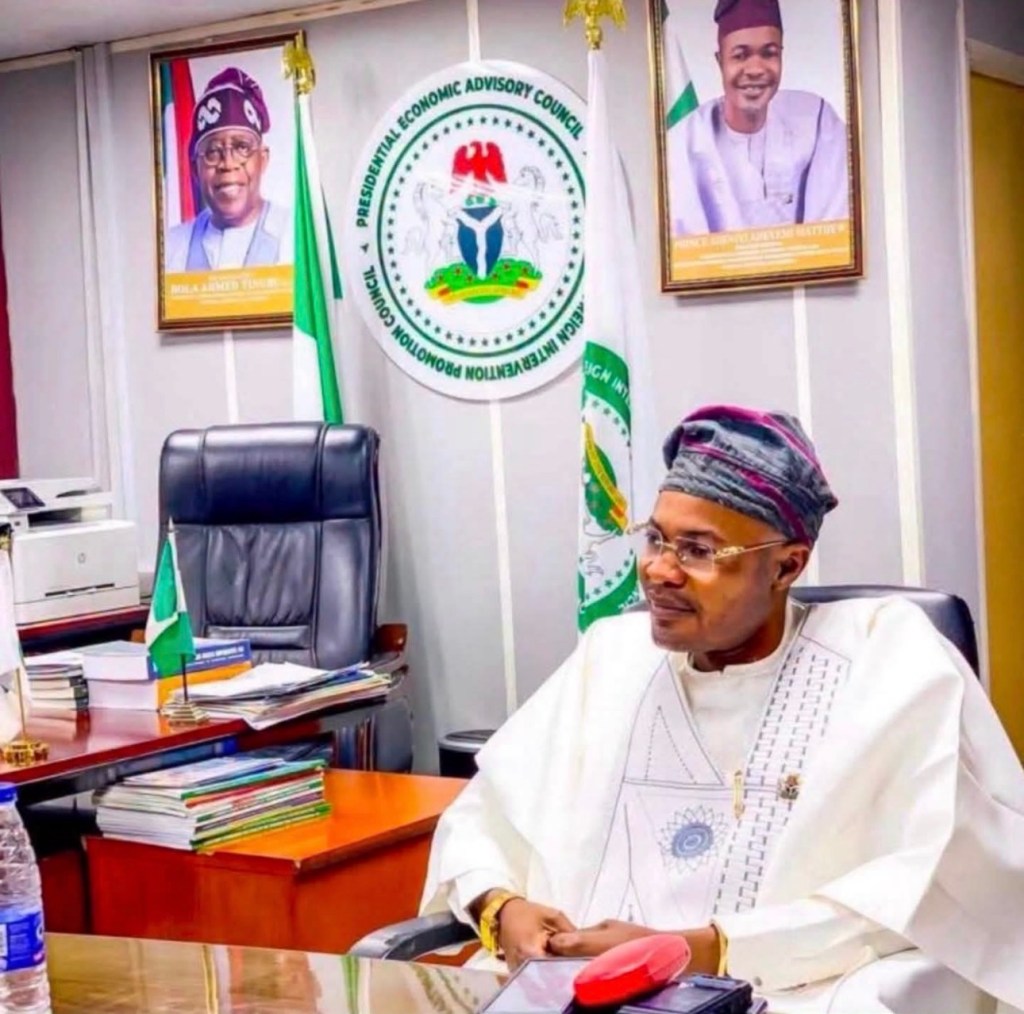
There is a peculiar Nigerian genre of scandal in which the first fact everyone agrees on is that nothing exists and the second fact, arriving shortly after, is an itemised inventory of everything the nonexistent thing apparently owned. Enter Prince Adeniyi Matthew Adeyemi, self-declared Director-General of the Presidential Foreign Intervention Promotion Council, a man the Presidency insists is a fiction, while simultaneously producing three separate statements, a police investigation, a forgery case, and a Chief of Staff’s personal denial letter to explain why the fiction has been so administratively demanding to deny.
Act One: The Man Who Would Be DG
Adeyemi’s résumé, generously read, is one of relentless upward self-appointment. This is, after all, a man who in 2016 presented himself as an ambassador and President-General of the World Youth Organisation, an alleged UN affiliate supposedly elected into being in New Delhi, a claim the actual United Nations, when asked, appeared never to have heard of. One might call this a pattern. Adeyemi would presumably call it a track record.
By 2025, the ambition had scaled considerably: not a youth organisation now, but an actual arm of the Nigerian Presidency, complete with an office at the Federal Secretariat Complex, Phase III, second floor which is either extraordinary criminal audacity or extraordinary institutional carelessness, and possibly, this being Nigeria, both at once.
Act Two: The Alleged Price of Power
According to Adeyemi’s own account, ascension to this rarefied post came at a price. He claims he paid ₦400 million by proxy toward securing his appointment, with a further ₦200 million still outstanding, and that the relationship with Chief of Staff Femi Gbajabiamila curdled when he refused an alleged demand for 48 percent of the agency’s ₦27.4 billion take-off grant. He has further alleged surviving an assassination attempt on the Abuja-Kaduna Expressway, and has raised pointed questions about the death of an intermediary he says helped broker the deal, who the police say died in an unrelated hotel fire a detail so cinematically convenient that even Nollywood might reject the script for excessive melodrama.
Act Three: The Presidency’s Rebuttal, With Receipts
The Chief of Staff’s office, for its part, has been unambiguous. Gbajabiamila’s June 11 disclaimer stated plainly that the PFIPC does not exist under this administration and that no such appointment was ever made. When Adeyemi refused to take the hint, the Presidency escalated from disclaimer to dossier. Presidential spokesman Bayo Onanuga went considerably further, alleging that Adeyemi forged appointment letters and official documents, falsely presented himself as a presidential appointee, and fraudulently sought diplomatic paperwork from the Ministry of Foreign Affairs. Police investigators reportedly uncovered 34 bank accounts operated by Adeyemi, including nine registered to fictitious organisations, and concluded the agency never existed at all a conclusion presumably meant to be the final word, except that Adeyemi has never treated final words as final.
Act Four: The Inconvenient Paper Trail
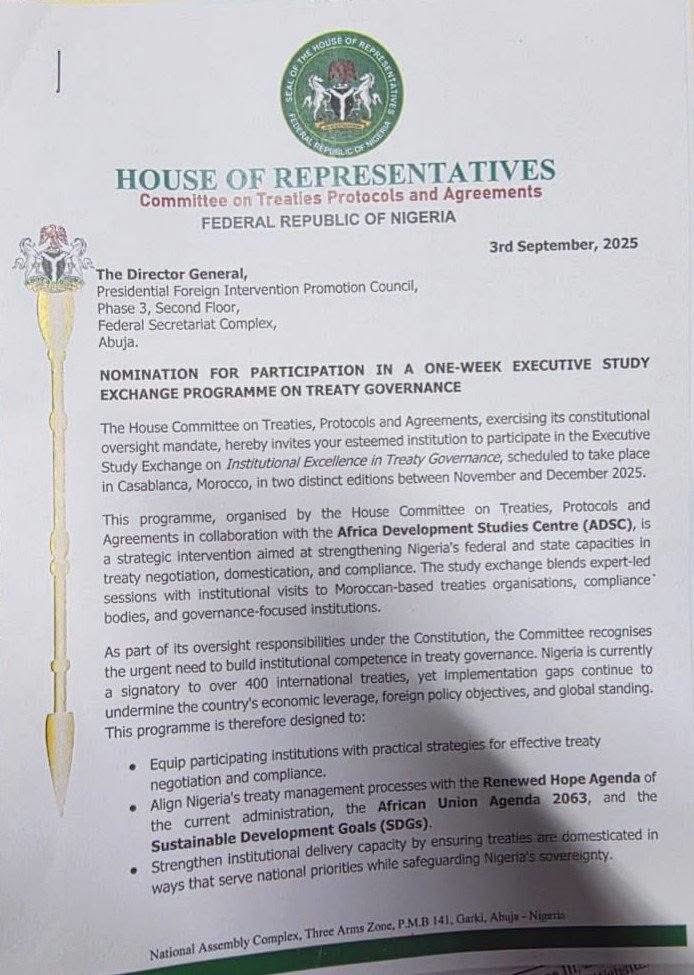
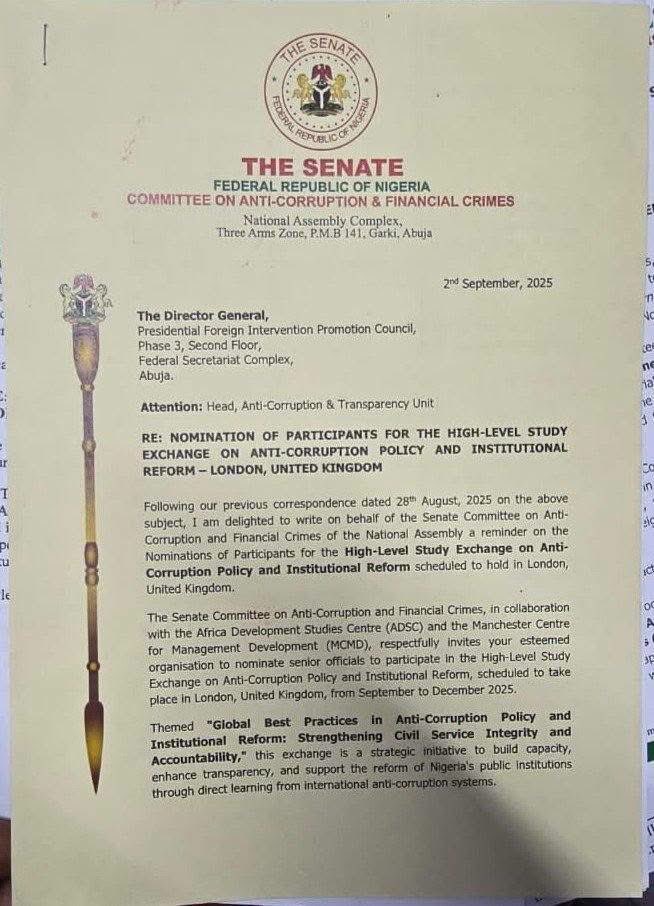
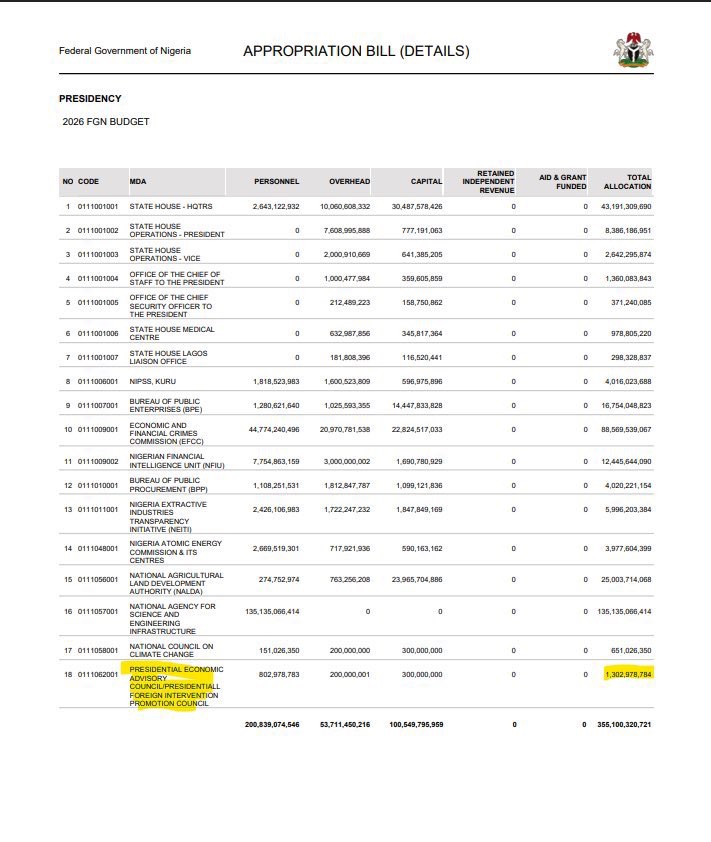
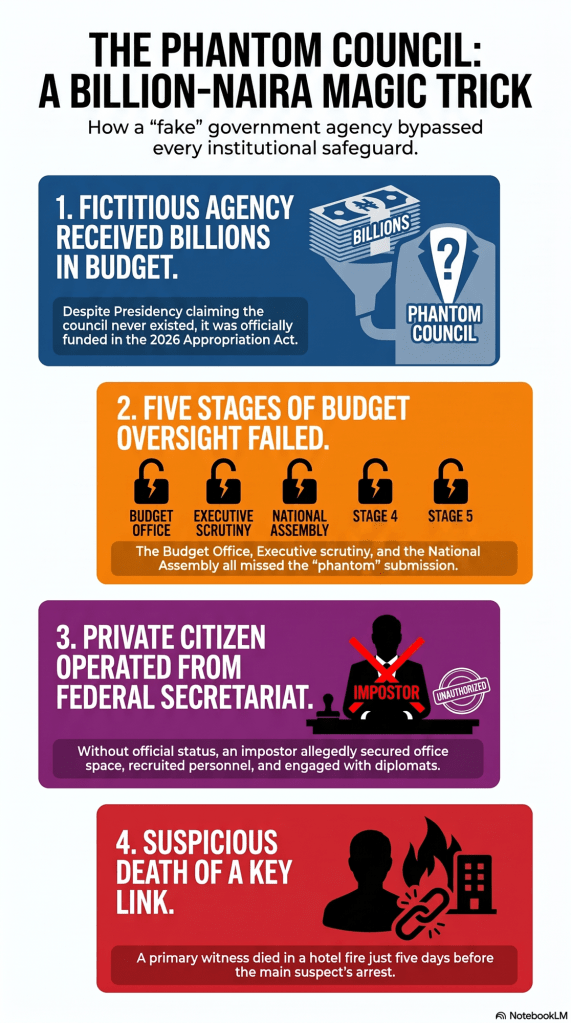
Here is where the satire writes itself, because Adeyemi’s counter-argument is not sentiment it is documentary. If the PFIPC is fictitious, he asks, how does fiction acquire multiple CBN accounts, including foreign-currency holdings, over 300 staff purportedly cleared by the Head of the Civil Service, and budgetary appropriation exceeding ₦1.3 billion? More pointedly still, he insists the agency appears on pages 50 and 51 of the 2026 Appropriation Act itself a document that, unlike a press statement, requires presidential signature to become law. A coalition of civil society actors has since confirmed the budget line is real enough to warrant investigation, even while dismissing Adeyemi’s own claim to legitimacy.
This is the delicious paradox at the centre of the affair: the Presidency’s strongest evidence against Adeyemi that he is a fraudster with 34 bogus accounts is not obviously incompatible with his strongest evidence against the Presidency, which is that somewhere in the machinery of government, someone with real signing authority let a fictitious agency draw real money. Both things can be true. Nigeria has never lacked room for two frauds occupying the same filing cabinet.
Closing Argument
Former Vice President Atiku Abubakar has now waded in, calling for Gbajabiamila’s suspension pending investigation, which the Presidency has dismissed as opportunism from a man who, one senses, will call for the resignation of anyone standing between him and 2027. Meanwhile Adeyemi, awaiting trial on forgery charges, continues holding press conferences with the theatrical confidence of a man who knows that in Nigerian public life, the appearance of persecution is often more useful than the substance of innocence.
Whether Adeyemi is a con artist who accidentally stumbled into a genuine budget-line scandal, or a genuine appointee now being retroactively erased by an embarrassed Presidency, is a question only a court or a considerably braver auditor-general can answer. What is not in dispute is this: in a country where ghost workers have drawn salaries for decades, a ghost agency drawing ₦1.3 billion was perhaps always the natural next stage of institutional evolution. Nigeria did not invent the ghost. It simply gave it a budget line, an office on the second floor, and apparently a foreign currency account.
 Centre for Nigeria Progress