

The untold story of John Henry Clavell Smythe and the origins of Black migration to Britain
Sometimes history is not wrong. It is simply incomplete. And occasionally, the missing piece is preserved in the recollections of a son telling the story of his father.
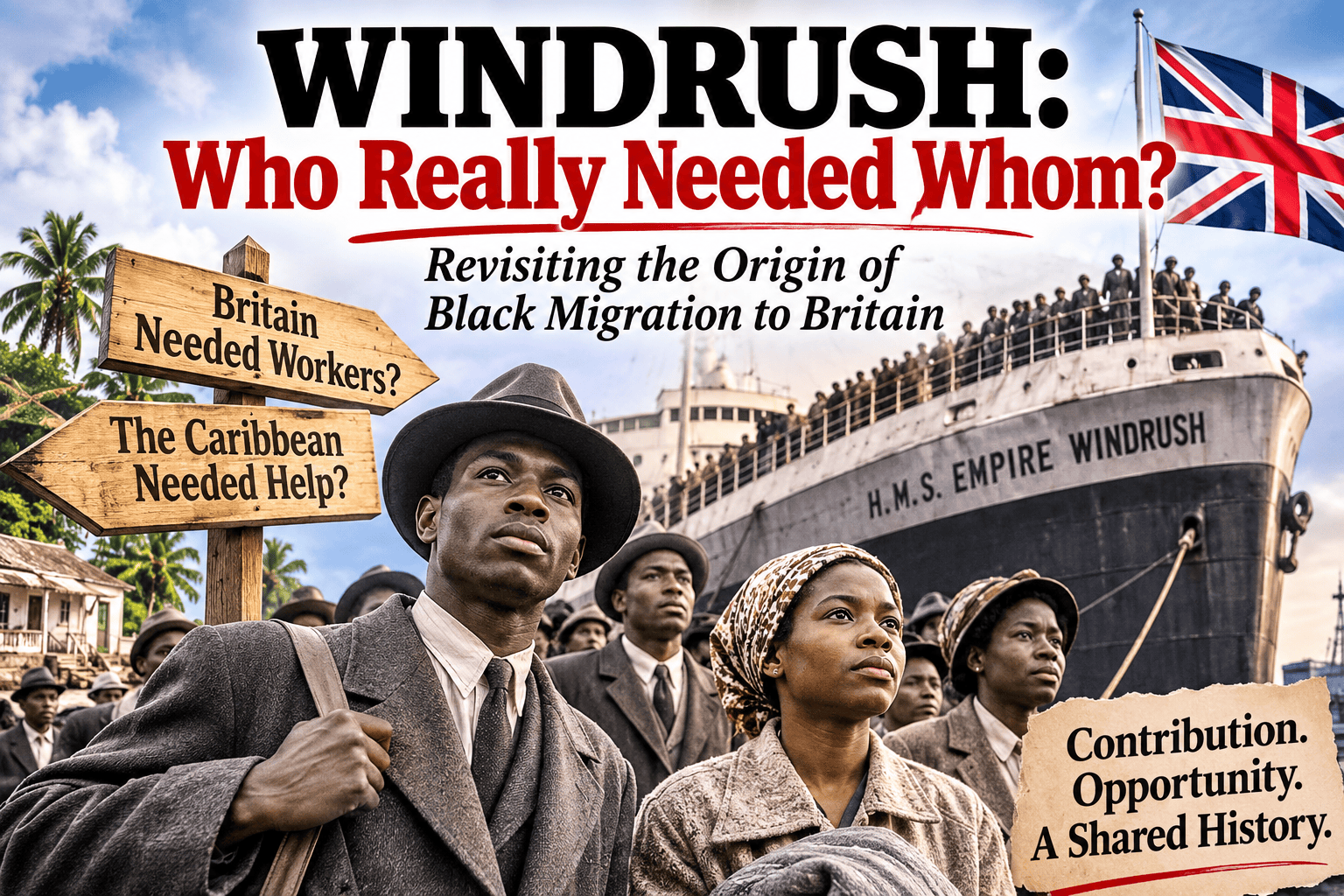
The popular historical narrative of mass Black migration to Britain begins with the arrival of the Empire Windrush at Tilbury Docks on 22 June 1948. The event has become a defining moment in modern British history and the beginning of what is popularly known as the Windrush Generation.
The familiar explanation is that Britain, devastated by the Second World War, desperately needed manpower to rebuild its economy and restore its public services. Having exhausted much of its domestic workforce through military mobilisation and wartime casualties, Britain looked towards its colonies, particularly the Caribbean, to fill the enormous gaps in its labour market.
The Caribbean answered the call, and the arrival of the Windrush became the enduring symbol of that relationship.
But there is another account of the circumstances that produced that historic voyage. It is a counter-narrative that deserves attention, particularly because it comes through the personal history of a man who was directly involved in the events.
His name was John Henry Clavell Smythe.
The man behind the counter-narrative
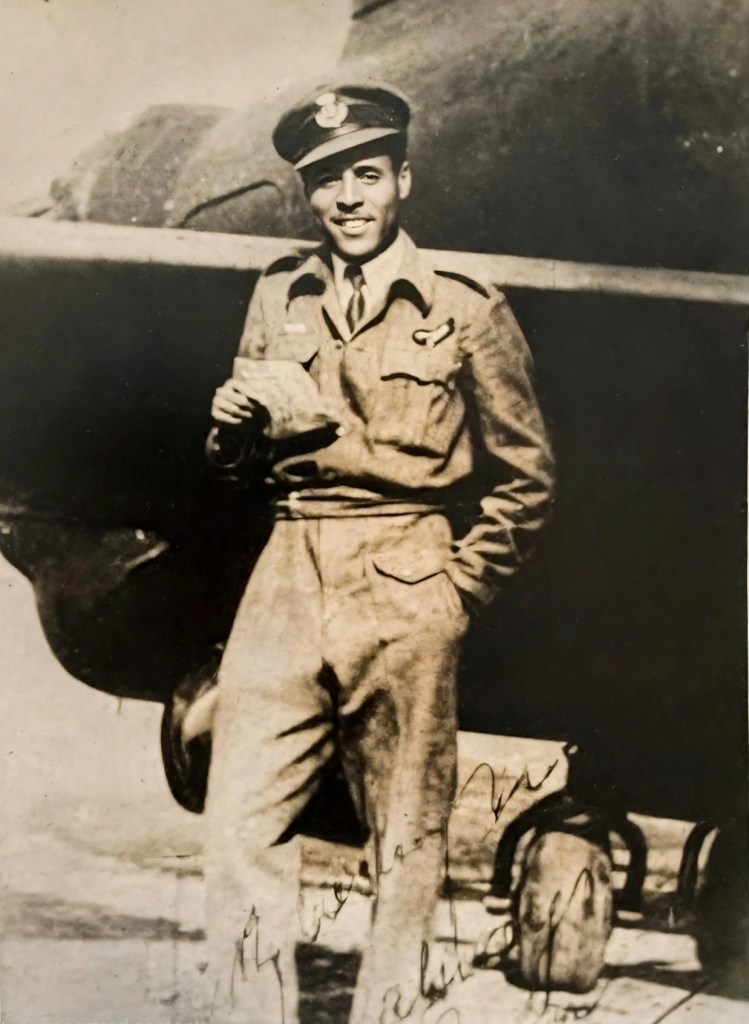
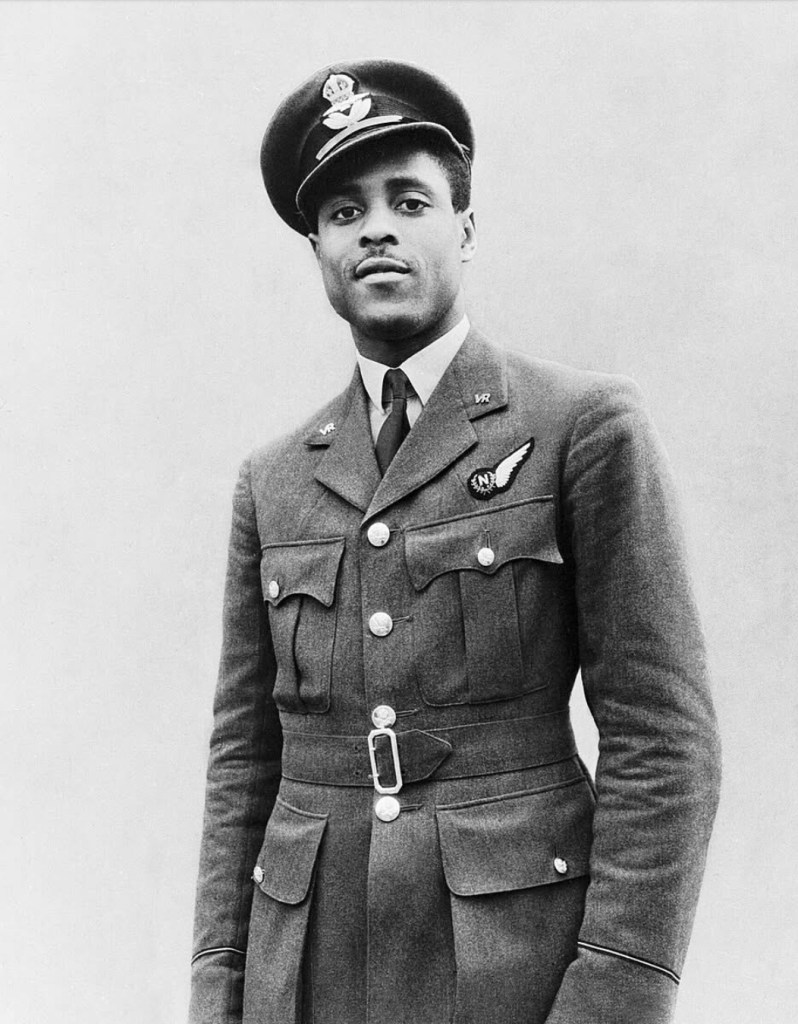
John Henry Clavell Smythe (1915–1996) was a Sierra Leonean, a Royal Air Force officer during the Second World War, and subsequently a distinguished barrister who became Attorney General of Sierra Leone.
His life was extraordinary even before his association with the Windrush.
Smythe joined the RAF during the Second World War and became a navigator in Bomber Command. He flew missions over Nazi Germany until his aircraft was shot down in November 1943. He was captured and spent approximately 18 months in a German prisoner-of-war camp before his eventual liberation.
Following the war, he continued his association with the RAF and became involved with the Colonial Office, where he was responsible for the welfare of demobilised African and Caribbean servicemen.
It was this responsibility that brought him aboard the Empire Windrush in 1948.
His story has been preserved in a particularly interesting way. His son, Eddy Smythe, has spoken publicly about his father’s experiences, including in an interview published by the London Museum and in a documentary-style personal account.
The son’s recollections offer something that conventional historical summaries sometimes lack: the human experience of the individual who found himself at the centre of an extraordinary historical development without necessarily appreciating its eventual significance.
The voyage that changed British history
The Empire Windrush did not initially set out from Britain with the primary intention of transporting Caribbean migrants to fill Britain’s labour shortages.
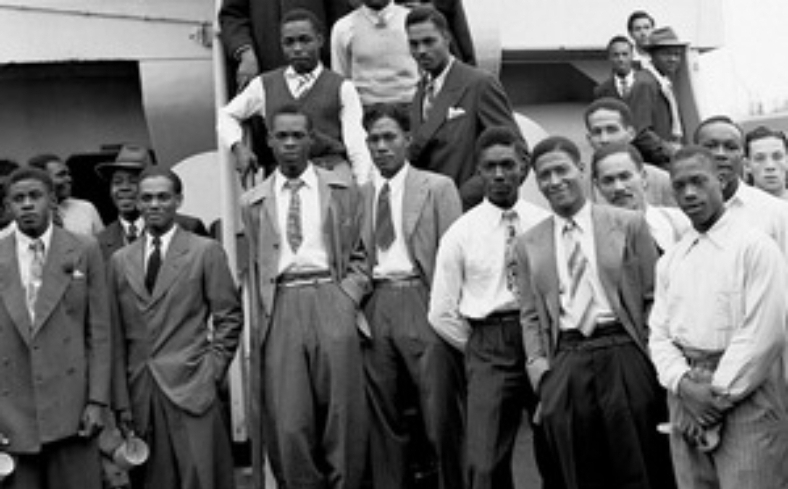
It was sent to the Caribbean to repatriate former servicemen, including approximately 500 West Indian personnel who had served in the Royal Air Force during the war.
Smythe was the senior officer responsible for the servicemen on this voyage.
The ship departed Southampton in May 1948, travelled through the Caribbean and eventually reached Jamaica.
It was there that the circumstances surrounding its return journey took an unexpected turn.
According to the account given by Eddy Smythe, when the ship reached Jamaica, a labour officer came aboard and explained the difficult economic circumstances facing the island. The returning servicemen would encounter serious difficulties finding employment if they remained in Jamaica.
The island’s economy was struggling, and there were insufficient employment opportunities to accommodate the returning men.
This was not simply a question of soldiers coming home after the war. It was a question of what awaited them when they got there.
The Jamaican labour officer asked whether arrangements could be made for the men to return to Britain.
Smythe, as the senior officer responsible for the servicemen, contacted the Colonial Office in London. He was asked to consider the circumstances and make a recommendation.
His response was consequential.
He recommended that the men be allowed to return to Britain, where they could pursue retraining and employment opportunities.
The Colonial Office agreed.
Smythe and the ship’s personnel then undertook the task of speaking to the servicemen, assessing their skills and qualifications and explaining that employment opportunities existed in Britain, although life would not necessarily be easy.
The men agreed to return.
And so, what had begun as a voyage to repatriate former servicemen became the journey that would acquire an entirely different place in British history.
The Windrush returned to Britain carrying the servicemen and hundreds of other passengers, including Caribbean civilians who had purchased tickets for the journey.
The ship arrived at Tilbury on 21 June 1948, with disembarkation beginning the following day.
A historic migration had begun.
A different interpretation of who needed whom
This account changes the emphasis of the familiar narrative.
The conventional understanding is that Britain needed workers and therefore encouraged its Caribbean colonies to send manpower to help rebuild the country.
The Smythe account introduces another dimension.
Jamaica had its own economic difficulties. The returning servicemen faced limited employment prospects, and the Jamaican authorities were concerned about the consequences of absorbing them into an already struggling economy.
It was therefore not simply Britain looking for workers. There was also a Caribbean society seeking a practical solution to the economic difficulties confronting its returning servicemen.
In this particular episode, the initiative to facilitate their return to Britain emerged from circumstances encountered in Jamaica.
It is important not to overstate the argument. The evidence does not establish that all Caribbean migration was initiated by colonial governments or that Britain had no interest in Caribbean labour. Nor should the circumstances of the servicemen be confused with the motivations of all the civilian passengers.
But the Smythe account does challenge the simplistic proposition that Britain alone initiated the movement.
It suggests that the migration was born out of an intersection of economic interests and circumstances on both sides of the Atlantic.
Britain needed manpower. Jamaica needed employment opportunities for returning servicemen. The men themselves needed livelihoods and a future.
In that sense, the relationship was reciprocal.
The irony of imperial citizenship
There is another dimension to this story that deserves attention.
Many of the men who travelled to Britain had already served the British Empire during the Second World War. They had risked their lives fighting Nazi Germany and defending a political order that proclaimed freedom, democracy and the rights of peoples.
They were not strangers to Britain.
They were subjects of the same empire whose survival they had helped secure.
Yet, after the war, some returned to Caribbean societies that could not offer them adequate employment, while others encountered racial discrimination and social hostility in Britain.
The British Nationality Act 1948, which created the status of Citizen of the United Kingdom and Colonies, was enacted in the same year as the Windrush arrival. These citizens had legal rights to enter Britain.
But legal entitlement and social acceptance were two different things.
The irony is difficult to miss. Britain had accepted the service of its colonial subjects during the war, but sections of British society were less comfortable accepting their presence in peacetime.
The Windrush Generation would subsequently experience discrimination in housing, employment and everyday social life.
The later Windrush scandal, in which lawful residents were wrongly classified as immigration offenders and suffered devastating consequences, exposed how badly the British state could treat people whose contribution to the country was beyond dispute.
The contribution that changed Britain
Whatever the precise circumstances that brought the passengers to Britain, their contribution is not in doubt.
They entered industries and professions where manpower was desperately needed. They worked in transport, manufacturing, public utilities, healthcare and other essential services.
They helped sustain the newly established National Health Service and contributed to the rebuilding of British infrastructure.
They also brought something that cannot be measured in economic statistics.
They brought culture, music, food, religion, entrepreneurship and a determination to establish better lives for themselves and their families.
They raised generations of British children and helped create the multicultural society that Britain has become.
The contribution of the Windrush Generation was not simply that they filled vacancies in an economy struggling after the war. They helped transform the social and cultural character of the country.
Britain was not quite the same after their arrival.
A son’s testimony and the preservation of history
What makes the story of John Henry Clavell Smythe particularly compelling is the way it has been brought back into public consciousness.
His son, Eddy Smythe, has undertaken the task of preserving and telling his father’s story.
In an interview with the London Museum, Eddy recounts his father’s wartime experiences and his involvement in the Windrush voyage. He also explains that his father did not initially appreciate the historical importance of the decision he had helped make.
It was only when the ship returned to Southampton and the passengers were greeted by considerable public attention that Smythe began to appreciate the significance of what had happened.
There is something rather remarkable about this.
A man who had survived the dangers of wartime bombing missions, endured captivity in Nazi Germany and returned to serve in the Colonial Office found himself involved in an event that would help shape modern British society.
He subsequently trained as a barrister, returned to Sierra Leone, became Queen’s Counsel and served as Attorney General.
Yet his place in British history is inseparable from that voyage.
The son’s recollections give the story a personal dimension that is often missing from the grander national narrative. History is not always made by politicians sitting around Cabinet tables. Sometimes it is made by an officer confronted with an unexpected problem, asked to make a recommendation and making a decision whose consequences extend far beyond his immediate responsibilities.
John Smythe’s story is a reminder of precisely that.
Conclusion: Who really needed whom?
I find this alternative account particularly interesting because it invites us to revisit a familiar historical event without diminishing the contribution of those who made the journey.
The Windrush should not be reduced to a story of Britain generously opening its doors to Caribbean people to rescue its post-war economy.
Nor should we replace that account with an equally simplistic suggestion that the Caribbean alone initiated the movement.
The reality was more complicated.
Britain needed workers. Caribbean territories faced their own economic difficulties. Returning servicemen needed employment and opportunities. Civilian passengers saw the possibility of a better future in Britain.
These circumstances converged in the voyage of the Empire Windrush.
The role of John Henry Clavell Smythe provides an important human explanation of how one part of that story unfolded.
There is also a wider lesson about the relationship between Britain and its former colonies. The empire was not simply a system in which Britain gave assistance and the colonies received it. The relationship involved the movement of soldiers, labour, resources and people in both directions, often according to the changing economic and political needs of the participants.
Perhaps, therefore, the most useful question is not who asked for help first.
It is why we have become so accustomed to telling this history from only one perspective.
The Windrush Generation deserves recognition not because Britain needed them, or because the Caribbean needed them to leave, but because of what they subsequently contributed to the country they made their home.
And somewhere in that history stands John Henry Clavell Smythe, a Sierra Leonean RAF officer whose recommendation on a Caribbean voyage helped shape the beginnings of modern Black Britain.
His son has done us a service by reminding us of his father’s part in that story.
The Windrush was more than a ship arriving at Tilbury. It was the meeting point of two societies in need, and the beginning of a transformation neither could have fully anticipated.

