

There is a particular irony in political movements that spend so much time trying to turn the clock backwards. They eventually discover that history has a rather inconvenient habit of moving forward.
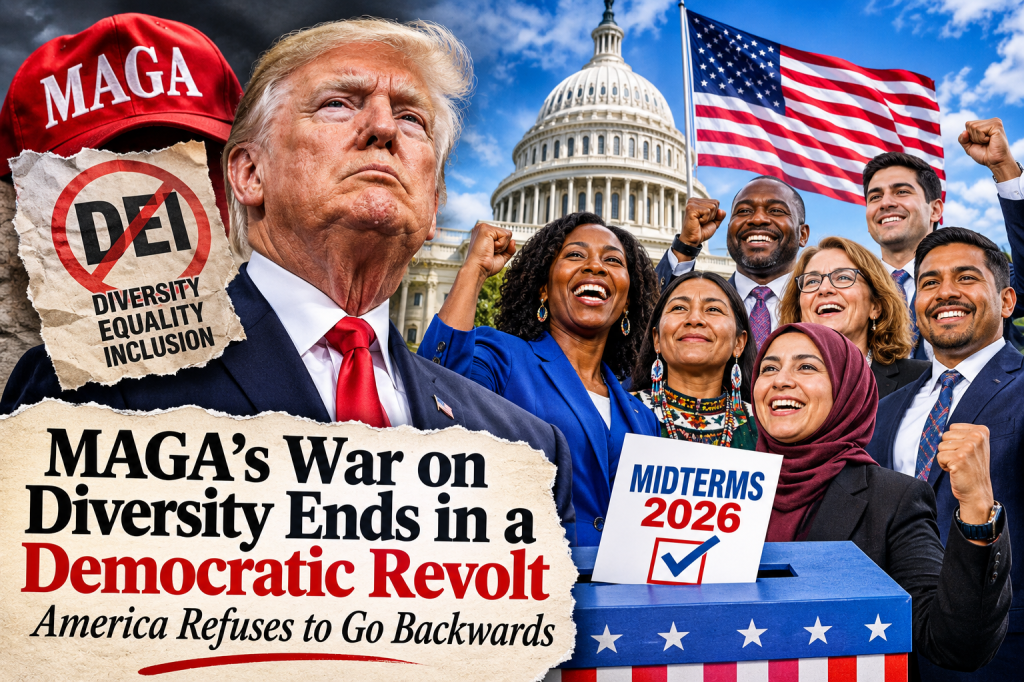
Donald Trump and the MAGA movement entered the White House with an unmistakable political mission: to dismantle what they described as the excesses of diversity, equality and inclusion (DEI). Their campaign was not simply against a set of administrative policies. It was an ideological assault on the idea that American institutions should reflect the diversity of the society they serve.
Under the banner of restoring merit, they set about dismantling DEI programmes, removing officials, restructuring the federal civil service and pursuing changes within the military. The language was familiar: meritocracy, efficiency, patriotism and the restoration of traditional American values.
But beneath the rhetoric was a more troubling proposition. That the presence of minorities and other historically disadvantaged groups in positions of authority was somehow evidence of institutional decline.
The administration’s approach to the federal workforce was particularly revealing. Thousands of public servants departed or lost their positions, with Black federal employees disproportionately affected. The Washington Post reported in October 2026 that approximately one in five federal workers had left government employment since Trump’s return to office. Its analysis found that Black employees had borne a particularly heavy burden.
The question that MAGA never adequately answered was a simple one: if the objective was competence, why did the process so often appear to place political loyalty above professional experience?
Replacing experienced officials with people whose principal qualification appeared to be ideological conformity is not institutional reform. It is institutional vandalism dressed up as patriotism.
A government cannot improve its performance simply by changing the political identity of the people occupying its offices. Competence does not belong to one race, political party, religion or cultural background. Neither does incompetence.
And this is where the MAGA project began to encounter the contradiction at the heart of its own politics.
The electorate delivers its verdict
The November 2026 midterm elections have delivered a political rebuke to Trump and his MAGA movement. But beyond the change in congressional control, the elections have produced something arguably more significant: a remarkable expansion of representation in American political leadership.
The list of historic breakthroughs is extraordinary.
- Keisha Lance Bottoms became the first Black woman elected governor of an American state, winning Georgia.
- Deb Haaland became the first Native American woman elected governor, in New Mexico.
- Peggy Flanagan became the first Native American woman elected to the United States Senate.
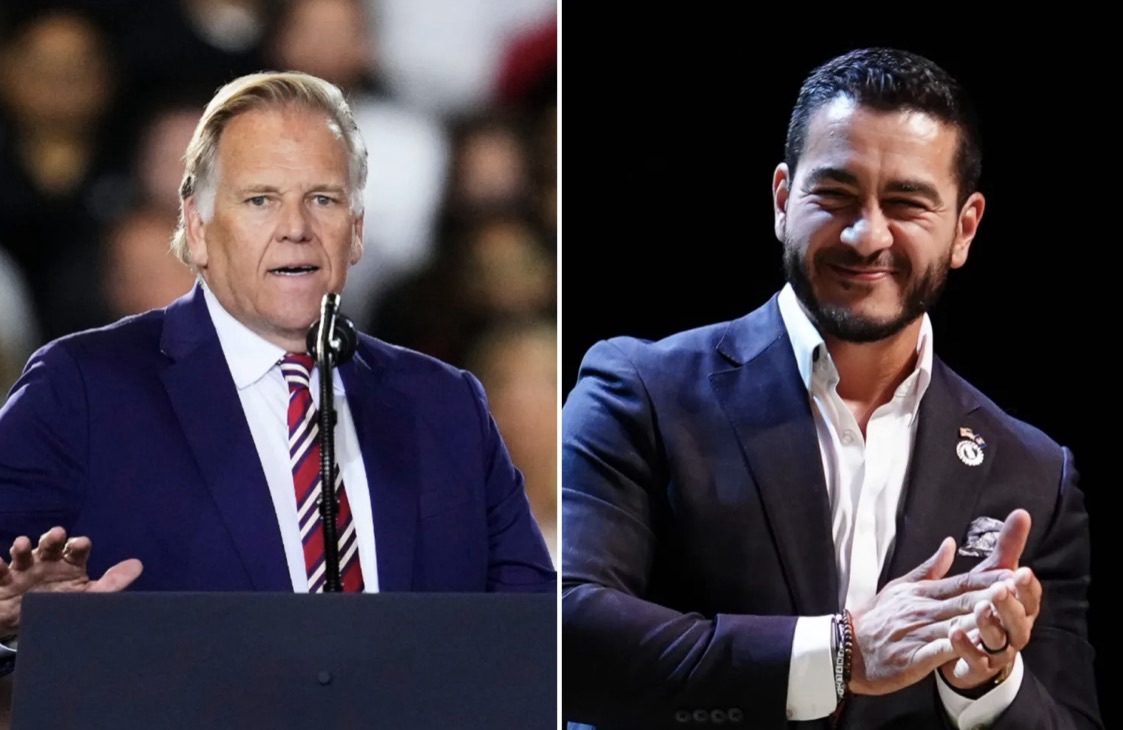
- Abdul El-Sayed became the first Muslim elected to the US Senate.
- Chris Pappas became the first openly gay man elected to the Senate.
- Gina Hinojosa became the first Latina governor of Texas.
- Xavier Becerra became California’s first Latino governor since 1875.
- David Crowley and Aaron Ford made history as the first Black governors of Wisconsin and Nevada respectively.
- Women also achieved historic breakthroughs in several other states, including Tennessee and Ohio.
These are not merely symbolic appointments. They represent the electoral participation and political advancement of people whose communities have historically been underrepresented in American political institutions.
The Democrats also regained control of both chambers of Congress, ending a 16-year period without a Democratic majority in both houses simultaneously.
The Associated Press described the election as a wave of historic firsts. The Associated Press +2
There is an important qualification: not every historic breakthrough belonged to a Democrat. Florida’s Byron Donalds, for example, became the state’s first Black governor as a Republican. This makes the wider point even more interesting. The demand for representation cannot simply be reduced to party affiliation.
The failure of political engineering
The MAGA movement appeared to believe that it could reverse the social and political changes of several generations through executive orders, dismissals, institutional restructuring and ideological pressure.
It underestimated the American electorate.
The United States is a country of immigrants, descendants of enslaved Africans, indigenous peoples, successive generations of European settlers and communities from virtually every corner of the world. Its political identity has never been static.
The attempt to recreate an imagined America, dominated by a particular racial, cultural and political identity, was always going to encounter resistance.
There is also a distinction between dismantling a policy and reversing the social reality that produced it. A president can abolish a DEI office. He cannot abolish the existence, aspirations or voting rights of the millions of Americans who believe that their participation in public life matters.
Nor can he legislate away the constitutional principle of equal protection.
The Fourteenth Amendment does not provide a presidential administration with permission to determine which citizens are entitled to meaningful participation in the affairs of their country.
Indeed, the constitutional promise of equality is much older and deeper than the political slogan of MAGA.
The women and minorities MAGA wanted to marginalise
Perhaps the most striking feature of the midterms is that the political groups MAGA sought to place on the defensive have emerged with renewed electoral visibility.
Black Americans, Native Americans, Latinos, Muslim Americans, gay men and women, and women across racial backgrounds have demonstrated that they are not peripheral participants in American democracy.
They are part of its political mainstream.
The significance of these victories extends beyond the individuals elected. They send a message to younger Americans who may previously have regarded certain positions of political authority as inaccessible.
A Native American girl can now look at the governor of New Mexico and see a possibility that previous generations could scarcely imagine. A Black girl in Georgia can see herself reflected in the state’s highest executive office. A Muslim American can contemplate the Senate without being told that their identity disqualifies them from belonging.
That is the real democratic value of representation.
It does not mean that every person elected will govern well. Political office remains a test of competence, judgment and integrity. But the right to compete for public office should never depend on satisfying the racial or cultural preferences of those temporarily holding power.
The lesson for Trump
Trump has repeatedly presented himself as the architect of a political and cultural restoration. MAGA promised to recover an America that it believed had been lost to liberalism, immigration, multiculturalism and changing social attitudes.
But the midterms suggest that the America of Trump’s imagination is not necessarily the America in which millions of Americans wish to live.
The election was not exclusively a referendum on DEI. Economic pressures, the cost of living, political conduct, governance and dissatisfaction with the administration all contributed to the result. It would be intellectually dishonest to attribute every electoral outcome to one issue.
Nevertheless, the breadth of the historic victories makes it impossible to ignore the political significance of the electorate’s rejection of exclusionary politics.
Trump’s administration may have succeeded in removing people from government offices, dismantling programmes and changing institutional structures. But it has discovered that it cannot simply remove diversity from American society.
There is a difference between having the power to dismiss an official and having the power to determine the future direction of a nation.
The first is an executive privilege. The second belongs to the electorate.
America is not going backwards
The irony of the MAGA experiment is that its campaign against diversity has coincided with an election that has produced some of the most significant advances in political representation in American history.
The movement wanted to make diversity politically suspect. The electorate has demonstrated that diversity can be politically powerful.
It wanted to make minority advancement an object of resentment. Voters have elevated members of those communities into positions of unprecedented authority.
It wanted to restore an imagined past. The electorate has voted for a more representative future.
There is a lesson here for democracies everywhere, including Britain and Nigeria. Political leaders who confuse their temporary control of government with ownership of the state eventually discover that citizens have the capacity to reclaim their institutions through the ballot box.
Democracy is not the property of the people who happen to win the last election. It is a continuing negotiation between generations, communities and competing visions of the future.
MAGA wanted to make America great again by making parts of America feel smaller.
The midterms have exposed the contradiction.
America does not become great by excluding its people. It becomes great when all its people have an opportunity to contribute to its greatness.
And perhaps the most important message from these elections is this: the future of America will not be determined by nostalgia for a past that never existed in quite the way MAGA remembers it.
It will be determined by the people who actually live in America today.

