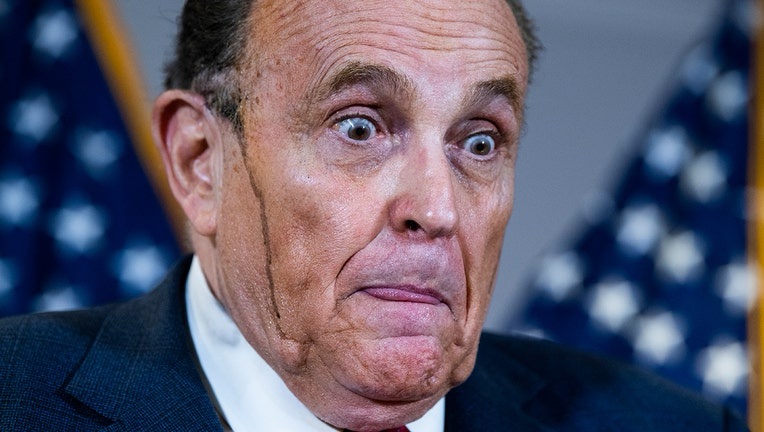
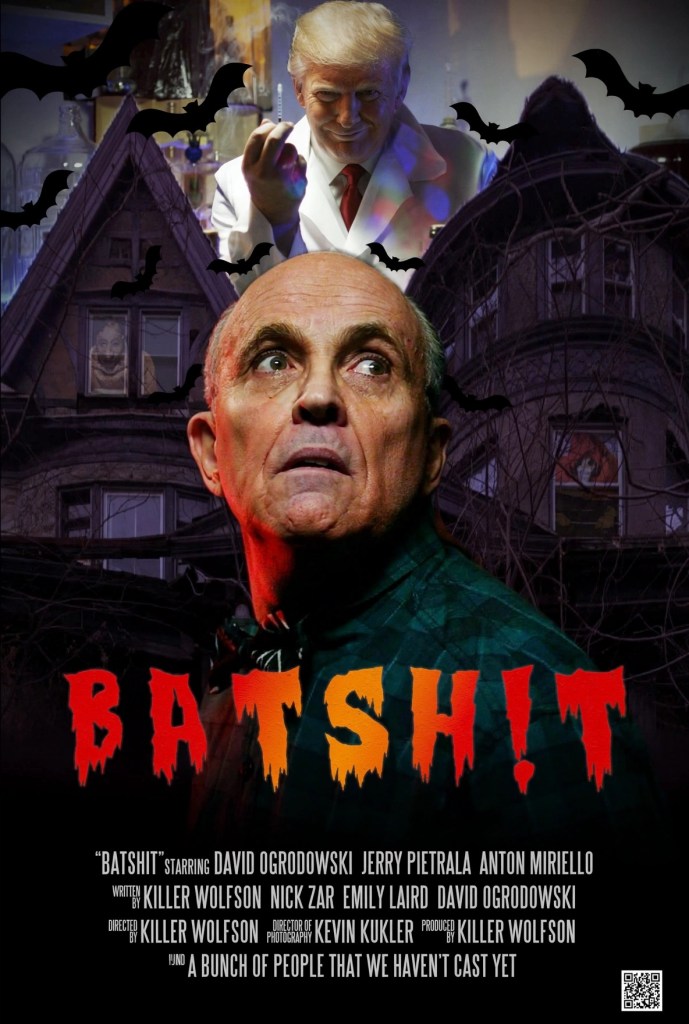
After learning that two of Rudy Giuliani’s associates had been charged with federal campaign-finance crimes, millions of Americans expressed their stunned disbelief that Giuliani had associates.
“By ‘associates,’ do they mean people who actually associate with Giuliani?” Carol Foyler, who lives in St. Louis, said. “This whole story doesn’t add up.”
“I read that these quote-unquote associates of Giuliani’s were actually business associates,” Tracy Klugian, of Butte, Montana, said. “If that means he was paying them a lot of money to associate with him, that could explain everything.”
“It said on the news that these associates were foreign-born,” Kevin Lockdale, of Portland, Maine, said. “Maybe they don’t speak English too well and so they don’t realize that everything Giuliani says is batshit. I mean, I know I’m grasping at straws, but I’m trying to make sense of this whole associates thing.”
Harland Dorrinson, a clinical psychologist who has done a ten-year study on the social isolation of despised people, said that the existence of Giuliani’s two associates should give “hope to the detestable” everywhere. “Honestly, if Giuliani can have associates, anyone can,” he said.
Then, just as the nation was still processing that improbable social breakthrough, President Donald Trump awarded Giuliani the Presidential Medal of Freedom—the nation’s highest civilian honour—in a private White House ceremony on Tuesday. The medal, normally reserved for those who have made “especially meritorious contribution” to the security or national interests of the United States, world peace, or significant cultural endeavours, was draped around the neck of a man who has been disbarred in two jurisdictions for false statements about the 2020 election, hit with a massive defamation judgment for smearing election workers, and required a presidential pardon to wipe away criminal exposure from the same chapter of American history.
The reaction was immediate and, in its own way, consistent.
“First he has associates,” muttered Foyler. “Now he’s got the Medal of Freedom. What’s next—someone claiming he has friends?”
Klugian was more analytical. “I can almost understand the associates if money was changing hands. But the highest civilian award? From Trump? That’s not association. That’s a mutual endorsement of each other’s résumé. Two unhonourable men—one giving, the other receiving—give a lie to the award. The medal doesn’t elevate them. They just drag the medal down to their level and make it look like costume jewellery.”
Lockdale tried the foreign-language theory again, without success. “Maybe the people who designed the medal don’t speak English either and thought ‘Presidential Medal of Freedom’ was just a fancy way of saying ‘participation trophy for loyal service in the face of overwhelming evidence.’”
Dorrinson, the psychologist of the detestable, updated his findings. “This changes the entire field. If Giuliani can not only have associates but receive the highest civilian honour from a man whose own relationship with truth, courts, and institutional norms has been… let’s call it complicated… then the isolation of the despised is over. Hope is no longer a theory. It is policy. The rest of us merely have to wait our turn for the next private Oval Office ceremony.”
Giuliani, for his part, declared himself “honoured and humbled,” sharing the credit with “all the men and women who worked with me, disagreed with me, and loved me.” The White House framed it as recognition for a “lifetime of service.” Trump had previewed the award more than a year earlier, calling Giuliani “the greatest Mayor in the history of New York City, and an equally great American Patriot.”
The public, still reeling from the earlier revelation that the man actually had associates, largely treated the medal as confirmation rather than contradiction. After all, if the universe can stretch far enough to give Rudy Giuliani two people willing to associate with him in a professional capacity, it can certainly stretch a little further and let one unhonourable man hand another unhonourable man a shiny medal that once meant something.
In the end, the award does not so much honour the recipient as reveal the giver. And the two of them, standing there together, do not so much elevate the medal as prove that even the highest civilian honour can be made to look like a participation ribbon once the wrong pair of hands is involved.
Hope, as the psychologist noted, remains available to the detestable everywhere. Just bring your own neck.

