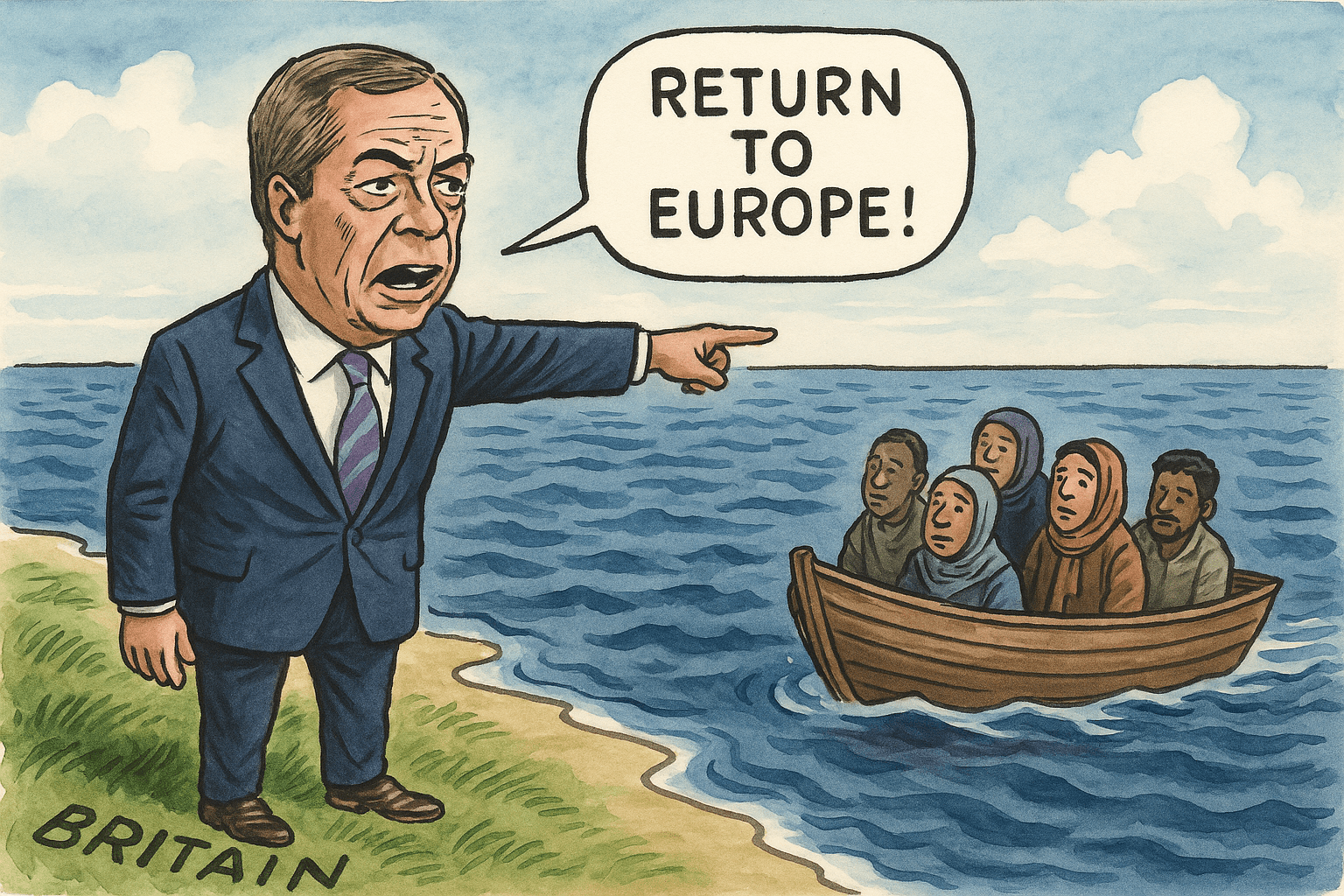
The BBC, Farage, and the Curious Case of Political Normalisation

There was a time when being politically radioactive in Britain meant you were treated like a dodgy kebab at 3 a.m.—acknowledged, perhaps, but never recommended. Today, however, one could be forgiven for thinking that political quarantine has been replaced with a BBC studio slot and a polite nod. Enter Nigel Farage and his vehicle, Reform …

Aid, Trade, and the Theatre of Generosity by Lawson Akhigbe

There is something almost theatrical about the way “aid” is discussed in the West. When the average voter in the United States or the United Kingdom hears that their government has sent development assistance to a country like Nigeria, the reaction is predictable: a mix of irritation, suspicion, and the familiar refrain—“why are we giving …

Walking in the Sunshine

What's the most fun way to exercise? Pick up one’s AirPod Max, sunglasses, walking shoes and head out strolling to Afro beats. From my gate to the countryside taking in air, seeing places you can’t see from driving, almost busting out dancing to Divido but self respect retains one, while a cheeky smile dancings around …

The Presidency Without a Mute Button: A Field Guide to Bola Ahmed Tinubu by Lawson Akhigbe

If governance were a smartphone, one suspects Bola Ahmed Tinubu would have long ago disabled the “silent mode,” misplaced the “settings” icon, and uninstalled the app called “optics.” What remains is a political operating system that runs at full volume, with push notifications enabled, and absolutely no parental controls. This is not, strictly speaking, illegal. …

Ben Murray-Bruce: When Debt Meets “Defection Doctrine” by Lawson Akhigbe

https://videopress.com/v/ZkyR63Nr?resizeToParent=true&cover=true&preloadContent=metadata&useAverageColor=true Nigerian politics has many unwritten rules, but one of the most enduring is this: alignment determines intensity. The case of Ben Murray-Bruce is not novel—it is textbook. Strip away the rhetoric, ignore the official denials, and simply follow the chronology. What emerges is less a scandal and more a familiar institutional pattern. The “Before”: …