If you are an African policymaker/technocrat/leader who has been following the World Bank’s development advice for the last say 30 years, this finding would shock you.
The World Bank, Industrial Policy, and Africa by Dr Fikayo Akeredolu



Reporting News and Opinions
If you are an African policymaker/technocrat/leader who has been following the World Bank’s development advice for the last say 30 years, this finding would shock you.

Scotland has a parliament, a flag, a football team that loses with tremendous dignity, and roughly the population of Lagos’s Ikeja Local Government Area. The Yoruba nation and I use the word advisedly has an empire’s worth of history, a written and oral constitutional tradition running from Ile-Ife through the Oyo Mesi and the Alaafin’s checks and balances, a diaspora spanning three continents, and something in the region of forty million native speakers. One of these is routinely described in the Financial Times as a nation debating its constitutional future. The other is routinely described, by the same publication, as a tribe engaged in an ethnic dispute. I invite the reader to spot the empirical difference. I have been looking for thirty years and have found only prejudice wearing a monocle.
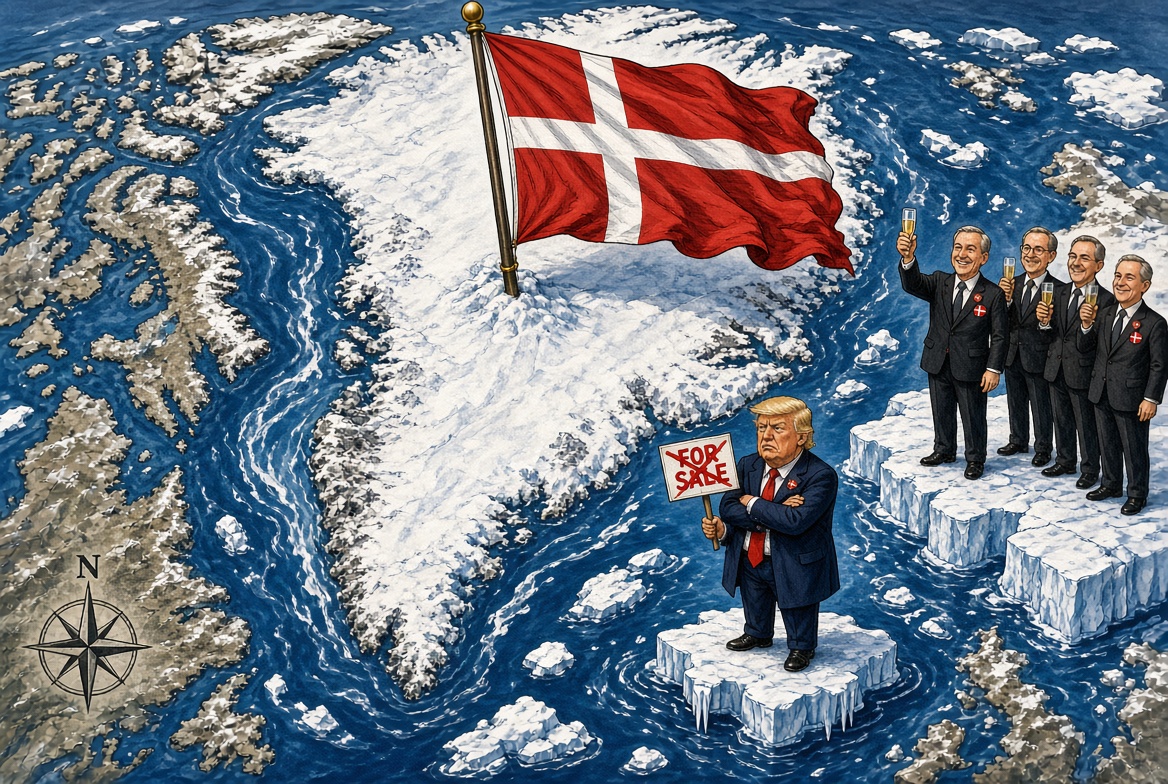
Donald Trump wanted Greenland. Not in the quiet, diplomatic, “let’s explore strategic interests over aquavit and polite nods” manner that grown-up nations occasionally attempt. No. He wanted it the way a toddler wants the biggest toy in the shop window: loudly, immediately, and with zero regard for the fact that it already belongs to someone else.

When a political movement cannot quite explain where Britain should go, it apparently finds comfort in explaining where Britain used to be.
Reform UK’s perspective on Brexit and immigration is central to its identity: Brexit was meant to deliver control over borders and lower overall migration, but post-2016 (especially post-2021) governments primarily Conservative, failed to use that control effectively, leading to a non-EU migration surge that the party labels the “Boriswave.” Reform argues this undermined the Brexit promise, strained public services, housing, wages, and cultural cohesion, and necessitates far tougher policies.

