

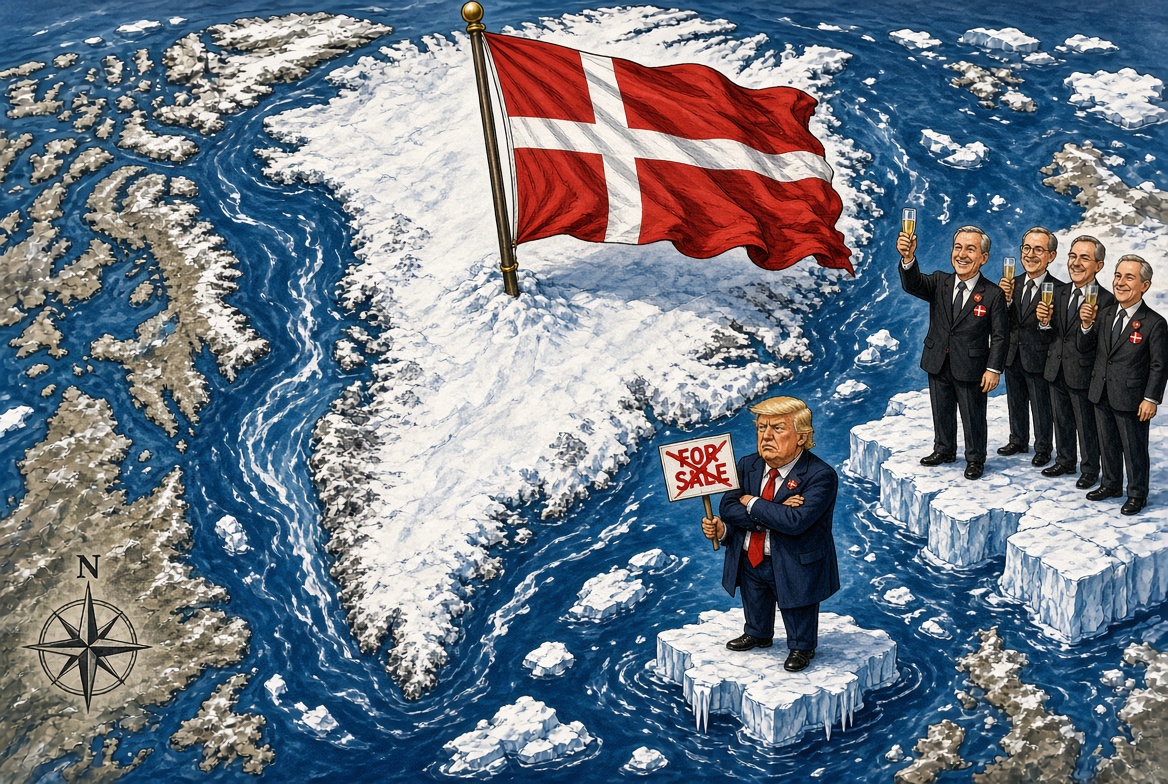
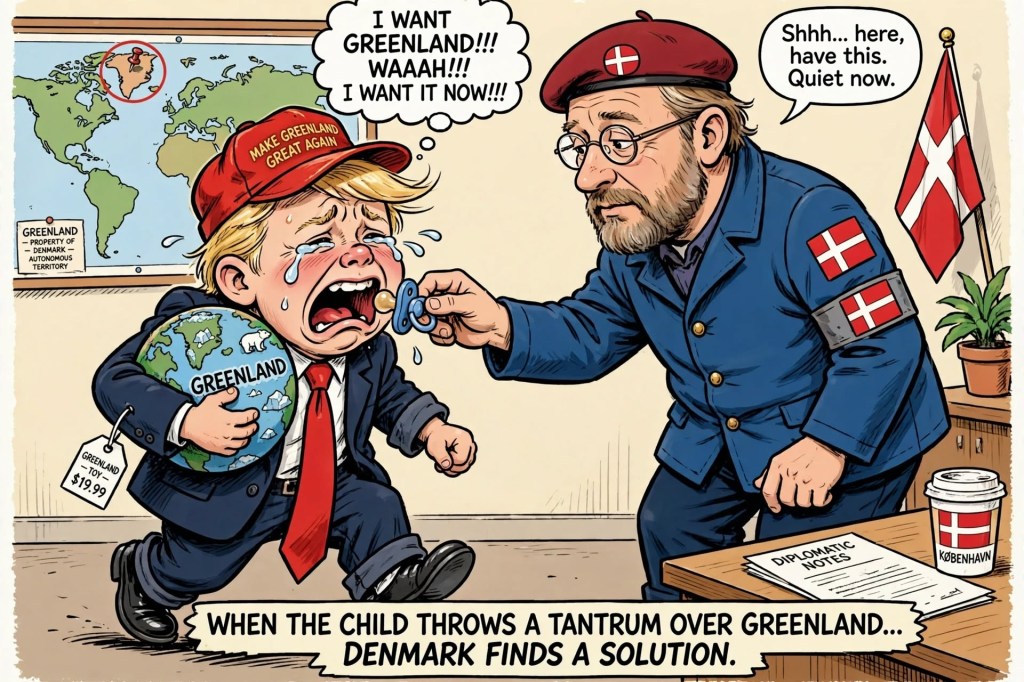
Donald Trump wanted Greenland. Not in the quiet, diplomatic, “let’s explore strategic interests over aquavit and polite nods” manner that grown-up nations occasionally attempt. No. He wanted it the way a toddler wants the biggest toy in the shop window: loudly, immediately, and with zero regard for the fact that it already belongs to someone else.
He made no coherent case. No serious groundwork. No quiet briefings, no careful cultivation of Danish goodwill, no long game of influence and investment. Just the pure, unfiltered demand. And when Denmark failed to genuflect on cue, the response was not the classic Trumpian art of the deal. The art of the deal, in the original brochure, involved leverage, flattery, threat, and the eventual extraction of something valuable while leaving the other party feeling they’d somehow won.
What we got instead was the public schoolyard version: tell the ally to go to hell, then stand there waiting for the applause. Bullying a NATO partner into submission and humiliation is not deal-making. It is performance. It is the political equivalent of shouting “I own this playground” while everyone else continues playing on the actual equipment.
And now, after the inevitable round of headlines, insults, and performative toughness, they have reached an agreement. An agreement that, with impressive precision, preserves the status quo. Greenland remains Danish. The United States does not acquire a vast Arctic territory. The map stays exactly as it was before the demand was made.
Yet watch the victory lap. Watch the claims that this was the plan all along. That the aim has been achieved. That adversaries have been bested. That the deal is done and done brilliantly.
This is the act of the diminishing deal.
It is the man who plants himself on one square metre of the pitch, demands the entire stadium, the surrounding car parks, the concession stands, and the naming rights, then, after much noise and many threats, solemnly accepts the square metre he was already occupying—and declares total victory. The rest of us are expected to applaud the magnificent restraint, the strategic genius, the artistry of it all.
There is a certain dark comedy in watching a self-proclaimed master of the deal celebrate the successful acquisition of what he already had access to, while the thing he actually demanded remains politely, firmly, out of reach. The status quo is dressed up as conquest. The absence of change is sold as triumph. The square metre is rebranded as the entire field.
This is not strength. It is not deal-making. It is the political equivalent of a man insisting he has just purchased the moon after being told, once again, that he may continue looking at it through a telescope.
And the most remarkable part? The diminishing deal still finds an audience ready to hail it as greatness. Because in the end, the performance matters more than the property. The noise matters more than the map. And the square metre, if shouted about loudly enough, can be made to feel like the whole damn field.

