Nigerian: Country Policy and Information notes Guidance used by UK Visas and Immigration to make decisions in asylum and human rights applications from Nigeria

Country Policy and Information Notes (CPIN) for Nigeria are official guidance documents published by the UK Home Office and used by UK Visas and Immigration (UKVI) caseworkers, decision-makers, and immigration judges to assess protection (asylum) and human rights claims from Nigerian nationals.

The Barrister Who Never Went to Law School: Adams Oshiomhole and the Art of Speaking from Both Sides of the Mouth by Lawson Akhigbe

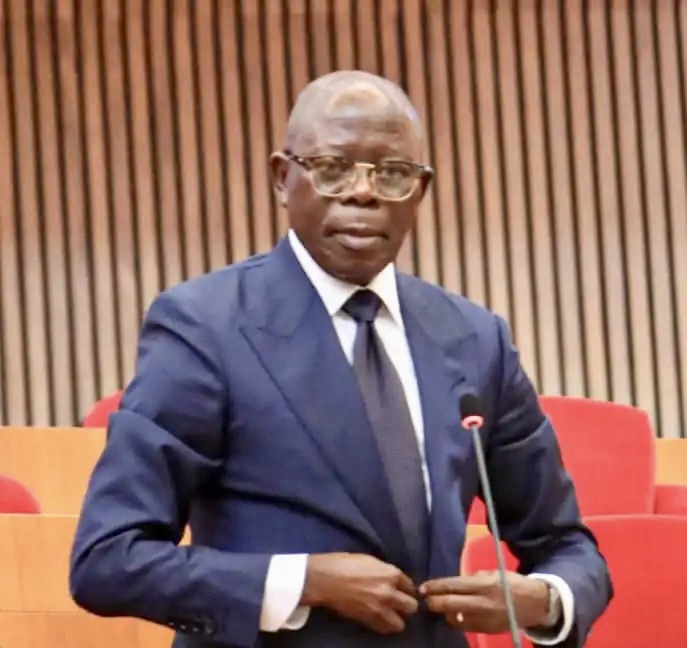
Adams Oshiomhole is that rare Nigerian political specimen who managed to climb from factory floor to labour presidency, state house, party chairmanship and the red chamber without the inconvenience of a published higher educational attainment. Self-taught, they say. One imagines him in some dimly lit corner of history, devouring political manuals by candlelight while the rest of his compatriots were busy collecting certificates that later proved about as useful as a raincoat in the Sahara.

Why thousands of West African children were privately fostered by white families By Wedaeli Chibelushi

From the 1950s to the 1970s, it was not at all uncommon for West African children and babies to be fostered via newspapers and childcare journals. The above advert was placed by a Nigerian mother looking for someone to care for her three-month-old.

Impunity Is Not a Personality Trait: On the Architecture of Nigerian Elite Immunity by Lawson Akhigbe

There is a comfortable explanation for why Nigerian officials behave as though accountability is an imported eccentricity, like fondue or the metric system. The explanation runs roughly like this: Nigerians have an authoritarian political culture, inherited from precolonial kingship and reinforced by military rule, and this culture manufactures leaders who cannot be shamed because shame requires a moral vocabulary the culture never built.

Nigeria’s ‘heroes past’ and the inconvenient truth by David Hundeyin (Repost from 2022)

Call it childhood naivety, youthful idealism or a need to believe in something, but for a long time I believed that the line in Nigeria’s national anthem that goes “The labour of our heroes past shall never be in vain,” actually meant something. Not a lot, mind you, but something. It had to mean something because every society on earth had heroes – icons to look up to because they laid the foundation for tomorrow.