

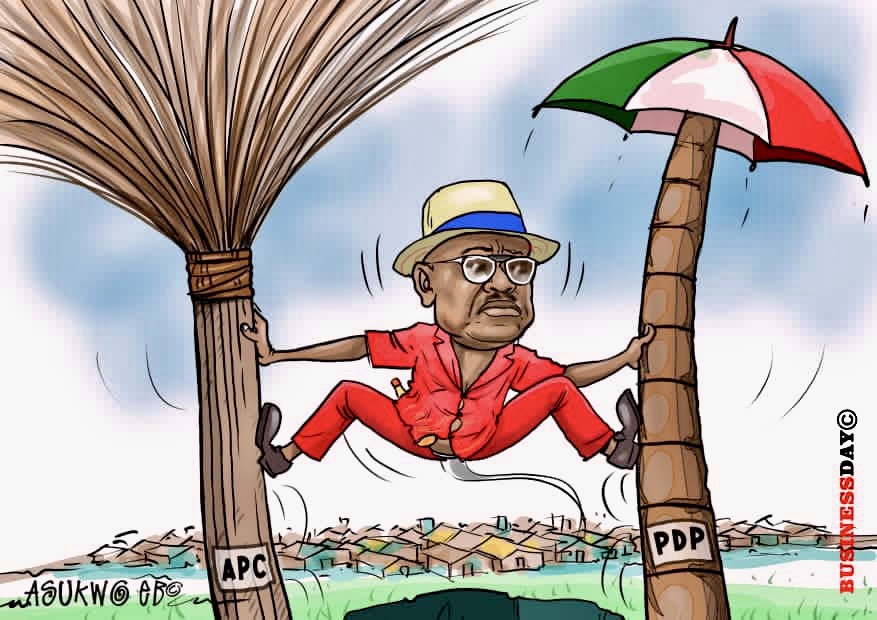
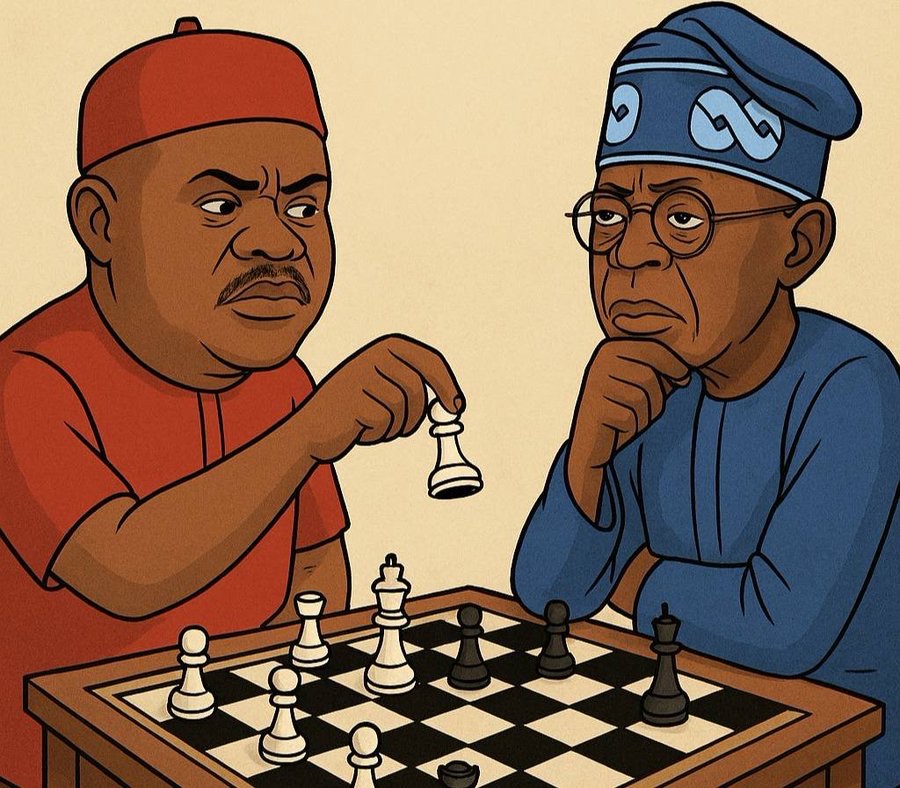
Nyesom Wike, the current Minister of the Federal Capital Territory (FCT) and former Governor of Rivers State, stands out in Nigerian politics as a bold, combative, and highly strategic operator. His recent dominance in PDP internal court battles—securing roughly 14 out of 15 favorable rulings in analyzed cases—has drawn attention to what the article satirically terms the “Abuja advantage” and “judicial hospitality”: leveraging control over prime land, infrastructure projects, and judicial welfare schemes in the capital to create an environment where power, proximity, and perception intersect.
This comparison explores Wike through multiple lenses—political style, use of institutional leverage, godfatherism, pragmatism versus ideology, and public perception—against other prominent Nigerian politicians. It draws on historical patterns, documented strategies, and contextual nuances while acknowledging that Nigerian politics often blurs lines between administrative competence, patronage, and influence.
1. Strategic Use of Position and Institutional Leverage (The “Abuja Advantage” Angle)
Wike’s approach is distinctive because he wields executive control over Abuja—the literal seat of federal courts and land administration—while engaging in high-stakes party disputes. The article portrays him as arriving in court not just with legal arguments but with a “hospitality package” of land allocations, housing projects for judges, and infrastructure that keeps the “bench comfortable.” This creates optics of a “home game,” where victories feel “built plot by plot.” Critics see potential erosion of judicial independence through perception, even if no direct proof of compromise exists; defenders frame it as legitimate welfare improvements in a capital plagued by infrastructure deficits.
- Comparison to Bola Tinubu: Both excel at structural control and long-game influence. Tinubu built a formidable machine in Lagos through economic patronage, urban development, and loyalty networks, later translating it nationally. Wike mirrors this in miniature via FCT: using land and projects for visible transformation while consolidating political capital. However, Tinubu’s leverage was more economic and party-building; Wike’s is geographic and judicial-proximate, raising sharper questions about separation of powers. Tinubu’s style is often seen as quieter empire-building; Wike’s is vocal and confrontational.
- Comparison to Muhammadu Buhari or Kayode Fayemi: The article explicitly contrasts Wike’s high success rate with their “less favourable outcomes” in similar disputes, suggesting they relied more purely on statutes and precedents without equivalent “site-and-service schemes.” Buhari’s era emphasized personal integrity and anti-corruption rhetoric but faced accusations of selective institutional use; Fayemi (as Ekiti governor) navigated opposition politics with intellectualism but without Wike-level administrative proximity to key institutions. Wike appears more transactional and adaptive in real-time power plays.
- Edge cases: In systems where capital cities confer outsized influence (e.g., some federal setups globally), this risks “host capital capture.” Wike’s model amplifies it due to Nigeria’s weak institutional firewalls.
2. Godfatherism, Loyalty, and Betrayal Dynamics
Wike embodies classic Nigerian godfatherism: installing protégés, demanding loyalty, and clashing bitterly when defied. His public rift with successor Governor Siminalayi Fubara in Rivers State echoes broader patterns where godfathers expect resource control post-handover.
- Comparison to Rotimi Amaechi (his own political “boss” turned rival): Both rose in Rivers politics with infrastructural focus and combative rhetoric. Amaechi emphasized projects (e.g., monorail, schools) and aligned with APC; Wike critiques him on corruption while defending Tinubu-era policies. Their war of words highlights personal animus over ideology. Wike’s style feels more pugilistic—he dares suspensions and mocks opponents publicly—while Amaechi projects a more reformist image, though both face accusations of high-handedness.
- Comparison to Olusegun Obasanjo or Ahmadu Bello-era figures: Historical godfathers like Obasanjo shaped successors (with mixed success and later clashes). Wike’s approach is more immediate and localized (Rivers + PDP factions), yet his cross-party pragmatism (supporting Tinubu while in PDP) recalls Obasanjo’s “third-term” influence attempts or post-presidency kingmaking. Unlike ideological patrons, Wike prioritizes outcomes over party purity, labeling rivals like Atiku Abubakar a “serial failure.”
- Broader godfather examples (e.g., Godswill Akpabio, Rabiu Kwankwaso, Chris Uba): These figures anoint and later battle godsons, often leading to violence, abductions, or impeachments. Wike fits the mold but differentiates through sustained court dominance and administrative deliverables in FCT (roads, revocations for public use). Nuances: Godfatherism breeds instability and mediocrity, yet can deliver short-term governance if the patron performs. Wike’s critics cite authoritarian drift; supporters praise his defiance of “impunity.”
Implication: Loyalty in this ecosystem is transactional, not ideological. Wike’s “uncommon steel” (public loyalty to allies or causes) contrasts with frequent defections elsewhere, but his anti-party activities (e.g., backing Tinubu in 2023) fuel perceptions of opportunism.
3. Pragmatism, Performance, and Public Persona
Wike is often called a “performing minister” for FCT infrastructure push, earning praise even from President Tinubu. His blunt, no-holds-barred speeches and willingness to “hold” PDP structures set him apart.
- Vs. Atiku Abubakar or Peter Obi: Atiku represents perennial presidential ambition with business acumen but inconsistent alliances; Wike has mocked him directly. Obi projects anti-establishment reform and youth appeal with less patronage machinery. Wike is the anti-Obi in style: brash, establishment-embedded, and results-oriented over moral posturing. He argues parties must win sub-nationally first, showing pragmatic realism about power.
- Vs. Seyi Makinde or other PDP governors: Recent PDP crises pit Wike’s faction against governors like Makinde, who accuse him of promising to “hold” the party for Tinubu. This reveals Wike as a disruptor willing to fracture for leverage, versus more consensus-seeking figures.
Nuances and edge cases: Performance metrics (e.g., court wins, projects) can mask deeper issues like eroded trust in institutions. In polarized environments, Wike’s visibility boosts short-term relevance but risks long-term isolation if perceptions of “real estate-assisted” influence harden. Related considerations: In weak-rule-of-law contexts, such strategies amplify inequality (access to prime land) and cynicism, yet they can accelerate development where bureaucracy stalls.
4. Implications and Broader Context
Wike exemplifies how Nigerian politicians navigate a hybrid system—formal democracy overlaid with patronage, ethnicity, and resource control. His style risks normalizing “judicial comfort” optics, potentially undermining public faith in courts more than isolated cases elsewhere. However, it also delivers tangible governance (infrastructure) that abstract reformers sometimes neglect.
Comparatively:
- Strengths shared with peers: Administrative delivery (like Tinubu in Lagos or Akpabio in Akwa Ibom).
- Unique risks: Proximity to judiciary in the capital creates unique perception challenges not easily replicated by state-level actors.
- Nuances: Success rates may reflect legal skill + resources, not solely influence. Yet in a country where court outcomes in political cases rarely feel accidental, Wike pushes the envelope.
Overall, Wike is a hyper-pragmatic power realist—less ideological visionary than Tinubu’s machine-builder archetype, more confrontational than bureaucratic survivors like Buhari, and more administratively embedded than pure godfathers like early Uba or Kwankwaso. He thrives on optics of strength and delivery but invites scrutiny over means. In Nigeria’s evolving 2027 landscape, his model could either stabilize factions through results or exacerbate fractures through perceived capture. Politics here rewards those who master “the geometry of power,” but sustainable institutions demand separating comfort from justice. This dynamic invites ongoing debate: effective realpolitik or symptom of deeper systemic vulnerabilities?

