

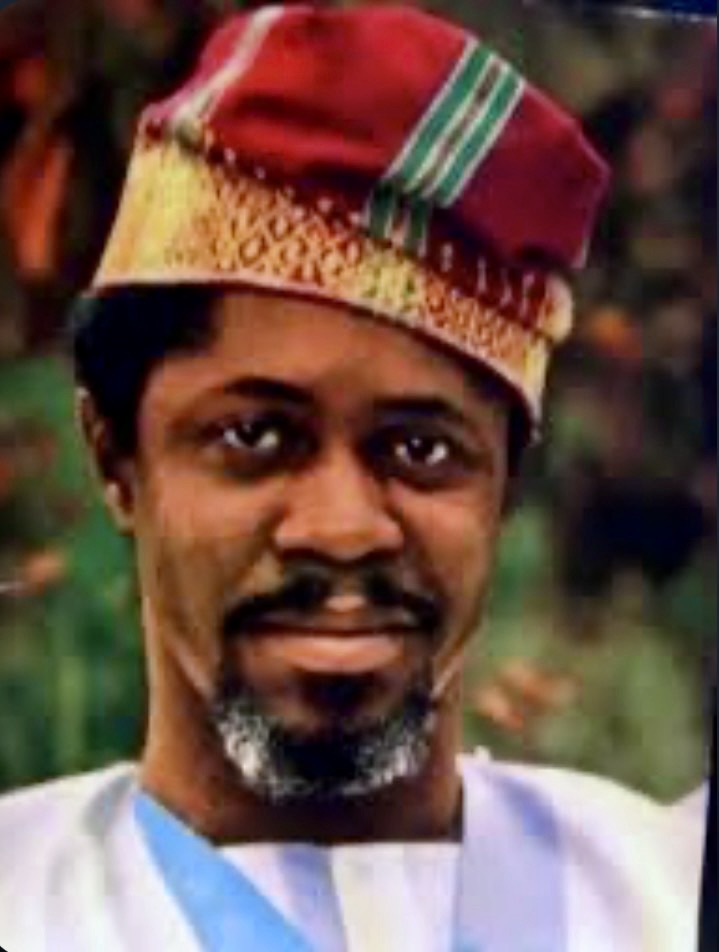
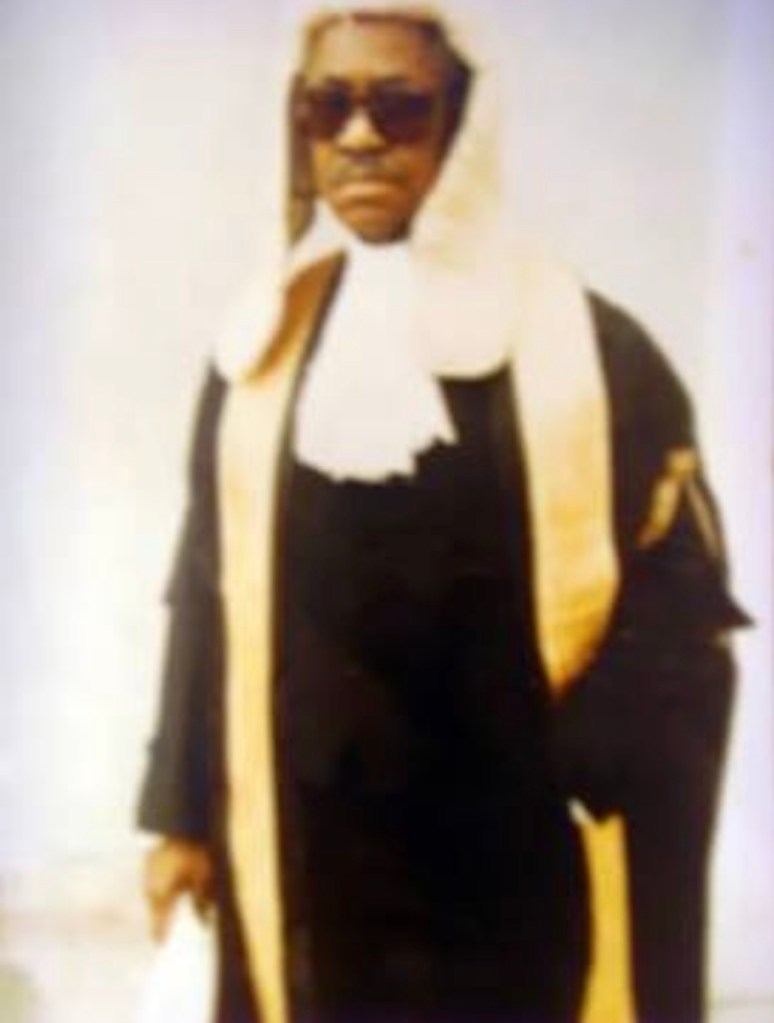
In the theatre of Nigerian political history, certain names dominate the marquee lights. Nnamdi Azikiwe, Obafemi Awolowo, Ahmadu Bello and Tafawa Balewa occupy the front pages of history books. Yet lurking in the corridors of power, often overlooked by popular memory, was a political operator whose influence cut across the ideological and ethnic divides of the turbulent First Republic: Remilekun Fani-Kayode.
Today, the Fani-Kayode name is mostly associated with media theatrics, fiery television appearances, and social media bombardments through his son, Femi Fani-Kayode. But long before the era of hashtags and television soundbites, the elder Fani-Kayode had already carved out a reputation as one of the most intellectually sophisticated and politically connected figures of Nigeria’s formative years.
To understand his impact on the First Republic, one must first understand the Nigeria he operated in: a country stitched together by colonial engineering, driven by regional nationalism, and heading slowly but steadily toward implosion.
The Antecedents: Colonial Nigeria and the Rise of Elite Politics
The roots of Remi Fani-Kayode’s political relevance can be traced to the peculiar structure of British colonial governance in Nigeria.
Colonial Nigeria did not produce a unified political culture. Instead, it produced three dominant regional aristocracies:
- The Northern conservative establishment,
- The Western Yoruba intelligentsia,
- The Eastern nationalist elite.
Politics therefore became less about ideology and more about ethnic balancing, elite negotiations, and access to the machinery of state.
Born into a privileged Yoruba family with strong educational exposure, Remi Fani-Kayode emerged from the class of Western-educated Africans who became indispensable intermediaries between colonial administrators and emerging nationalist politicians. Unlike the populist charisma of Awolowo or Azikiwe, Fani-Kayode represented the quieter but equally powerful tradition of elite statecraft — the men who understood both British institutional logic and Nigerian political realities.
He belonged to a generation of politicians who wore Savile Row suits, quoted British constitutional conventions, and negotiated Nigerian power like barristers settling an inheritance dispute among hostile cousins.
And Nigeria, unfortunately, was precisely that: a hostile inheritance dispute.
The NCNC Connection and Cross-Regional Politics
One of the most fascinating aspects of Remi Fani-Kayode’s career was his ability to operate beyond rigid regional loyalties.
At a time when the Western Region was politically dominated by Awolowo’s Action Group, Fani-Kayode aligned more closely with the National Council of Nigerian Citizens (NCNC), led by Azikiwe.
This was politically significant.
The First Republic is often simplified into a tribal tripolar structure:
- AG for the Yoruba West,
- NPC for the Hausa-Fulani North,
- NCNC for the Igbo East.
But figures like Fani-Kayode complicated this neat narrative. His involvement demonstrated that elite alliances frequently transcended ethnic identity when power calculations demanded it.
He became one of the Yoruba politicians willing to collaborate with the NCNC establishment, helping the party gain legitimacy and footholds outside the Eastern Region. In many ways, he represented an early version of what modern Nigerian politicians call “bridge-building,” though in practice it often resembled sophisticated elite bargaining.
This was not unusual in post-colonial Africa. Across the continent, nationalist movements quickly transformed into coalitions of regional strongmen trying to prevent total fragmentation while simultaneously competing for control of the central state.
Nigeria merely perfected the chaos.
Ministerial Influence and State Formation
Remi Fani-Kayode served in important governmental capacities during the First Republic, including as Deputy Premier of the Western Region and later in federal roles.
His significance lies less in populist mass mobilisation and more in institutional engineering.
While Awolowo focused on visionary regional developmentalism, free education, television stations, industrialisation, Fani-Kayode operated more as a constitutional tactician and political negotiator. He belonged to the class of Nigerian politicians obsessed with one difficult question:
How do you keep Nigeria together without anybody feeling cheated?
No Nigerian government has successfully answered that question since independence.
His influence was especially visible during the growing constitutional crises of the early 1960s. The Western Region became a political war zone after the split within the Action Group between Awolowo and Samuel Ladoke Akintola.
The crisis was not merely ideological. It was fundamentally about:
- access to federal power,
- control of patronage,
- and the survival of regional elites.
Fani-Kayode emerged as one of the intellectual defenders of federal cooperation over Awolowo’s increasingly confrontational opposition politics.
To Awolowo loyalists, this made him part of the “traitorous” establishment enabling Northern dominance.
To his supporters, however, he was a pragmatist trying to stop Nigeria from descending into ethnic warfare.
History would soon prove that the latter fear was not exaggerated.
The Collapse of the First Republic
The First Republic eventually collapsed under the weight of electoral fraud, regional violence, corruption allegations, census disputes, and mutual paranoia among elites.
The Western Region crisis, often called “Operation Wetie” became one of the sparks that ignited military intervention in January 1966.
The tragedy of politicians like Remi Fani-Kayode was that they belonged to a generation attempting to operate British parliamentary conventions inside a deeply unstable post-colonial federation where:
- institutions were weak,
- ethnicity was weaponised,
- and political competition resembled existential warfare.
Nigeria’s elite inherited Westminster democracy but governed a society that had never organically evolved into a single political nation.
It was rather like importing the rules of Wimbledon into a street fight in Mushin.
Everyone looked elegant at the beginning.
Soon enough, chairs were flying.
Historical Reassessment: Villain, Pragmatist or Stabiliser?
Modern Nigerian political memory tends to reward dramatic personalities. Awolowo became an ideological titan. Azikiwe became the grand nationalist philosopher. Ahmadu Bello became the symbol of Northern conservatism.
But the quieter institutional actors often disappear into the margins.
Remi Fani-Kayode deserves reassessment because he embodied a critical but uncomfortable truth about Nigerian politics:
Nigeria has often survived not through idealism, but through elite compromise.
His politics reflected the worldview that the federation could only function if rival blocs continuously negotiated power-sharing arrangements, however imperfect. Critics viewed this as opportunism. Supporters viewed it as realism.
And perhaps both were correct.
The tragedy of the First Republic was not simply that politicians were corrupt or tribalistic. It was that the political architecture itself rewarded permanent suspicion. Every region feared domination. Every election looked like a census. Every alliance felt temporary.
Within that unstable framework, men like Fani-Kayode became political mechanics trying to hold together an engine already overheating.
The Legacy Today
The elder Fani-Kayode’s legacy survives less through monuments and more through the political DNA of modern Nigeria.
Today’s politics still revolves around:
- elite bargaining,
- coalition-building,
- regional balancing,
- federal appointments,
- and negotiated access to power.
The names change.
The methods hardly do.
The First Republic never truly ended psychologically. Nigeria simply replaced agbadas and parliamentary debates with military coups, godfatherism, televised propaganda and social media warfare.
In many ways, the ghosts of that era still sit around every cabinet table in Abuja.
And somewhere among them remains the shadow of Remi Fani-Kayode, one of the republic’s forgotten strategists, remembered less for mass applause than for navigating the impossible mathematics of keeping Nigeria politically stitched together.

