

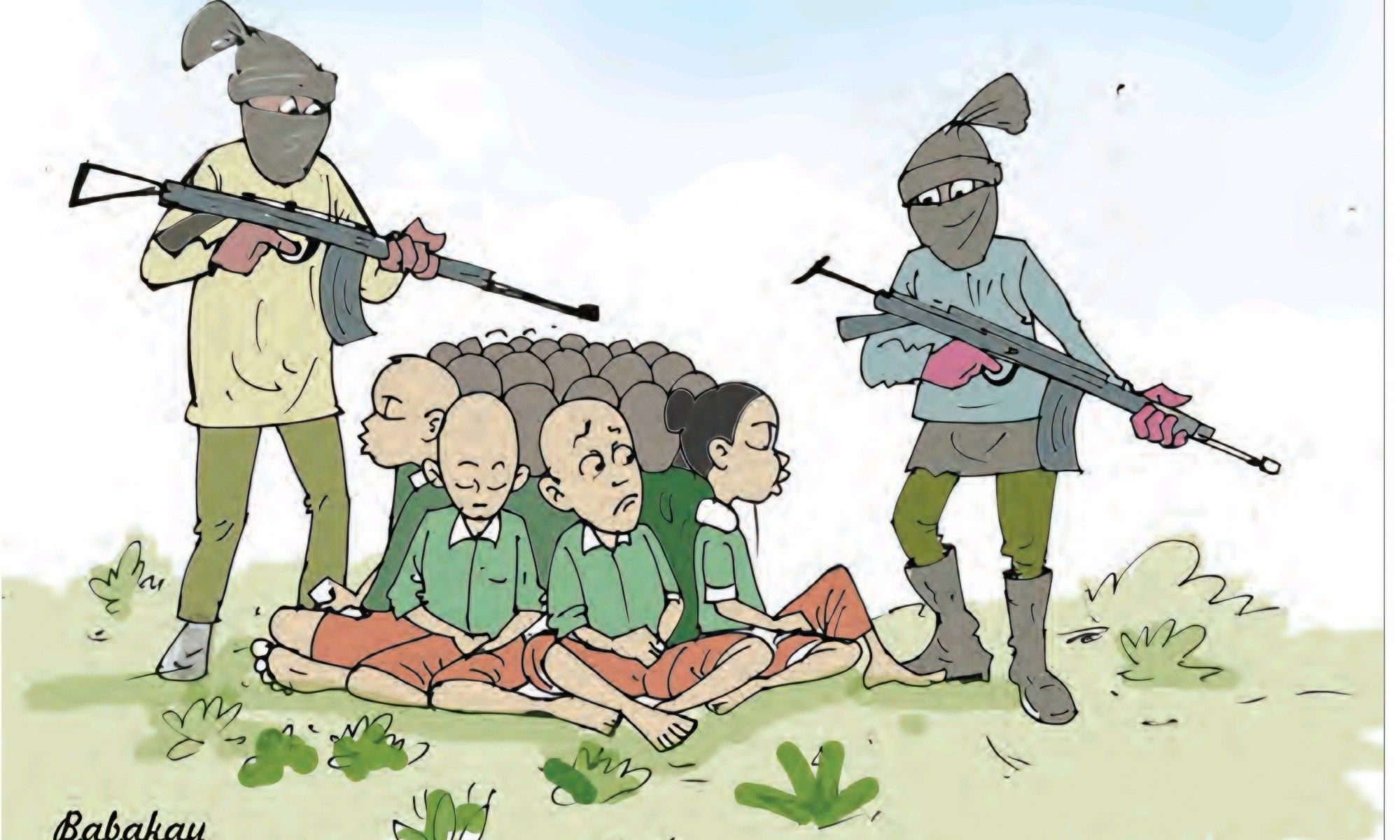

For decades, Nigerians have been told that insecurity is a temporary challenge, a problem that will eventually be defeated through increased funding, new operations, and fresh government initiatives. Yet year after year, the crisis deepens. What if the problem is not simply insecurity itself? What if insecurity has become an economy?
The uncomfortable reality is that kidnapping in Nigeria increasingly resembles a functioning market. In this market, fear is the currency, human beings are the commodities, and safety has become a product available only to those who can afford to buy it.
Between July 2024 and June 2025, nearly 5,000 people were reportedly abducted across Nigeria, with ransom demands totaling approximately N48 billion. These figures reveal something more disturbing than criminal activity. They reveal an organised economic system operating alongside the formal economy.
Safety as a Luxury Good
In every functioning state, security is a public good. Citizens pay taxes, and the state provides protection. The social contract rests on this fundamental bargain.
In Nigeria, however, that bargain is increasingly breaking down.
The wealthy employ armed escorts, live in gated estates, install surveillance systems, and hire private security companies. Businesses employ their own guards. Communities organise vigilante groups. Families contribute money for ransom payments when relatives are kidnapped.
The result is a society where safety is no longer guaranteed by citizenship but purchased through private means.
The consequences are profound. Security ceases to be a right and becomes a luxury product. Those who can afford protection survive. Those who cannot become vulnerable participants in a market of fear.
The Al-Kadriyar Family and the Market Logic of Kidnapping
Few cases illustrate this reality more clearly than the abduction of the Al-Kadriyar family.
The family’s ordeal attracted national attention. Nigerians across social and religious divides rallied in sympathy. Public fundraising efforts emerged to assist in securing their release. Politicians, activists, and ordinary citizens amplified the story.
Yet the reaction of the kidnappers exposed a chilling truth.
Rather than reducing their demands in response to public sympathy, reports indicated that the kidnappers increased their expectations. The attention surrounding the case became a market signal. Public awareness suggested that additional funds might be available. Increased visibility translated into increased perceived value.
This is not the behaviour of desperate criminals acting irrationally. It is the behaviour of market participants responding to incentives.
The kidnappers were effectively pricing the hostage according to demand.
That observation is disturbing because it demonstrates that kidnapping has evolved beyond isolated criminality. It now operates according to economic principles.
The Trillion-Naira Paradox
Successive governments have responded to insecurity with larger security budgets.
Billions became hundreds of billions. Hundreds of billions became trillions.
Yet ordinary Nigerians continue to experience worsening insecurity.
This raises an uncomfortable question: if the security challenge persists despite ever-increasing expenditure, where is the money going?
Investigations and public audits over the years have repeatedly highlighted procurement irregularities, abandoned projects, inflated contracts, ghost expenditures, and inefficient deployment of resources. Analysts frequently argue that only a fraction of allocated security funding reaches personnel operating on the front lines.
The result is a paradox.
The insecurity crisis justifies larger budgets. Larger budgets create larger contracts. Larger contracts create larger opportunities for patronage and political influence. The continuation of insecurity therefore sustains a network of financial and political interests.
This does not mean officials deliberately create insecurity. Rather, it means that the system often rewards spending more than solving.
In such an environment, the absence of a solution becomes more profitable than the presence of one.
The Privatization of Survival
Nigerians have become experts at adapting to state failure.
When public electricity became unreliable, people bought generators.
When public water systems failed, people drilled boreholes.
When public healthcare deteriorated, those who could afford it sought private hospitals.
When education declined, private schools emerged.
Now, when security fails, families crowdsource ransom payments and communities organise their own protection.
This adaptation demonstrates remarkable resilience. It also creates a dangerous political consequence.
Every private solution reduces pressure for a public solution.
A citizen who buys a generator no longer depends entirely on public electricity. A family that pays ransom through crowdfunding bypasses the state’s security obligations. A community vigilante fills a gap that should be occupied by professional law enforcement.
Gradually, the extraordinary becomes normal.
What should be a national scandal becomes routine.
Citizens stop demanding functioning institutions because they have learned to survive without them.
At that point, they cease acting as citizens and begin behaving as subjects—individuals who must personally finance services that should already be guaranteed by the state.
Following the Money
The common explanation for kidnapping is poverty. While poverty undoubtedly contributes to criminality, it does not fully explain the scale and sophistication of the crisis.
Kidnapping persists because it generates revenue.
Ransom payments generate income for criminal networks.
Security contracts generate revenue for private actors.
Emergency appropriations generate spending opportunities.
Political promises generate electoral capital.
An entire ecosystem emerges around managing insecurity rather than eliminating it.
The question Nigerians should ask is not merely who commits kidnappings.
The deeper question is who benefits from the existence of a society permanently afraid.
Conclusion: Seeing the System
The greatest danger facing Nigeria is not simply kidnapping itself. It is the normalisation of a system in which insecurity becomes profitable.
Markets survive because incentives sustain them. If kidnapping has become an industry, then understanding the incentives that sustain it becomes essential to defeating it.
One cannot dismantle a system one refuses to see.
For too long, discussions about insecurity have focused exclusively on the symptoms, the kidnappers, the ransom demands, the tragic headlines.
The time has come to examine the structure beneath the headlines.
Follow the money.
Follow the incentives.
Follow the interests that profit when citizens live in fear.
Only then can Nigerians begin to understand whether they are confronting random criminality or an economy built upon insecurity itself.

