


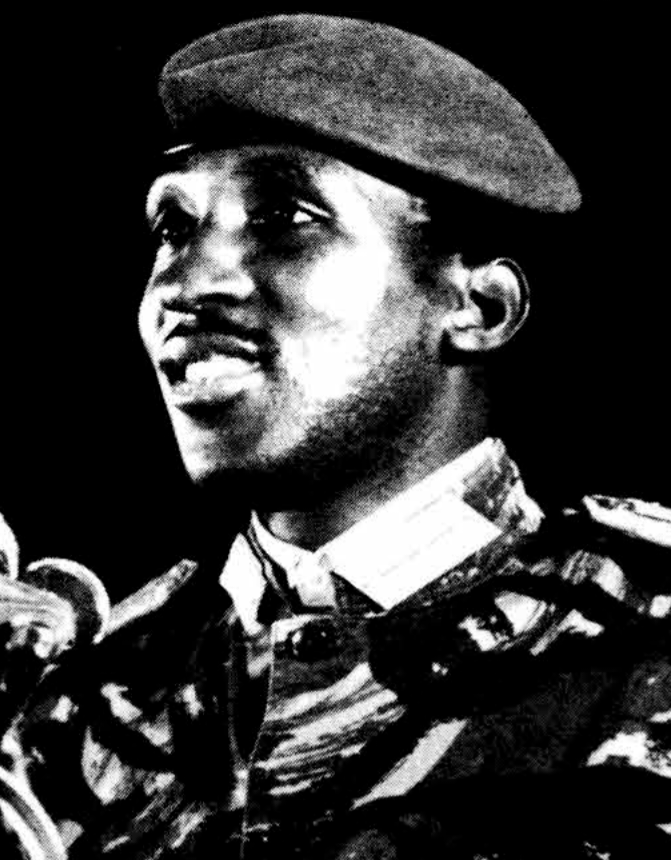
Thirty years ago, Thomas Sankara — soldier, revolutionary, and the man who dared to rename a country — fell in a storm of bullets. His assassination ended a fierce, brilliant, and brief life that has since turned him into one of Africa’s most enduring icons. But history, with its strange sense of timing, may now have delivered a sequel: a new young captain rising from the same soil, echoing many of the same ideals — Captain Ibrahim Traoré.
Sankara, who seized power in 1983 at just 33, has long been hailed as “Africa’s Che Guevara.” The nickname captures both his ideology and the theatrical manner of his departure. “Kill Sankara, and thousands of Sankaras will be born,” he declared prophetically. Months later, he was assassinated. But perhaps one of those “thousands” has now walked onto the stage.
Born on December 21, 1949, in Yako in then-Upper Volta, Sankara grew up during the final years of French colonial rule. After early exposure to conflict in the 1974–75 border war with Mali, he cultivated the radical vision that would one day redefine his nation. A cascade of coups brought him first to junior minister, then prime minister, then prisoner — and finally to head of state after the August 1983 uprising led by his friend Blaise Compaoré.
In office, he renamed the country Burkina Faso — “land of upright people” — a symbolic break with colonial thinking. Lean, athletic, perpetually in fatigues, guitar in hand and revolution in mind, Sankara projected a clean, youthful, idealistic Africa. He lived modestly, owned little more than a battered Renault 5 and a guitar, and demanded his ministers abandon luxury for the same austerity.
His reforms were sweeping: cleaning up public finances, shrinking the bureaucracy, expanding healthcare, pushing literacy campaigns, and empowering rural farmers. But he enforced his vision with an iron hand. Revolutionary Committees and People’s Tribunals monitored citizens; strikes met with mass firings; political opponents were jailed. Internationally, he confronted France, lectured François Mitterrand on human rights, embraced Ghana’s Rawlings and Libya’s Gaddafi, and urged African nations to reject Western debt: “If we pay, we will die.”
On October 15, 1987, Sankara was murdered in a coup widely attributed to Compaoré, who then ruled for 27 long years. Sankara was blamed for poor relations with France and regional powers — convenient reasons masking deeper fears of his radical message.
Yet the Sankarist spirit outlived him. It stirred the uprising that toppled Compaoré in 2014–15, when young Burkinabè marched with shirts proclaiming, “Sankara — He Still Provokes.” Franco-Burkinabè rapper Humanist put it simply: “Sankara reflects hope for all youth. His values transcend time.”
And then, in 2022, a new figure emerged: Captain Ibrahim Traoré, a 34-year-old officer who led a popular uprising within the military and became the youngest head of state in the world — almost the exact age Sankara was when he took power.
Like Sankara, Traoré wears fatigues as second skin. Like Sankara, he speaks openly of sovereignty, dignity, and freeing Burkina Faso from the grip of external control. Like Sankara, he projects youth, defiance, and a refusal to bow to old geopolitical scripts. Crowds in Ouagadougou wave not only his image, but Sankara’s portrait beside him — a symbolic passing of the revolutionary baton.
Where Sankara confronted France with words, Traoré has done so with policy, pushing for security partnerships outside traditional French influence and calling for resource sovereignty. Whether he will match Sankara’s ideological clarity or avoid his authoritarian excesses remains to be seen, but the parallel is undeniable. For many Burkinabè, Traoré is the reincarnation of the dream that was buried in 1987.
As we remember Sankara today — murdered by Black hands serving foreign interests — Lucky Dube’s haunting lyrics still ring:
“Bob Marley said how long shall they kill our prophets while we stand aside and look.
Little did he know the enemy would one day stand aside and look while we slaughter ourselves.”
Sleep on, Captain Sankara. The land and continent you loved are still wrestling for uhuru. But a new captain has risen, invoking your courage, your stubborn dignity, your uncompromising vision. Your struggle lives on — not only in millions of hearts, but now, undeniably, in the seat of power once more.

