

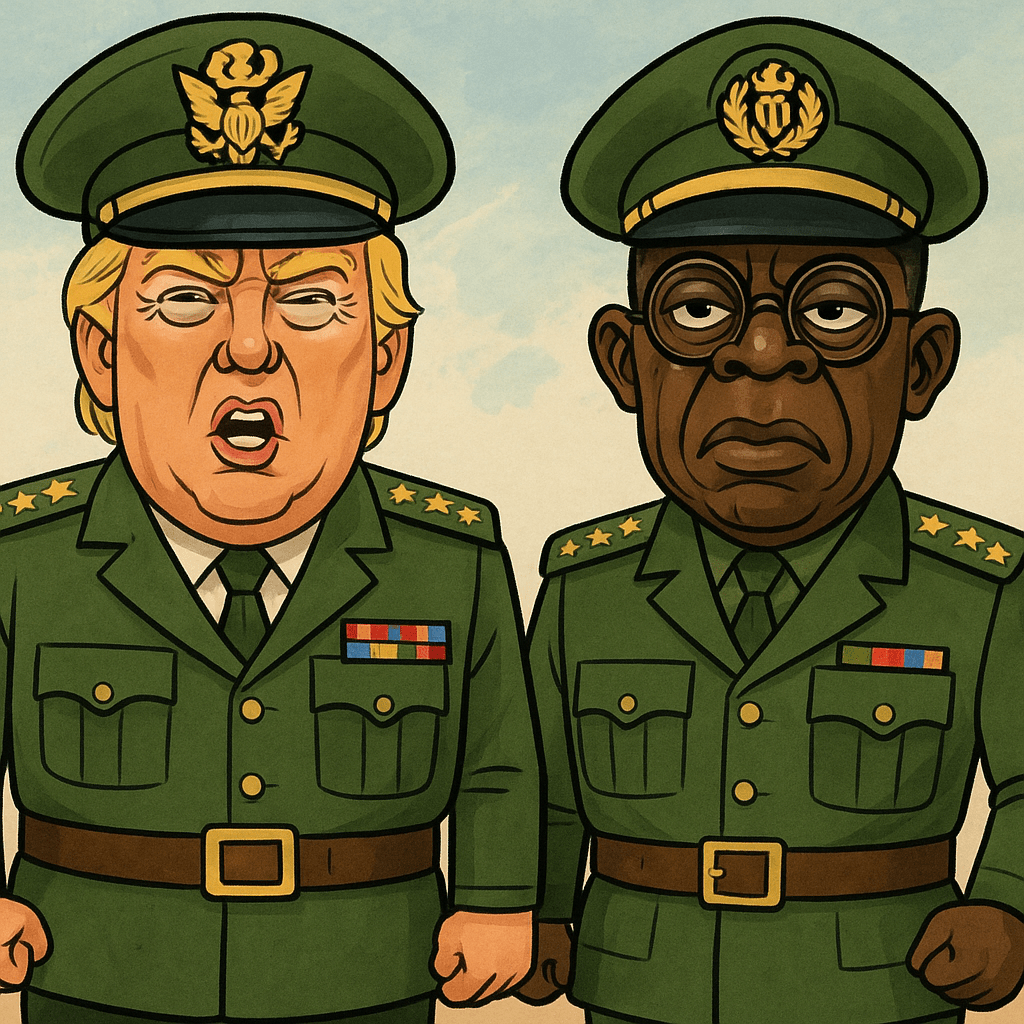

The genius of constitutional democracy is not merely that elections are held. It is that power is divided. Every institution is expected to possess enough independence to say “no” when necessary.
Increasingly, that constitutional architecture is being quietly dismantled.
The executive is no longer content with exercising executive power. It now seeks to determine who exercises legislative power as well.
The result is that those constitutionally required to supervise government increasingly owe their political existence to the very people they are meant to scrutinise.
The watchdog has become a pet.
Nigeria’s Constitutional Contradiction
Nigeria’s 1999 Constitution envisages a clear separation of powers.
Sections 4, 5 and 6 respectively vest legislative, executive and judicial powers in separate institutions. The National Assembly and State Houses of Assembly are not decorative ornaments attached to Government Houses or Aso Rock. They exist to approve expenditure, make laws, investigate public affairs, summon ministers and commissioners, and hold the executive accountable.
On paper, it is a beautiful constitutional design.
In practice, party politics has inverted it.
Today, presidents and governors often wield overwhelming influence over who becomes a party candidate for legislative office. Primaries are frequently less about convincing party members than obtaining the blessing of the governor or the President.
The constitutional order says legislators oversee the executive.
The political order says legislators owe their careers to the executive.
Those two propositions cannot comfortably coexist.
One inevitably swallows the other.
That helps explain why oversight hearings become theatrical productions, budgets are passed at astonishing speed, confirmations resemble coronations and constitutional checks become polite applause.
Good governance rarely survives such an arrangement.
America Was Different
For decades the United States operated rather differently.
Political parties were decentralised. Candidate selection was dispersed across fifty states, thousands of counties and countless local party organisations.
National politicians mattered.
Local politics mattered more.
A congressional candidate in Iowa did not necessarily require the blessing of Washington. A governor in Georgia was not simply a branch manager of the White House.
That decentralisation was one of the structural safeguards against excessive concentration of political power.
Recent years have witnessed a remarkable change.
Donald Trump has become the dominant force within the Republican Party, exercising enormous influence over endorsements and primary elections. Republican politicians increasingly calculate not merely what their constituents think but whether their positions might attract presidential approval or disapproval.
The practical consequence is difficult to ignore.
Independent thought becomes politically expensive.
Disagreement becomes a career risk.
Silence becomes the safer option.
It is not that the American Constitution has changed.
Its political culture has.
Britain Flirts with the Same Disease
The United Kingdom has traditionally prided itself on strong local constituency associations choosing parliamentary candidates.
Party leaders certainly possessed influence, but local members retained an important voice.
That convention is beginning to look increasingly fragile.
Reports surrounding the Conservative Party’s candidate selection process, including decisions affecting figures such as Graham Sharpe, have fuelled concerns that central party leadership is exercising greater control over who may or may not stand for Parliament.
Whether one supports or opposes particular individuals is almost beside the point.
The constitutional question is larger.
Who chooses representatives?
Local members?
Or central command?
If the answer increasingly becomes the latter, local democracy steadily loses its meaning.
Politics Was Supposed to Be Local
One of the oldest democratic truths is that politics is local.
Roads are local.
Schools are local.
Hospitals are local.
Policing is local.
Planning decisions are local.
The person representing a constituency should first answer to that constituency.
Not to a presidential villa.
Not to Downing Street.
Not to a party headquarters.
Yet across mature and developing democracies alike, politics is becoming nationalised.
Every election becomes a referendum on one individual.
Every candidate becomes a surrogate for one leader.
Every legislative contest becomes another chapter in an executive personality cult.
Local issues disappear beneath national slogans.
Representative democracy quietly becomes representative loyalty.
Who Is Copying Whom?
It is difficult to know who is borrowing from whom.
Has Nigeria’s executive dominance become an unfortunate export?
Or has America discovered that concentrating political power around one dominant personality is electorally convenient?
Perhaps both countries have independently arrived at the same destination.
Different roads.
Same destination.
An executive increasingly liberated from meaningful scrutiny.
Democracy Does Not Die in One Day
Democracy seldom collapses through tanks rolling into parliament.
It usually fades by smaller constitutional erosions.
Candidate selection becomes centralised.
Party discipline becomes absolute.
Legislatures become compliant.
Oversight weakens.
Executive power expands.
Each step appears minor.
Together they transform the constitutional balance.
Citizens still vote.
Parliaments still sit.
Constitutions still exist.
Only their spirit quietly slips away.
The framers of democratic constitutions understood a timeless truth.
Power should never choose those responsible for restraining it.
The moment it does, the referee has joined one of the teams.
That is not merely bad politics.
It is bad constitutional design.
As both Nigeria and the United States increasingly demonstrate, and as Britain must guard against, the greatest threat to democracy is not always the absence of elections.
Sometimes it is the disappearance of genuine choice long before election day ever arrives.

