


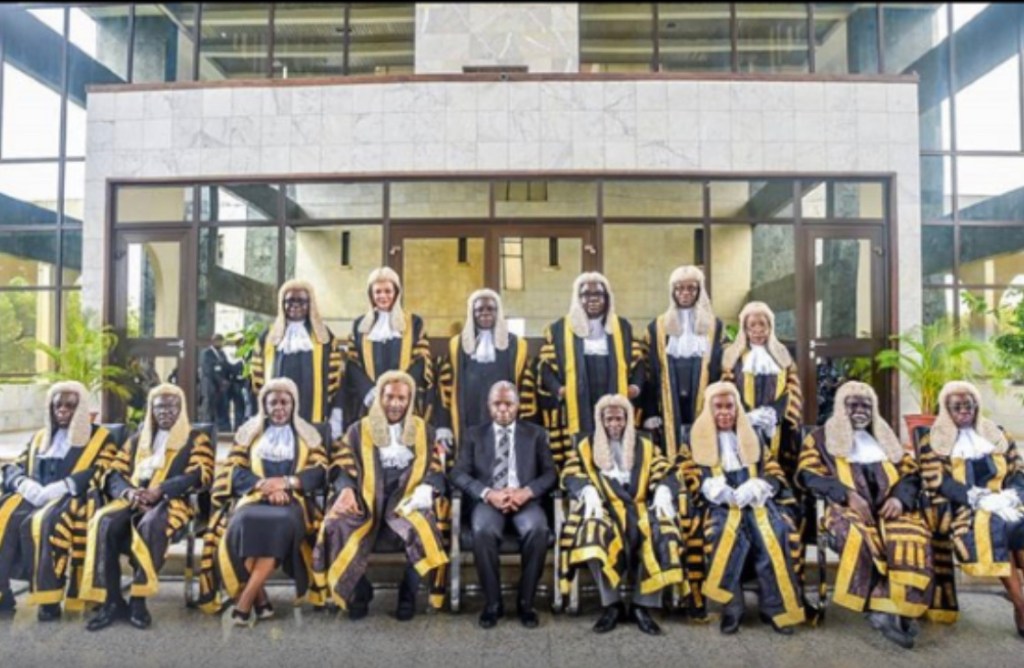
Transnational justice refers to legal accountability mechanisms that cross national borders to address serious crimes such as corruption, war crimes, crimes against humanity, genocide, or money laundering, when a single state’s domestic system is insufficient, unwilling, or unable to act. It encompasses universal jurisdiction (any state can prosecute certain grave offenses regardless of location), international tribunals, hybrid courts, extraditions, mutual legal assistance treaties, and asset recovery efforts. Unlike purely domestic prosecutions, it often involves “following the money,” evidence trails, or perpetrators across jurisdictions.
This exploration builds directly on the themes in Lawson Akhigbe’s 2026 article, “From London Court to Abuja Court”, which highlights the irony and frustrations of transnational prosecutions: the law’s “long arm” (e.g., UK courts stepping in for Nigerian corruption cases due to laundered funds) paired with its “longer delay” (multi-year lags from arrest to trial). Examples below illustrate these dynamics across corruption, atrocity crimes, and hybrid models. They draw from historical precedents, recent cases (as of 2026), and ongoing developments, revealing nuances like sovereignty tensions, North-South power imbalances, institutional weaknesses, and the human costs of prolonged proceedings.
1. Transnational Corruption Prosecutions: “Follow the Money” Across Borders
Corruption cases often exemplify transnational justice because illicit funds flow globally via banks, real estate, and shell companies, enabling foreign courts to assert jurisdiction based on territorial links (e.g., money laundering in their financial systems). This creates “outsourced justice” but frequently exposes delays and selective enforcement.
- Diezani Alison-Madueke (UK-Nigeria, ongoing as of 2026): Former Nigerian Petroleum Minister arrested in London in 2015, charged in 2023 with bribery (allegedly £100,000+ in benefits for oil contracts), with trial starting January 2026 at Southwark Crown Court. The UK National Crime Agency pursued it because proceeds were laundered through British banks and property. Akhigbe notes the symbolism: a Nigerian elite tried in London while Nigeria’s institutions lag. Nuance: Delays (over a decade) raise questions of “how long can justice jog before it collapses,” yet it deters kleptocrats by showing no safe havens. Implication: Highlights Nigeria’s reliance on foreign courts due to domestic capacity gaps.
- James Ibori (UK-Nigeria, 2010–2013): Former Delta State Governor convicted in a London court of money laundering and fraud involving tens of millions of pounds (hidden in UK assets and Swiss accounts). He was acquitted domestically in Nigeria earlier. Edge case: UK prosecution succeeded where local courts faltered due to alleged political interference. Broader impact: Asset recovery efforts returned funds, but delays allowed Ibori to enjoy proceeds initially.
- Sani Abacha Funds Recovery (Multi-country, 1990s–2020s): Nigeria recovered hundreds of millions from Swiss, UK, US, and Liechtenstein accounts looted by the former dictator. US DOJ forfeitures (e.g., $480M+ in 2014) and repatriation agreements (e.g., $52.88M in 2025) show mutual legal assistance at work. Nuance: Success in asset tracing but criticism over slow repatriation and lack of full accountability for enablers in Western banks. Implication: Demonstrates “longer arm” via financial intelligence sharing, yet underscores how global banks facilitate impunity.
- Related example: Malaysia’s 1MDB Scandal (2015–ongoing): Funds laundered through US, Singapore, and Swiss banks led to prosecutions in multiple jurisdictions (e.g., Goldman Sachs fined billions). Ties to Nigerian patterns: Extractive industry corruption often transnational. Challenge: Political backlash and uneven victim restitution.
Nuances and implications: These cases advance deterrence and recovery but raise sovereignty concerns (e.g., Global North courts “policing” Southern corruption). Delays erode public trust; edge cases include trials in absentia or politically motivated refusals to extradite. Positive: Capacity-building via partnerships (e.g., EFCC-UK collaborations).
2. Universal Jurisdiction: Any Court, Anywhere for Grave Crimes
Universal jurisdiction allows states to prosecute core international crimes (genocide, crimes against humanity, war crimes, torture) without territorial or nationality links, rooted in treaties like the Geneva Conventions. It fills gaps where home states shield perpetrators but faces backlash for perceived overreach.
- Auguste Pinochet (UK-Spain-Chile, 1998–2000): Spanish warrant led to UK arrest of Chile’s ex-dictator under universal jurisdiction for torture. House of Lords ruled no head-of-state immunity for such crimes. Outcome: Extradition blocked on health grounds, but set precedent. Nuance: Political diplomacy trumped law; highlighted selective application (rarely against powerful states).
- Hissène Habré (Senegal-Chad, 2012–2016): Former Chadian dictator convicted in a Senegal hybrid court (AU-mandated) for crimes against humanity. First universal jurisdiction trial in Africa. Implication: Regional ownership reduces “neo-colonial” critiques; showed hybrid models’ viability.
- Recent Syrian Cases (Europe, 2020s): Germany convicted Anwar Raslan (2021, life sentence) for crimes against humanity in Assad’s detention centers (Branch 251 torture). France convicted Roger Lumbala (Congolese rebel, 30 years) and others in absentia. Switzerland convicted Gambian ex-minister Ousman Sonko (2024, 20 years). 2024 saw 36 new cases opened globally, 27 convictions. Nuance: In absentia trials address flight risks but raise fair-trial concerns. Delays common due to evidence gathering.
- Rwandan Genocide Cases (Europe, 1990s–2020s): France convicted Claude Muhayimana (2021, 14 years complicity). Multiple European states tried low-level perpetrators post-1994. Edge case: Extraditions complicated by death penalty abolition debates.
Nuances and implications: Empowers victims but risks politicization (e.g., focus on weaker states). 2025 Universal Jurisdiction Annual Review notes rising convictions, yet low numbers overall due to resource intensity. Broader angle: Complements ICC via complementarity principle; ethical tension between justice and diplomacy.
3. International Tribunals and Hybrid Courts: Collective Global Accountability
Ad hoc tribunals and hybrids blend international standards with local elements, addressing mass atrocities where domestic systems collapse.
- ICTY (1993–2017) and ICTR (1995–2015): Prosecuted Yugoslav and Rwandan leaders for war crimes/genocide. ICTY first recognized sexual violence as torture; ICTR pioneered media incitement liability. Legacy: 161+ indictments (ICTY), 93 (ICTR). Nuance: High costs, selectivity critiques (e.g., African focus in early ICC referrals). Delays plagued proceedings.
- Hybrid Examples:
- Special Court for Sierra Leone (2002–2013): Convicted Charles Taylor (Liberian president) for aiding war crimes. Hybrid (UN-Sierra Leone) model balanced legitimacy and resources.
- Extraordinary Chambers in the Courts of Cambodia (ECCC, 2006–ongoing): Prosecuted Khmer Rouge leaders (e.g., Nuon Chea, Khieu Samphan). Low-level convictions limited; political interference noted.
- Others: Special Panels in East Timor (modest success on low-level militias); Colombia’s Special Jurisdiction for Peace (post-FARC, domestic-international mix); Uganda’s International Crimes Division (domesticating ICC standards).
Nuances and implications: Hybrids enhance local ownership and capacity (e.g., training judges) versus pure international courts’ distance. Edge cases: In absentia or low-conviction rates (East Timor farce). Challenges include funding, legacy (e.g., ICTR’s Gacaca community courts in Rwanda for grassroots reconciliation), and ICC complementarity (hybrids as alternatives).
Broader Considerations, Edge Cases, and Future Outlook
- Multiple Angles: Legally, these mechanisms evolve norms (e.g., no immunity for international crimes). Politically, they expose imbalances—wealthy states host proceedings while poorer ones bear conflicts. Practically, delays (as Akhigbe critiques) stem from evidence, translations, and politics; successes deter via precedent. Ethically, victim-centered approaches (reparations, truth commissions) complement prosecutions but risk “victor’s justice.”
- Edge Cases: Cyber-enabled crimes (transnational hacker extraditions); corporate accountability (Chiquita Brands 2024 US verdict for funding Colombian paramilitaries); climate or cultural heritage cases emerging under universal principles.
- Criticisms and Trade-offs: Selectivity (Africa-heavy ICC dockets); sovereignty erosion; high costs vs. domestic reform needs. Positive: Asset recovery funds development; builds rule-of-law norms.
- Implications for Nigeria/Global South: As in the article’s Ozekhome case (Nigeria asserting extraterritorial reach over London property), home states can reclaim agency. Yet reliance on foreign courts signals institutional gaps. Future: Strengthened mutual assistance, AI for evidence, or regional courts to reduce delays.
Transnational justice is imperfect progress amid persistent delays, but essential for a borderless world of crime. It underscores Akhigbe’s point: the law follows, eventually, but demands stronger domestic systems to shorten the wait. For deeper dives, specific cases reward further reading on jurisdictional evolution and real-world trade-offs.
 Centre for Nigeria Progress