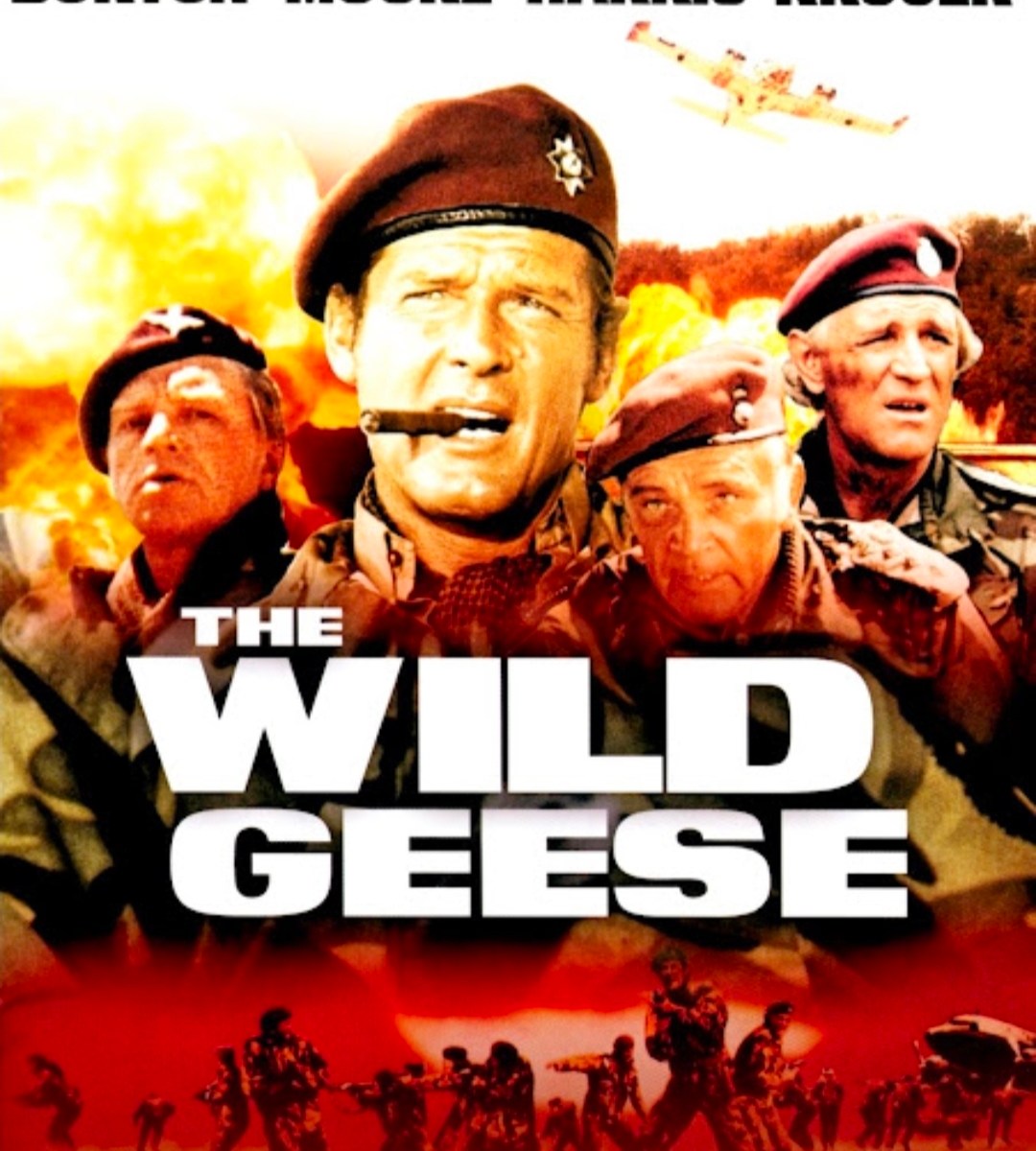
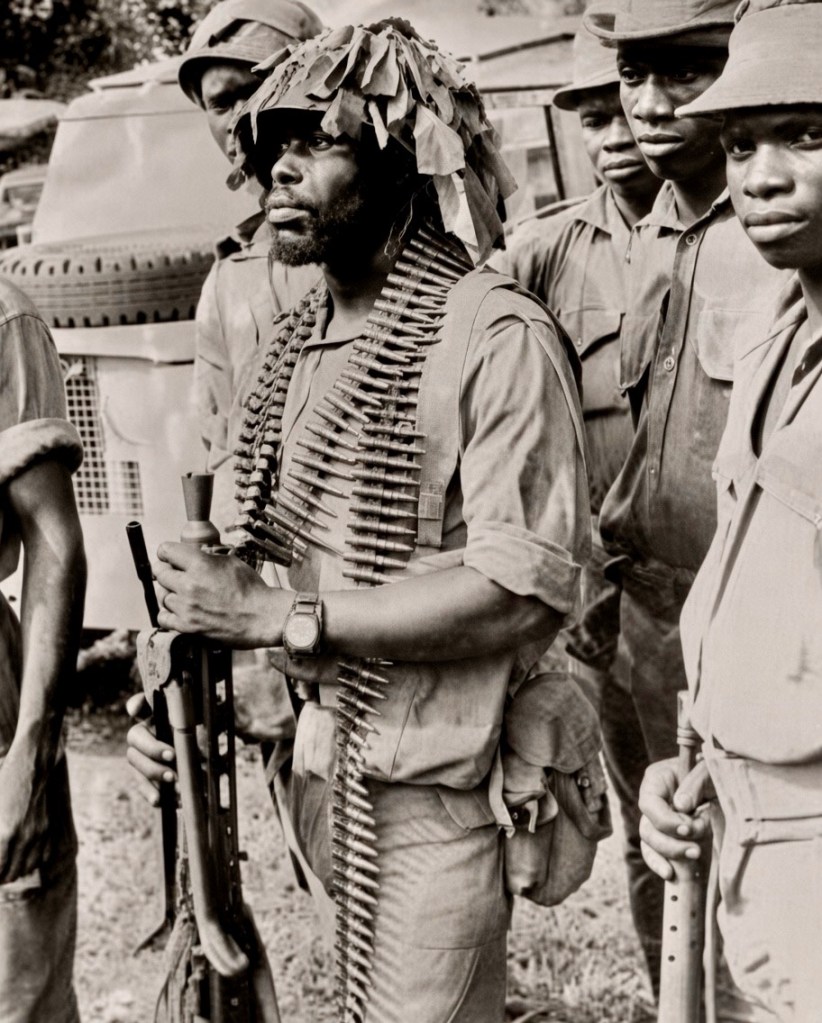
There is something revealing about reading Al J. Venter’s Biafra’s War 1967–1970 while watching the 1978 film Wild Geese.
At first, they appear to have little in common beyond war, Africa and white mercenaries.
But read them together and another story emerges.
It is the story of how some white men saw Africa and black Africans in the decades immediately after the Second World War.
It is a story about colonialism after colonialism.
It is about men who had grown up in a world in which European civilisation was placed at the top of an imagined racial hierarchy and Africans somewhere beneath it. Some came from the remnants of European wartime military culture. Others came from apartheid South Africa. Others had acquired their experience in colonial and post-colonial African wars.
They arrived in Africa carrying rifles, military experience and, in some cases, racial assumptions.
The extraordinary thing is how often Africa refused to cooperate with those assumptions.
The ghost of Europe in Africa
The Second World War had supposedly settled the question of racial supremacy.
Nazi Germany had taken the idea of racial hierarchy to its murderous conclusion. The Holocaust exposed the obscene consequences of constructing human beings into superior and inferior racial categories.
Yet the defeat of Nazism did not magically erase racial thinking.
The British Empire was still an empire.
European colonial rule still existed across much of Africa.
And in southern Africa, apartheid institutionalised racial hierarchy with extraordinary bureaucratic precision.
Thus, while Europe proclaimed a new post-war language of human rights, large parts of the European world continued to operate with assumptions about race inherited from the nineteenth and early twentieth centuries.
Africa became one of the places where those contradictions were exposed.
The European colonial administrator had been replaced by the foreign correspondent, military adviser, mercenary, adventurer or soldier of fortune.
The uniform might have changed.
The political circumstances had changed.
But sometimes the worldview had not.
The African was supposed to be one thing
One of the great weaknesses of the colonial imagination was its tendency to turn millions of people into a single category.
“The African.”
As though Nigeria, Congo, Kenya, Rhodesia, Ghana, Angola and South Africa were merely different addresses occupied by the same kind of human being.
The same intellectual laziness could be applied to African soldiers.
A European who had encountered Congolese troops might believe he therefore understood the Nigerian soldier.
He didn’t.
This is one of the fascinating themes that emerges from reading Venter’s account of the Biafran war.
There was a tendency among some foreign observers and fighters to arrive with expectations based upon previous African conflicts.
Then they encountered the Biafran.
And the stereotype began to fracture.
The Biafran soldier was not simply an interchangeable African infantryman.
He was fighting in a particular political conflict, for particular reasons, within a particular society.
His motivation could not be understood merely through the racial lens of the European observer.
The foreign soldier might have entered Biafra believing he already understood Africans.
The war began teaching him that he understood very little.
The white mercenary’s peculiar contradiction
There is an extraordinary contradiction in the psychology of the white mercenary.
He goes to Africa because he considers himself a professional.
He believes he possesses superior military knowledge.
He believes European military experience gives him an advantage.
And because the society from which he comes has taught him that white people occupy a higher position in the racial hierarchy, his military superiority can become entangled with racial superiority.
The two ideas reinforce one another.
“I am the better soldier” becomes dangerously close to “I am the better man.”
And then the African battlefield arrives with its usual indifference to ideology.
A bullet does not know the colour of the man firing it.
Terrain does not care about racial theory.
And an African soldier does not become less dangerous because his skin is black.
The battlefield has a particularly brutal way of correcting intellectual errors.
Enter Wild Geese
This is where Wild Geese becomes more interesting than the conventional mercenary movie.
The film is full of the attitudes of its period.
Lieutenant Pieter Coetzee is not merely a soldier. He represents a particular white South African mentality.
His view of black Africans is shaped by the racial hierarchy of apartheid South Africa.
He carries the assumptions of a society in which white superiority was not simply an individual prejudice but a political system.
The African is someone to be commanded.
The African leader is someone to be distrusted or patronised.
The African soldier is someone whose capacity can be presumed to be inferior.
And the white soldier occupies the position of natural authority.
But the film gradually undermines that certainty.
The African characters do not remain inside the roles assigned to them by Coetzee’s imagination.
They have political intelligence.
They have agency.
They have motives.
They understand their own country.
They are not waiting for a white man to arrive with a map, a rifle and a solution.
The moment the foot soldier becomes the student
Perhaps the most revealing element is the interaction between the white soldier and the African president.
The racial hierarchy initially exists inside the soldier’s head.
He assumes that because he is white, European-trained and militarily experienced, he must also be intellectually superior.
Then he encounters the president.
And suddenly the hierarchy reverses.
The supposed primitive is explaining the country to the supposed civilised man.
The supposedly ignorant African understands the politics.
The supposedly sophisticated European discovers that his knowledge is painfully limited.
The white foot soldier becomes the student.
That is not merely an amusing reversal.
It is the collapse of an entire colonial assumption.
Colonialism depended upon the proposition that the colonised were incapable of governing themselves.
The colonial power therefore had to govern them.
But once the African demonstrates that he understands his own political world better than the foreigner, the intellectual foundation of the hierarchy begins to crumble.
Apartheid’s soldier in a post-colonial Africa
The significance of Coetzee’s character is also that he is South African.
That matters.
South African apartheid was not merely racial prejudice wearing a uniform.
It was a political and legal system designed around racial classification and hierarchy.
White South Africans were told that they were guardians of civilisation in Africa.
Black South Africans were told, in different ways and through different institutions, that they were subordinate.
The apartheid state therefore produced its own peculiar mythology of the white African.
He was simultaneously African and not African.
He could claim the continent as his home while denying political equality to the majority of its population.
This contradiction is central to the psychology of the white mercenary.
Africa was home.
But Africans were not necessarily regarded as equals.
That is a remarkably revealing contradiction.
Biafra complicates the picture
The Biafran war makes the contradiction even more interesting.
Nigeria in the 1960s was not a European colony.
It was an independent state.
Biafra was attempting to establish another African state.
The political arguments were Nigerian.
The combatants were overwhelmingly African.
The conflict was being fought over power, security, identity, territory and survival.
Yet foreign white soldiers entered the conflict and sometimes attempted to interpret it through categories formed elsewhere.
This is where Venter’s observations become historically valuable.
The outsider’s perspective tells us something about Biafra.
But it also tells us something about the outsider.
We are watching a European or white South African consciousness trying to make sense of an African war.
And occasionally the consciousness gets it wrong.
That is precisely what makes the account worth reading.
The Congo was not Biafra
There is an important lesson here.
The Congo had its own history.
Nigeria had its own history.
Biafra had its own history.
Rhodesia had its own history.
Angola had its own history.
Yet the white mercenary culture sometimes treated Africa as one enormous battlefield.
The assumption was that experience in one African conflict provided a master key for the next.
But the key did not fit.
The Congolese soldier was not the Biafran soldier.
The Nigerian politician was not the Congolese politician.
The Biafran conflict was not simply another version of the Congo crisis.
Africa was not a single war with different scenery.
It was a continent of political societies with their own histories.
That sounds obvious.
But it was precisely the obviousness that colonial thinking had spent generations obscuring.
The European carries Europe into Africa
There is therefore a broader historical irony.
Europe had spent centuries exporting its ideas into Africa.
Christianity.
Capitalism.
Colonial administration.
European law.
European education.
European military organisation.
And, unfortunately, European racial hierarchies.
After independence, some Europeans continued to export something else:
their assumptions.
The colonial administrator left.
The mercenary arrived.
The governor’s uniform disappeared.
The soldier of fortune appeared.
The empire formally retreated.
But the psychological empire could survive.
That is why these films and books are valuable historical artefacts.
They reveal not simply what white men did in Africa but how some white men thought about Africa while doing it.
The African keeps breaking the stereotype
The most interesting characters are therefore the ones who refuse to behave according to the racial expectations of the white observer.
The competent African soldier.
The politically sophisticated African leader.
The African president who understands the conflict better than the foreign soldier.
The African who does not need to be rescued from his own continent.
Each one represents a small intellectual defeat for racial stereotyping.
The stereotype requires uniformity.
Reality supplies individuality.
The stereotype says:
African.
Reality answers:
Which African?
The stereotype says:
African soldier.
Reality answers:
Which army? Which country? Which war? Which political cause? Which man?
The stereotype says:
African leader.
Reality answers:
Perhaps you should listen before assuming he needs educating.
The ultimate irony
There is an irony running through both Venter’s Biafra and Wild Geese.
The white men often arrive believing they are bringing expertise to Africa.
Yet Africa becomes the teacher.
The soldier discovers that the African soldier is not what he expected.
The mercenary discovers that the political environment is more complicated than the racial categories he brought with him.
The foot soldier discovers that the African president may be considerably more sophisticated than he imagined.
The supposed expert discovers his own ignorance.
And that may be the most important connection between Biafra’s War 1967–1970 and Wild Geese.
Both, in different ways, provide a window into the last great age of the white man’s African fantasy.
It was an age in which some Europeans and white South Africans could still imagine Africa as a place where their race, military experience and presumed civilisation entitled them to command.
But the African continent was changing.
Colonialism was dying.
African nationalism was rising.
European racial authority was losing its political legitimacy.
And the Africans themselves were refusing to remain characters in somebody else’s story.
The battlefield was changing
The most profound change was not technological.
It was psychological.
The African no longer accepted the premise that the European was automatically the master.
The soldier did not automatically defer.
The politician did not automatically listen.
The president did not automatically require instruction.
And the intellectual did not automatically accept European definitions of African reality.
That was the real revolution of post-colonial Africa.
Independence was not simply about changing flags.
It was about changing the relationship between the European imagination and the African person.
And that transformation can be seen in the uncomfortable moments in which the white mercenary discovers that the African standing before him is not the African he imagined.
He is a soldier.
He is a politician.
He is a president.
He is a human being.
And perhaps the most devastating discovery for the racial supremacist is that none of those qualities require white permission.
Africa was never the classroom
Perhaps that is the lesson I take from reading Venter’s book while watching Wild Geese.
The white men thought they were coming to Africa to fight its wars.
Some believed they already understood its people.
But Africa had another lesson waiting.
It was not a classroom in which Europeans were the teachers and Africans the pupils.
It was a continent whose people had their own histories, intelligence, ambitions, courage and political agency.
The white mercenary could bring his rifle.
He could bring his military experience.
He could bring the prejudices of apartheid South Africa or the racial assumptions of post-war Europe.
But he could not bring his assumptions and expect Africa to obey them.
Eventually the African soldier would have to be recognised as a soldier.
The African president as a president.
And the African himself as something considerably more complicated than “the African.”
The war was bloody.
The politics were brutal.
The history was tragic.
But somewhere amid the smoke, the mercenary’s racial imagination encountered its most dangerous enemy.
Reality.

