
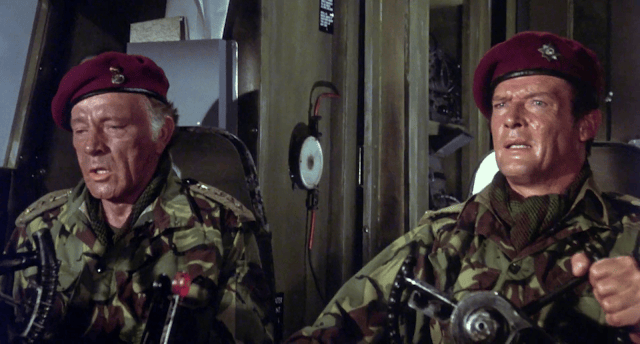
Watching The Wild Geese in 2026, almost half a century after its release, is a rather different experience from watching it in 1978.
In 1978, it could be watched as a muscular adventure about British mercenaries parachuting into an unnamed African country to rescue a deposed president.
Today, it can also be watched as something else:
a cinematic document of the white African military imagination.
And that is what makes it particularly interesting when read alongside Al J. Venter’s Biafra’s War 1967–1970.
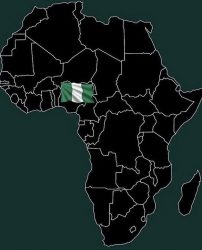
The two are separated by geography, genre and several years. Venter was reporting on an actual war in Nigeria, while Wild Geese was a fictionalised mercenary adventure. Yet they inhabit the same historical world: the Africa of decolonisation, coups, mercenaries, white minority rule and the last generation of Europeans and white South Africans who believed that their military experience gave them a special authority over African affairs.
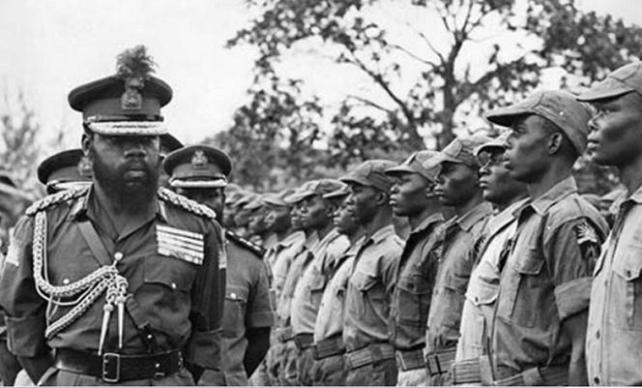
Venter’s book describes a Biafran war in which foreign mercenaries became involved, including men who had acquired experience in the Congo. Western pilots were hired by Lagos, while Biafra also attracted foreign military personnel. Venter himself covered the conflict from both sides of the battlefield.
Wild Geese, meanwhile, was explicitly built around a 50-man British mercenary force sent into sub-Saharan Africa to rescue a deposed African leader. The film’s mercenary world was not invented entirely from thin air: its background was connected to the mythology surrounding Congo mercenary Mike Hoare, who served as technical adviser, and real members of his Five Commando appeared in the production.
The film therefore sits inside a very real historical culture.
And that culture deserves examination.
Africa as the white man’s battlefield
The mercenary is a peculiar colonial figure.
He is not quite a colonial officer.
He is not quite a soldier of a recognised state.
He is not quite an adventurer.
He is a soldier who has discovered that the end of empire does not necessarily mean the end of employment.
The flags have changed.
The uniforms have changed.
The colonial administration has disappeared.
But there are still wars to fight.
And Africa has plenty of them.
For a particular generation of European and white South African soldiers, Africa therefore became the place where military experience could continue to have commercial value after formal empire had begun to retreat.
The Congo became one of the great proving grounds.
Then came Biafra.
Then Angola.
Then Rhodesia and the wars of southern Africa.
The continent became a vast, violent employment market for men who possessed military skills and were prepared to sell them.
But something else travelled with them.
The racial worldview of the old order.
The South African in the room
This is why Lieutenant Pieter Coetzee is such an important character.
He is South African.
That is not incidental decoration.
He represents a very particular historical phenomenon: the white South African soldier operating beyond the immediate boundaries of apartheid South Africa.
Apartheid had constructed a society in which racial hierarchy was not merely social prejudice but a system of government.
The white South African soldier consequently came from a society that had spent decades telling him that racial hierarchy was normal.
Wild Geese places such a man inside an African political crisis.
And suddenly his assumptions are exposed.
Coetzee does not initially see Africans simply as fellow human beings who happen to have different political interests.
He sees them through a hierarchy.
There is the white man who commands.
There is the black man who is commanded.
There is the white professional soldier.
There is the African subject.
The remarkable thing is that the film allows this mentality to appear rather than simply explaining it.
The prejudice is in the character.
It is in the language.
It is in the assumptions.
And then the story starts dismantling it.
The white soldier who thinks he knows Africa
This is perhaps the most interesting connection with Venter.
The foreign soldier frequently arrives in Africa with an existing mental map.
He has fought in the Congo.
He knows “Africans.”
He has seen African armies.
He has dealt with African politicians.
Therefore he assumes he understands the next African conflict.
But Africa refuses to be that simple.
The Congo is not Nigeria.
Nigeria is not Biafra.
Biafra is not Rhodesia.
Rhodesia is not Angola.
The African soldier is not a generic African soldier.
Yet the outsider can arrive carrying precisely that assumption.
This is one of the lessons lurking beneath Venter’s observations of Biafra.
The war attracted mercenaries, some with previous experience in the Congo, but the Biafran conflict presented its own military and political realities.
A European could therefore make the elementary mistake of assuming that because he had encountered one African army, he understood another.
It is the military equivalent of confusing Manchester with Lagos because both contain football supporters.
The map may say Africa.
History says otherwise.
Then comes the African soldier
The racial stereotype requires the African soldier to be inferior.
He can be brave, perhaps.
But not sophisticated.
He can be numerous.
But not necessarily disciplined.
He can be useful.
But not necessarily the equal of the European.
This is where reality becomes inconvenient.
The African soldier may be competent.
He may be disciplined.
He may understand the terrain.
He may possess political motivation that the foreign mercenary cannot comprehend.
And he may fight extremely hard because the war is not a contract for him.
It is his life.
The white mercenary can leave.
The African often cannot.
That distinction is enormous.
For the mercenary, there is an aircraft home.
For the African soldier, there may be a family behind him and nowhere else to go.
That can produce a kind of commitment that money cannot purchase.
The president who refuses to be a native
The most devastating challenge to the racial imagination, however, is not the African soldier.
It is the African intellectual or political leader.
Because military competence can still be dismissed as an exception.
But intellectual competence is more dangerous.
The white supremacist can tolerate the idea of a brave African.
What becomes much harder to accommodate is an African who is more politically intelligent than him.
This is where the African president in Wild Geese becomes significant.
The white soldier initially assumes superiority.
Then the president speaks.
And suddenly the supposedly primitive African is explaining the political world to the supposedly sophisticated European.
The direction of education reverses.
The white man came to Africa as the expert.
The African becomes the teacher.
That is a profound humiliation for a racial ideology.
The colonial mentality assumes that knowledge flows from Europe to Africa.
But here knowledge flows in the opposite direction.
The European has the gun.
The African has the political understanding.
And the gun cannot explain the politics.
The mercenary and the colonial officer
There is also an important distinction between the mercenary and the colonial officer.
The colonial officer at least operated within a formal political structure.
He represented a state.
The mercenary represents himself, or whoever is paying him.
But psychologically, the two worlds can overlap.
Both may regard Africa as a place where European expertise is required.
Both may regard African political institutions as fragile.
Both may assume that African states are incapable of resolving their own crises.
And both can develop the paternalistic belief that Europeans are necessary to prevent Africa from descending into chaos.
That is one of the oldest arguments of colonialism.
The empire is necessary because the natives cannot govern themselves.
The mercenary version is slightly different:
Someone has to come and sort this out.
And naturally, that someone looks remarkably like a European with a rifle.
The strange morality of the mercenary
There is another fascinating contradiction.
The mercenaries in Wild Geese are not portrayed simply as villains.
They have loyalty to one another.
They have military professionalism.
They have courage.
They sometimes possess a moral code.
They are also capable of extraordinary violence.
This creates the peculiar morality of the mercenary film.
The African political world is presented as corrupt and violent.
The European mercenary enters it and brings discipline.
The African dictator is brutal.
The mercenary is brutal but professional.
The African politics are dirty.
The mercenary has a code.
This is the old Western genre transplanted into Africa.
The cowboy becomes the mercenary.
The frontier becomes Africa.
The corrupt African ruler becomes the villain.
The white soldier becomes the professional outsider who knows how to restore order.
It is not difficult to see the colonial ghost sitting quietly in the cinema.
And then history complicates the fantasy
The problem with this narrative is that Africa was not waiting for the white mercenary to arrive.
The continent was undergoing enormous political transformation.
Colonial rule was collapsing.
New states were being created.
African nationalism was reshaping political identity.
The Cold War was turning African countries into battlegrounds for competing international interests.
The Congo crisis had demonstrated that independence did not mean the end of foreign intervention.
Biafra demonstrated that African civil wars could attract foreign soldiers, pilots, governments and weapons.
Southern Africa became the great remaining battlefield of white minority rule.
The mercenary was therefore not simply an adventurer.
He was part of a larger international system.
And sometimes he was defending, directly or indirectly, the remnants of a political order that history was already dismantling.
The white man who could not see the African
This is where the comparison with Venter becomes particularly useful.
Venter himself was a white South African observer of African wars and had an extensive career covering conflicts across the continent. His later bibliography includes works on South Africa’s Border War, Angola and Portugal’s colonial wars, among others.
His position gives the reader an unusual window into this world.
But it also raises a question:
What happens when the observer is part of the civilisation whose assumptions he is observing?
The answer is not necessarily that everything he writes is wrong.
That would be far too easy.
The more interesting answer is that the observer can provide valuable information while simultaneously revealing the limitations of his worldview.
That is how historical documents work.
The historian reads not only what the writer tells him.
He reads what the writer assumes.
Sometimes the unconscious assumptions are more revealing than the conscious argument.
The end of the white African fantasy
By 1978, when Wild Geese appeared, the world that had produced its mercenaries was already disappearing.
Portugal had lost its African empire.
Rhodesia was under enormous pressure.
Apartheid South Africa was increasingly isolated.
African states had become the recognised political actors of the continent.
The European monopoly over military expertise was disappearing.
And the white mercenary was increasingly becoming an anachronism.
The film therefore captured something that was already fading.
It was the last great cinematic moment of the white African soldier as heroic professional.
Richard Burton could still parachute into Africa and look like the man who could solve the problem.
Hardy Krüger could still play the South African whose prejudices were shaped by a white minority regime.
Roger Moore could still bring the suave British mercenary into the African bush.
The cast itself is almost a museum exhibit of the mythology.
But history was moving elsewhere.
The African was becoming the protagonist
The great change was that Africans were no longer merely the background to European adventures.
They were becoming the protagonists of their own political history.
The president was African.
The army was African.
The political struggle was African.
The future was African.
The foreign soldier could intervene.
But he could not determine the historical destination indefinitely.
This is why Wild Geese is more interesting today than it might initially appear.
It can be enjoyed as an old-fashioned war film.
But it can also be interrogated as a document of a dying worldview.
It shows us a world in which white soldiers could still imagine themselves as the natural managers of African crises.
And it shows, sometimes unintentionally, the absurdity of that assumption.
Africa’s great lesson to the mercenary
The white mercenary came to Africa believing he understood Africans.
Then he met individuals.
That is where the problem began.
The Congolese soldier was different from the Nigerian soldier.
The Biafran soldier was different from the Congolese soldier.
The African politician was different from the African soldier.
The president was different from both.
The continent kept producing exceptions until the exceptions became the rule.
The racial stereotype could survive only if Africans remained an abstraction.
Once they became individuals, it began to collapse.
That is the real connection I see between Venter’s Biafra’s War and Wild Geese.
Both belong to a period when white soldiers, journalists and adventurers were still attempting to understand Africa through categories inherited from colonialism.
But Africa kept resisting those categories.
The Biafran soldier was not the Congolese soldier.
The African president was not the ignorant native imagined by the racist foot soldier.
The African politician did not need the European to explain politics to him.
And the African soldier did not need white approval to demonstrate courage.
The final irony
Perhaps the greatest irony is that the white mercenary’s greatest enemy was never the African army.
It was his own assumption that he already understood the African.
That assumption was inherited from colonialism.
It was reinforced by apartheid.
It was nourished by decades of European racial thinking.
And it travelled into the post-colonial era inside the minds of men who regarded themselves as professional soldiers rather than racial ideologues.
But the battlefield is an unforgiving professor.
It teaches lessons without consulting the curriculum.
The African soldier could shoot.
The African commander could command.
The African politician could think.
The African president could understand.
And eventually the white soldier had to confront the most uncomfortable possibility of all:
perhaps Africa did not need to be taught how to be African.
Perhaps the African had been the adult in the room all along.
And perhaps the white man, armed with the confidence of centuries of racial hierarchy, had simply mistaken confidence for knowledge.
That is what makes Wild Geese, viewed alongside Biafra’s War, more than an old mercenary movie.
It is a glimpse into the twilight of a world.
The last days of the white man’s Africa.
And like many twilight scenes, it is beautifully lit, deeply dramatic and already disappearing.

