

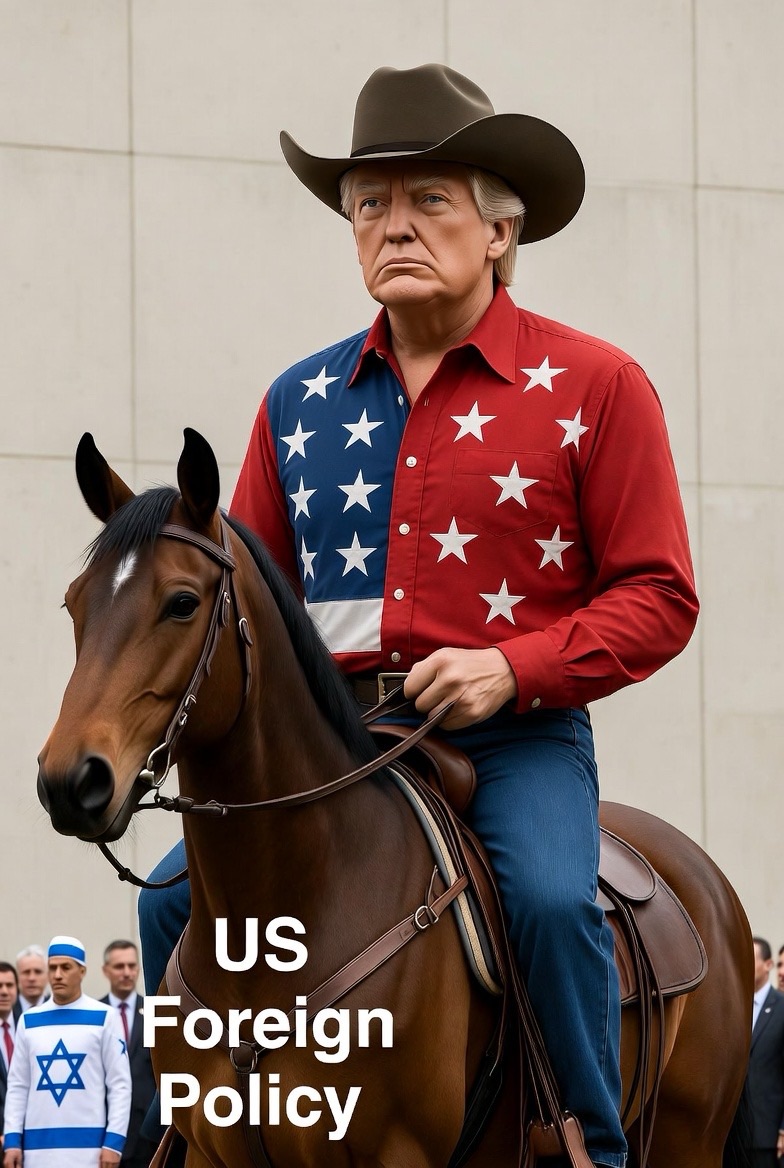
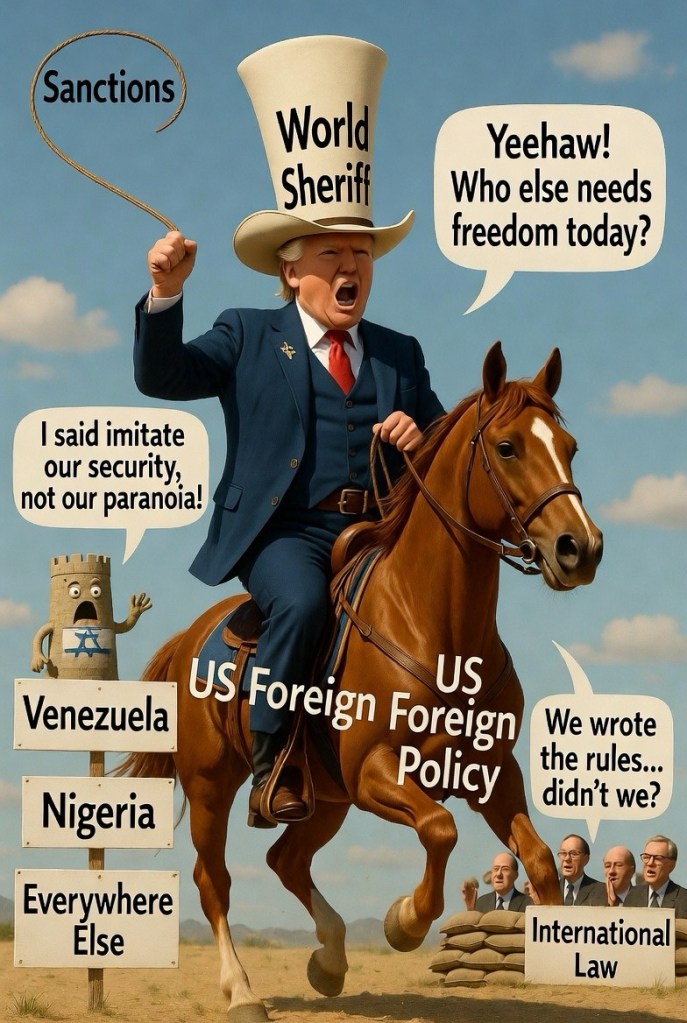
Israel is a small country with a big personality. Think of it as that compact, wiry uncle at Christmas dinner — the one who sits at the end of the table with his back to the wall, scanning the room as if the turkey might attack him. Surrounded by neighbours who eye it with varying levels of suspicion, Israel has perfected the art of the siege mentality. It reacts first, asks questions never, and somehow still expects applause.
Now, ordinarily, this would be filed under “regional complexities” — the geopolitical equivalent of a family WhatsApp group. But when a superpower decides it wants to cosplay as Israel, the stakes go from matzo ball soup to nuclear-powered barbecue.
Enter the United States under Donald Trump: a nation the size of a continent, with enough military hardware to colonise Mars by accident, suddenly behaving like a small, paranoid fortress-state backed into a corner. Except the US is not in a corner. The US is the room.
Yet here we are, watching a giant mimic the foreign policy swagger of a much smaller ally.
The Venezuela Episode: When the Sheriff Rides Out
The recent American excursions into Venezuela are a masterclass in how not to conduct international relations. Instead of diplomacy, negotiations, or even polite threats (the traditional tools of civilised mischief), the US appears to have reached for its favourite playbook:
1. Identify target.
2. Declare target a threat.
3. Insert military hardware.
4. Announce it was for “democracy.”
It’s as if Washington looked at Israel and said, “Ah yes, aggressive unilateral action — but make it supersized.”
But here’s the plot twist: Israel does this because it genuinely feels existentially threatened. The US does it because… well, because it can. And because certain leaders fancy themselves global sheriffs patrolling the hemisphere for their personal highlight reel.
International Law: The Rules You Write, Then Ignore
What makes America’s new cowboy diplomacy especially spectacular is the theatre of it all. These are the same international laws the US championed, sculpted, and laminated when it suited them. Laws meant to tame smaller countries, discipline dictators, and provide the world a handbook for good global behaviour.
But now?
Apparently those laws come with a little asterisk:
Does not apply to the United States when in a mood.
Trump’s recent behaviour signals a dangerous precedent — that major powers can selectively abandon international norms while lecturing others about them. It’s like watching a judge throw his own gavel at the accused.
The Bad Example: Cowboys Without Cattle
The world does not need a superpower adopting the habits of a twitchy, surrounded state. We already have one Israel — and that’s quite enough to keep the UN permanently caffeinated.
When America behaves like Israel, it sends a message to other countries that they too can:
Strike first and justify later Ignore international law when it’s inconvenient Brand every neighbour a mortal threat And act more like a cowboy than a peacekeeper
But the difference is this: a cowboy with a six-shooter is one thing. A cowboy with the world’s most powerful military machine is another.
Conclusion: Choose Your Heroes Wisely
The US has every right to defend its interests, but not every interest is a crisis, and not every disagreement is Armageddon. The world does not need an American sheriff itching for showdowns. It needs a sober, steady major power that practices what it preaches.
Israel may operate from a place of existential dread — understandable, even if troubling. But the United States imitating those tactics doesn’t project strength. It projects anxiety, confusion, and a disregard for the very order it claims to uphold.
A superpower should not aspire to be a fortress-state.
And a nation with global reach should not behave like a cornered animal.
Cowboy hats are fun, yes — but not when worn by someone holding the nuclear codes.

