

Nigeria’s complex insecurity crisis is not about to be solved soon or at all, if the roots of its component parts remain unattended to.
What do the mangrove swamp forests of the Niger Delta and the Sudan Savannah forests of northwest Nigeria have in common apart from being evidently forests, albeit of different kinds? Their resident principalities love a bottle of Fanta.
It’s a wild joke rooted in reality.
In the southern forests, priests and priestesses of the goddesses in the rivers that run through them, are known to demand bottles of Fanta to open consultations or before any water infrastructure project commences. In the northern forests, gangs of bandits – usually ethnic Fulani – who use them as operational bases, crave bottles of Fanta as well.
As someone who grew up in the Niger Delta, I was conversant with the first situation. But late last year, as I prepared to go interview a couple of bandit gangs in the northwest, I was surprised to hear my fixer say we should prepare for a request from them to bring along a crate of mortuary standard – which is how we Nigerians say “chilled to perfection” – Fanta. As with the river deities, it was meant to give us a soft landing when we met.
“For the Fulani man in the bush, Fanta is one of the highest levels of enjoyment”, he told me.
It was an intriguing detail about the motorcycle-riding bandit gangs that have turned what was localised 20th-century cattle rustling into a kidnap-for-ransom industry. The scale of it is now such that armed banditry has overtaken the Boko Haram insurgency as Nigeria’s deadliest internal security threat in recent years. A 2025 report by SBM Intelligence found that 2,938 people were kidnapped in the North-West between July 2024 and June 2025. It’s a full-blown crisis.
To hear that they love and spend so much on soda made me think: beyond weapons and bribes, what mundane things do they buy with the millions of naira they get in ransom from even the poorest of the poor?
The gangs kept tinkering with dates and location for the meet, subtly showing that they were in control and ultimately, the request for Fanta never came. In February, I made it to Rugu forest, which stretches 220km from Katsina state to Maradi region in neighbouring Niger.
One gang cancelled the meet, saying they could not guarantee our safety due to a clash with a rival gang in the vicinity. Another gang in another settlement of the forest agreed to meet but we had to haggle over the location because they wanted to keep to a code of conduct: I wanted the leaders to come to a market in a mining town where we were waiting but they understandably did not want to come out without their weapons (a condition of a recently agreed peace deal with that community) and they also did not want to take us to their hideout for fear that we could lead security agencies there. So we met midway in a forest settlement, where they took us into on motorcycles. There, I learnt more about their interesting code of conduct.
Media outlets who have visited with security escorts in tow often get nothing substantial because the bandits feel disrespected. I was told: “If they tell you to come, it means you will not be harmed, they keep their word and if you go with soldiers, you’re breaking their trust”. It’s weird to imagine a bandit keeping his honour but what would Jeffery Archer say?
One journalist at my former workplace went with a security convoy and was apparently upset when the gang leader decided not to speak with him but delegated a subordinate to talk in his stead and for only a short while. Someone unfamiliar with Nigeria’s many peculiarities may be tempted to ask why the security agents did not arrest that gang. Nigerians know that there’s no straight answer to that question.
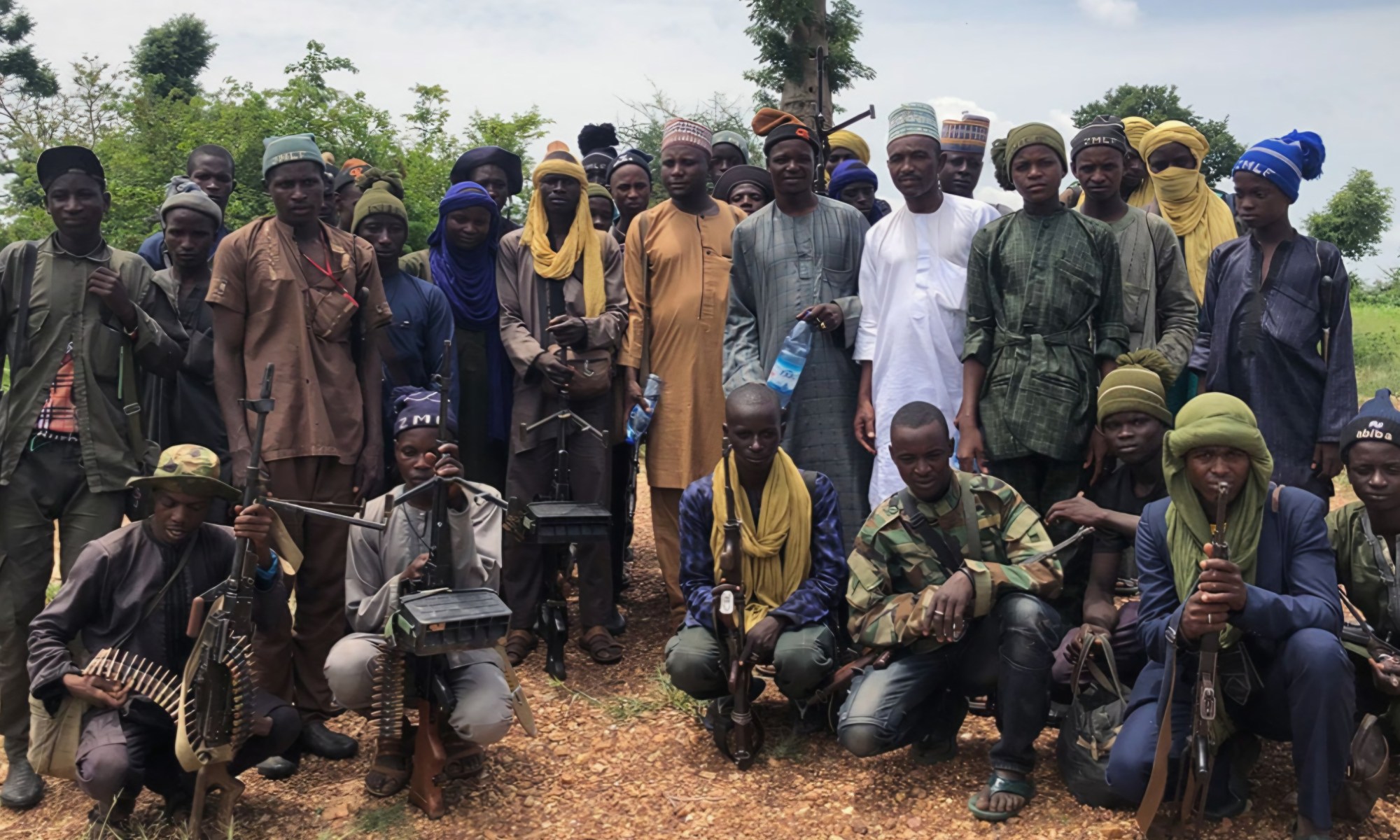
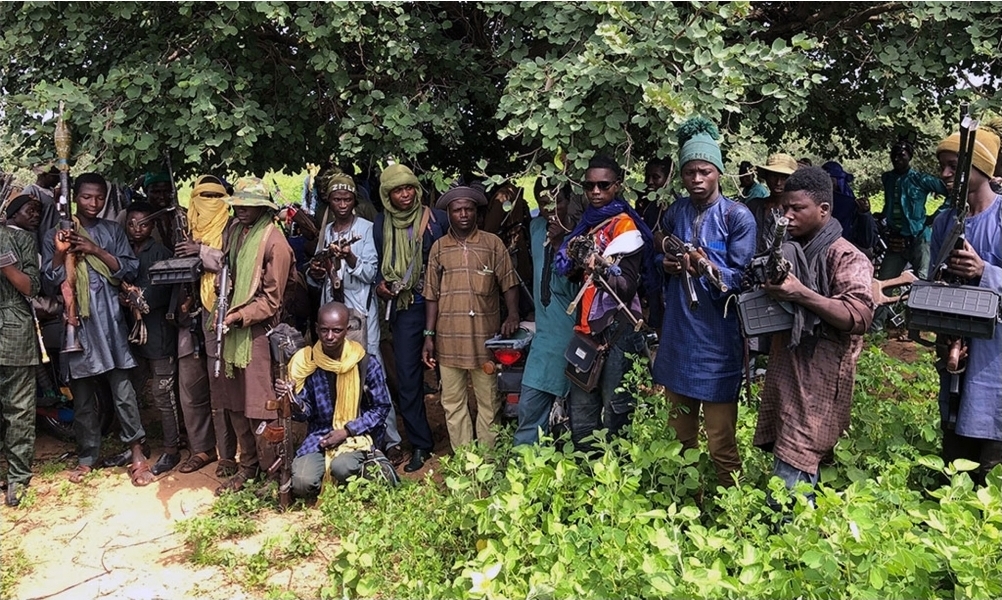
I went with a photographer and fixer, just as I have in similar situations, taking the necessary precautions that evidently cannot be mentioned here, but careful not to spook the bandits. As the young recruits milled around on their motorcycles in the scorching sun, they had with them bottles of cold water and a popular energy drink called Fearless. Poetic?
Abu Radde, the 32-year-old leader of the gang we interviewed, had a baby face that belied the kind of criminal past tucked under his belt. Throughout the interview, he was more relaxed than a man cooling off under the experienced hands of a veteran masseuse. Perhaps it was because there were at least six of his men and as many AK47s or because they were on his turf and knew he was not at risk at all. Perhaps it was a combination of all of that.
For years, there has been speculation from a lot of quarters including the government, some commentators and even journalists that the bandits are Fulanis from neighbouring countries, given that they are present in almost 20 countries stretching across the Sahel belt from Mauritania to Eritrea.
Abu Radde stepped away to pray before the interview began. When he returned, we asked him if he was Nigerian. He chuckled and brought out his Nigerian identity card aka NIN card and let me see his full name and date of birth for longer than even I felt comfortable. The card looked legit. Even when I took it from him to scrutinise for a whole minute, he let it go without hesitation. I had to resist the impulse to take a photo right there.
When I would later mention this to sources within intelligence and around the presidency in Abuja, they told me that terrorists oddly are eager to perform the pilgrimage to Mecca and so get their contacts in government to help them get NIN cards so they can get passports and travel to Saudi Arabia.
On their way out or back to the country, operatives of the Department of State Security would then apprehend them. When one cohort was nabbed like that, their boss Ado Aleru – so powerful that he was given a chieftaincy title by one community and so unremorseful that he once said kidnapping was a lesser sin than political corruption – was vexed. Among his men who had been arrested was his own nephew. As I was told, he called every high-ranking person he could to get them released, but nothing worked. So he did what he does best, engineering the abduction of 25 schoolgirls from a Kebbi school in November 2025. The government capitulated, paying millions in ransom and releasing the men too. Ado Aleru had won.
Abu Radde was planning his own pilgrimage after the peace deal he had signed (we will come to this). He refused to answer some of our questions, smiling shyly and being evasive until one of his belligerent lieutenants interrupted us and ended the interview after 30 or so minutes. He laughed when I asked the source of his shiny AK47 and whether he had political connections or sponsors or possible collaboration with traditional, ideological terrorists. When I asked what he did when he was not settling grievances or raising cattle, he mentioned shadi, the endurance ritual young Fulani men do when seeking a bride.
But he answered questions on his childhood, religion, family and most importantly the method to his madness, his grievances. He and his fellow Fulani were tired of marginalisation and living on the edge of society he told me. They wanted access to potable water for themselves and their cows to drink, political participation, dams for irrigation, electricity connections and release of their crew members who had been arrested.
“We are not literate so we can not go to court,” he told me when I asked why he preferred to kill for so long rather than litigate or negotiate. His gang signed a peace deal with a nearby mining community called Nahuta. There, some bandits had shifted to gold mining, hoping to get more regular and less risky income. They now patronise the same food vendors and sex workers along with the people they once terrorised.
By the end, we were confused even by questions we thought we had answers to.
Why can’t soldiers go in? What leverage do these non-state actors have over the state? What level of complicity is there between both parties? So far, what we have is conspiracy theories and more questions than answers.
Why are Nigerian leaders so wasteful? The current peace deal seems to be holding strong in the communities I visited but remains fragile elsewhere. It was backed by government but they were barely involved in the negotiations as someone who mediated a peace deal in another village called Kurfi – our profile of the peacemaker has not yet been published – told me. Researchers like Malik Samuel told me this was better because the state governments are always keen to throw so much cash at the issue rather than tackle the root problems.
In previous peace deals, the government preferred to pay for the gangs to turn in their weapons and receive monthly payments akin to a salary. These monies helped the gangs buy new weapons and change the geographical spread of their attacks to other states where deals were not in place.
Abu Radde’s gang claimed the government was yet to fulfil its end of the current peace deal by providing what it reportedly agreed to.
It made me wonder about the myopia of it all: was it easier to make these payments to a small group of people or build dams and schools for the good of all? How do you as a government mess up so bad that even criminals who have a clearly capitalistic drive are saying they prefer social infrastructure instead and yet you fail to deliver that? Is there any promise the government can be trusted to make good on to the end?
It was surprising to hear the bandits ask not only about madarassa but also Western schools – as someone else would tell me later, they see it as a gateway out of poverty and to political power.
Why can’t these places, especially the abandoned forest reserves be tourist paradises? Why is there no sense of urgency to tackling these crises?
People have begun adapting to the new status quo.
I heard stories that reminded me of what I’d heard while covering Boko Haram in Maiduguri. Circa 2012-2014, female students at the university would sleep fully dressed and have on them a backpack packed full of basic necessities but light enough to not be a burden while running and then sleep with it on them.
Just outside of Katsina, people used to sleep dressed or eat dinner at 5pm and then run into the bush to hide so that the bandits would meet the houses empty when they entered the village. There were stories of children being forgotten in the bush or in the village because everyone was running helter-skelter. In the village of Kurfi, one villager told me that he was happy because of a recent peace deal with the bandits in that community, because he and his wife now have the privilege of going to bed naked, rather than fully dressed in case they needed to escape for their lives.
At Firji, a Nigerien community right on the border, the immigration officials said no to interviews. Interestingly, the Nigerian customs post was locked with no sign of any recent activity that day. The villagers told us that bandits had spots in that community where they came to hangout with certain women there whenever law enforcement officials in Nigeria go on a manhunt after a particularly bad raid. Before Niger quit ECOWAS and joined the AES, there was a joint military operations working to combat Boko Haram and other jihadist groups. One wonders if it also tackled banditry and if there is any such cross-border security operation now.
At Jibiya, the official border seemed really quiet but a few smugglers were at work, moving contraband into Nigeria. Smugglers and bandits have been known to collaborate with one party choosing to be active on one day to help create a diversion for the other to act. Smugglers have also been known to help with weapons and to buy loot off the bandits, including for example roofing sheets off an abandoned primary healthcare centre – that used to serve as much as three communities – riddled with bullets during a raid.
It was confusing to see only a couple or so checkpoints along the stretch of land from Katsina city to Jibiya – around 50km. If it was the Niger Delta or South East, there would have been up to half a dozen or more of that number on the same length of road.
There was a small military camp within a couple of kilometres from Nahuta and we saw one soldier within the market as miners and food vendord and bandits mixed with each other. He passed without turning to glance at me and my photographer, who one could tell were strangers.
That Monday morning, as we headed for our interview with Abu Radde, we passed an abandoned housing project a few kilometres outside the capital. It had been constructed for the purpose of resettling and reintegrating IDPs fleeing banditry but is now abandoned due to insecurity caused by bandit attacks.
Not long after we passed it, we saw dozens of buses and Toyota Golf cars packed full of people heading in the opposite direction to the capital. There was a rally of the ruling APC where the state governor Dikko Radda was about to endorse President Tinubu for a second term. On a Monday morning, no less, in a state that remains a hotspot in the crisis. Within 24 hours, we received word that 13 people had been killed in Fasakari LGA – also in Katsina – where a peace deal was supposed to be in effect.
P.S. Within hours of publishing this, I learnt that bandits were doing “giveaways” on TikTok i.e. asking different random followers to send their account numbers and then gifting them substantial sums of money. Oh Nigeria.

