


If the Pope stands on a balcony in Rome, raises his hands, and recites a rhythmic Latin formula to bring peace to a troubled region, the global media reports it with solemn reverence: The Pontiff offers prayers.
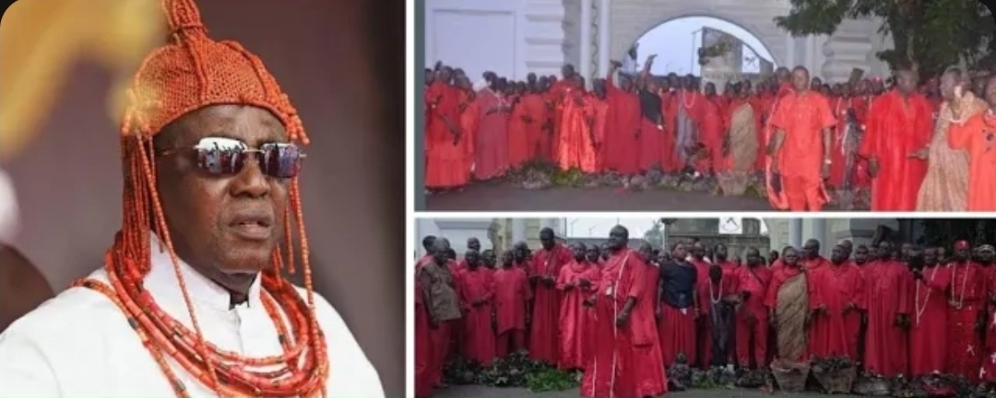
But if the Oba of Benin gathers his chiefs, raises a ceremonial staff, and recites a rhythmic Edo formula to combat insecurity within his domain, the Western-trained mind instinctively shifts its vocabulary. Suddenly, it’s not a prayer. It’s an incantation. It’s a spell. It’s juju.
Why does one man commune with the divine while the other plays with magic? The difference isn’t actually in the action; it’s in the vocabulary of power, race, and who owns the dictionary.
The Linguistic Double Standard
At their core, human attempts to influence the unseen world follow remarkably similar blueprints. Yet, our language splits them into two completely different categories.
On one hand, we have the “civilized” concept of Prayer. Its vibe is humble communication with a deity, focused on petitioning, confessing, and thanking, ultimately submitting to a higher power’s will.
On the other hand, we have the “exotic” concept of the Incantation. Its vibe is the formulaic coercion of mystical forces. Instead of requesting, it chants, casts, and summons, focusing on the mechanical power of the words to force a specific, automatic result.
Textbooks will tell you the distinction lies entirely in the attitude. They argue that a prayer humbly asks, while an incantation demands. A prayer focuses on a relationship with God; an incantation focuses on the words themselves think Abracadabra, which stems from an Aramaic phrase meaning “I create as I speak.”
It’s a neat academic theory. But in the real world, the line gets incredibly blurry and highly political.
When Prayer Acts Like Magic (and Vice Versa)
Let’s be honest: mainstream religious prayers are often incredibly formulaic.
When a Catholic recites the Hail Mary ten times in a row using rosary beads, or an Anglican reads the exact, unvarying text of the Book of Common Prayer, they are relying on precise, rhythmic phrases. If you’ve ever seen a televangelist repeatedly shout “In the name of Jesus, be healed!” to command a disease out of a body, that looks structurally identical to a spiritual decree. It is a formula used to trigger an immediate, tangible effect.
Yet, we rarely call the Pope’s traditional Latin blessings “magical spells,” even though Latin is the very language that gave us the word incantation (from incantare, meaning “to sing or enchant”).
Conversely, when traditional African rulers or indigenous elders perform rituals for the safety of their communities, they aren’t just hacking a spiritual vending machine. They are invoking ancestors, honoring creators, and expressing deep communal devotion. It is, by every definition of the word, a prayer.
The Corporate Twist: Ironically, the modern West has no problem using “incantation” metaphorically. When a CEO repeats buzzwords like “synergy, paradigm shift, and dynamic scalability” hoping it will magically fix a failing quarterly report, they are performing a corporate incantation. We tolerate the word when it’s a joke about white-collar workers, but use it as a weapon of minimization when applied to non-Western faiths.
Who Holds the Pen?
The vocabulary we choose isn’t accidental; it’s historical. During the eras of colonization and global expansion, European observers needed a way to categorize the spiritual practices of the people they conquered.
To label African, Indigenous, or Asian spiritual traditions as “religion” or “prayer” would be to grant them equal footing. It would mean acknowledging that they, too, were communicating with the divine. By branding their prayers as “incantations,” their priests as “witch doctors,” and their sacred spaces as “shrines of superstition,” it became much easier to justify dismantling them.
Language creates a hierarchy of legitimacy. “Prayer” wears a tailored suit or a silk robe; “incantation” wears feathers and holds a potion.
The next time you see a global leader or spiritual figurehead invoking the unseen to fix a very real, earthly problem like insecurity or war pay close attention to the caption under the photo. The words chosen tell you far less about what the person is doing, and far more about how much the writer respects the person doing it.

