

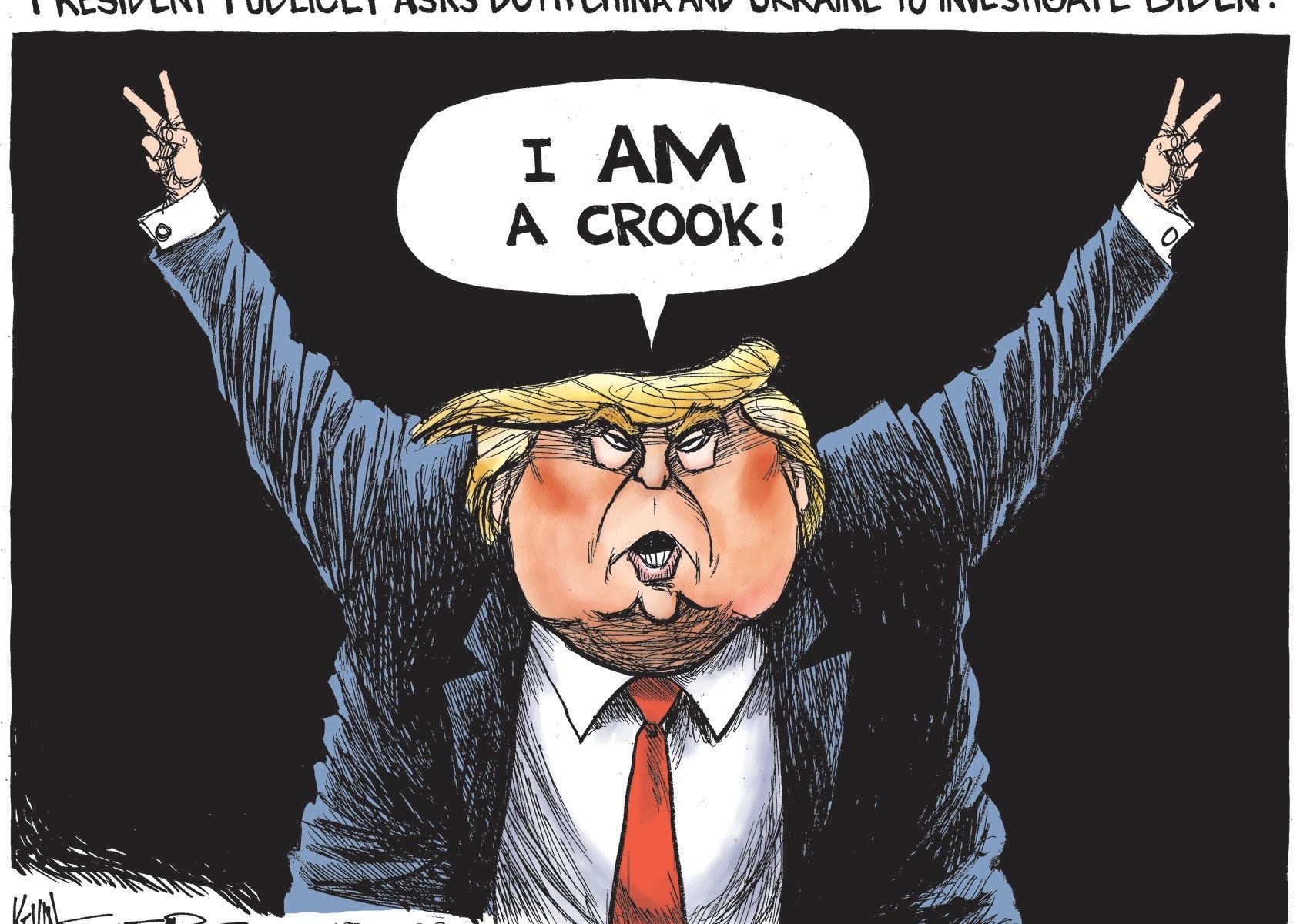
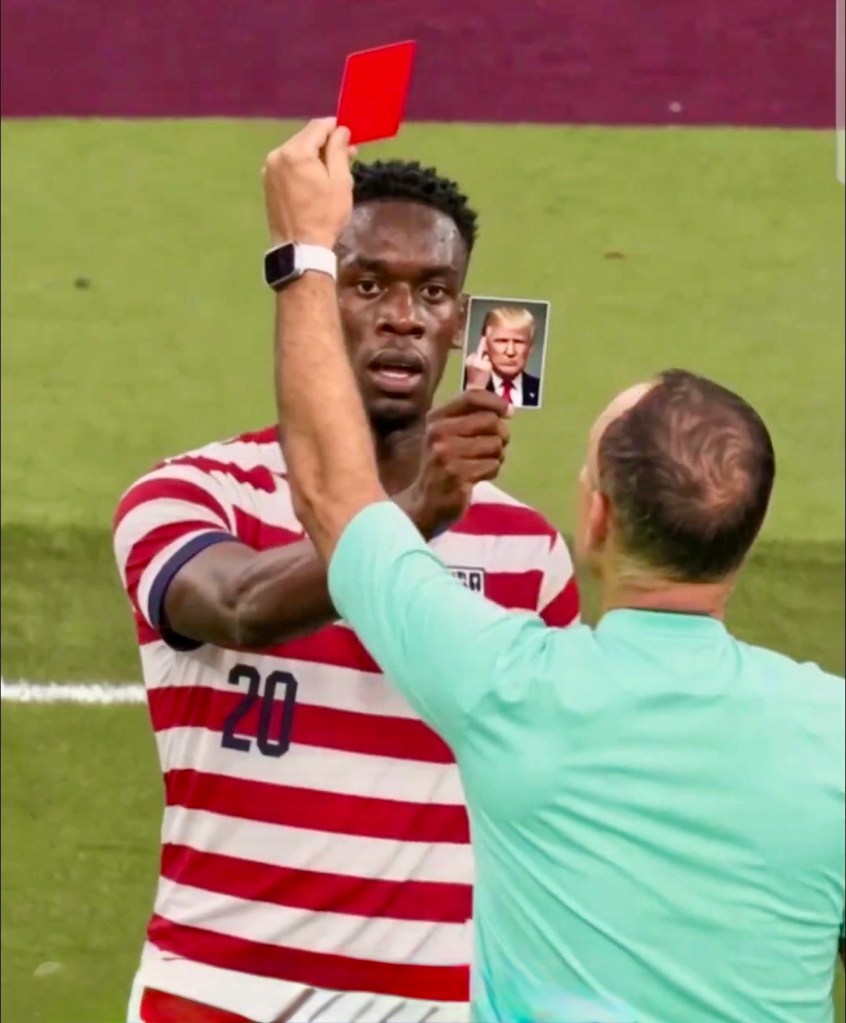
There was a time when rules were boring.
That was precisely their virtue.
The referee blew the whistle, the linesman raised a flag, the electoral officer counted the votes, and even when people grumbled, they generally accepted that the game was bigger than any one player. Institutions existed so that personal desires did not become public policy.
Then Donald Trump arrived.
On January 2, 2021, after losing the 2020 United States presidential election, Trump spent over an hour on a phone call urging Georgia Secretary of State Brad Raffensperger to “find 11,780 votes” to overturn the election result in the state. The number was not random. It was exactly one vote more than the margin he needed.
It was perhaps the most revealing political moment of modern America.
Trump was not asking for a recount. He was not requesting an investigation. He was effectively asking the referee to adjust the scoreline after the final whistle.
For Trump, losing is rarely evidence that he lost. It is usually evidence that somebody cheated.
The election was rigged.
The judges were biased.
The prosecutors were corrupt.
The media was dishonest.
The system was unfair.
The pattern is familiar. Whenever reality refuses to cooperate with Trump’s ambitions, reality itself becomes suspect.
What makes this dangerous is not merely the complaint. Every democracy allows losers to complain. The danger lies in systematically poisoning public confidence in institutions whenever they produce an inconvenient outcome.
A well can survive a bucket of dirt.
It struggles when somebody keeps pouring in truckloads.
The consequences extend far beyond elections.
Consider Trump’s recent comments during the FIFA Club World Cup. After a controversial red card against Real Madrid’s Dean Huijsen, Trump questioned the referee’s credibility and suggested the official’s past should be scrutinised. The language sounded remarkably familiar.
The referee was “suspect.”
The decision was unbelievable.
The process was unfair.
The victim was on “our” side.
It was the same script, merely performed on a different stage.
Football has always generated controversy. Fans have spent generations arguing about penalties, offside decisions, and refereeing errors. Yet the game survived because there was an understanding that referees, however imperfect, were part of a system whose legitimacy mattered more than any single call.
Without that understanding, every match becomes a conspiracy theory.
The losing team was robbed.
VAR was manipulated.
The referee was compromised.
The tournament was fixed.
The score was stolen.
The game itself becomes secondary to the suspicion.
This is Trump’s true political export.
Not conservatism.
Not nationalism.
Not populism.
Suspicion.
The permanent suggestion that rules are valid only when they produce the desired result.
For decades, the United States promoted itself as a model of institutional stability. Election officials counted votes. Courts interpreted laws. Referees enforced rules. Citizens accepted outcomes they disliked because they trusted the process.
Trump’s political genius lies in understanding that trust is easier to destroy than to build.
You do not need evidence.
You merely need doubt.
Plant enough uncertainty and people stop asking whether the system worked. They begin asking whether the system can ever work.
Once that happens, every institution becomes negotiable.
Every rule becomes optional.
Every decision becomes political.
Every referee becomes an enemy.
Every election officer becomes a conspirator.
Every judge becomes a partisan.
The irony is that Trump frequently presents himself as a champion of fairness. Yet fairness requires neutral rules applied consistently to everyone. Trump’s version of fairness often resembles something different: rules that work when he wins and investigations when he loses.
This approach may be effective politics.
It is disastrous governance.
Democratic systems depend upon millions of people agreeing to lose occasionally. Football depends on teams accepting refereeing decisions they dislike. Markets depend on investors trusting regulators. Courts depend on litigants accepting judgments they disagree with.
Civilisation itself is, in many ways, an agreement to respect outcomes we did not personally choose.
Trump challenges that agreement wherever he goes.
The concern is no longer confined to American politics. His style has become contagious. Around the world, politicians increasingly imitate the formula.
Lose an election? Claim fraud.
Face prosecution? Claim persecution.
Receive criticism? Attack the institution.
Get a red card? Investigate the referee.
The result is a world where trust continuously declines and outrage continuously grows.
The most worrying part is that institutions rarely collapse dramatically. They erode gradually.
A little less confidence here.
A little more suspicion there.
A little more pressure on officials.
A little less respect for neutral rules.
Until eventually nobody trusts the referee, nobody trusts the count, and nobody trusts the final score.
At that point, everyone is trying to find their own version of 11,780 votes.
Or perhaps 11,780 goals.
And the game, whether democracy or football, ceases to be a game at all.

