

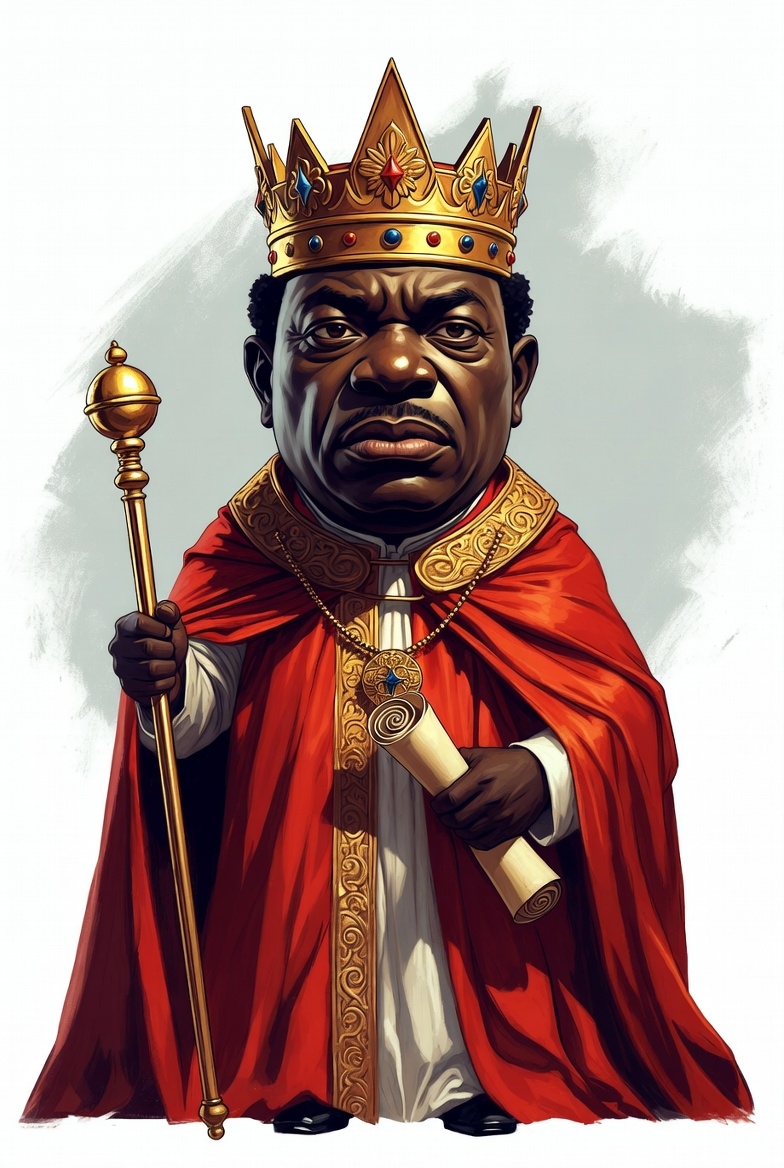
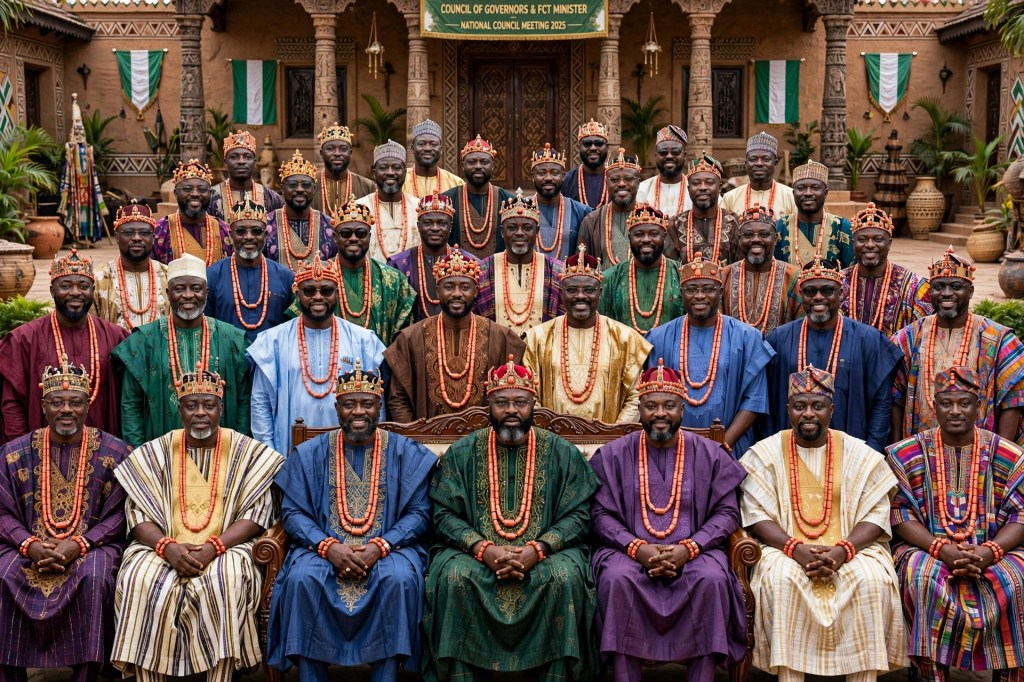
We love a good villain arc, and in Nigeria, the villain is almost always cast as the resident of Aso Rock. We spend our days analyzing the President’s macroeconomic policies, agonizing over the federal budget, and tracking every step of the central government. Meanwhile, tucked away in 36 state capitals (plus the Federal Capital Territory), a crew of 37 emperors is quietly running a Masterclass in Absolute Monarchy and we are barely talking about it.
The harsh reality of Nigerian politics is that while we are busy trying to fix the roof of our federal structure, the foundation is being eaten away by termites at the state level. If you want to know why Nigerian democracy feels like a car running on flat tires, don’t just look at Abuja. Look at your Governor.
Exhibit A: The Judiciary and the Handout Culture
Let’s start with the third arm of government, which is supposed to be the last hope of the common man. The Buhari administration actually tried something decent here: they sought to give the judiciary financial independence so judges wouldn’t have to beg the executive for light bills.
The result? It went to the states to die.
State governors promptly pulled up the drawbridge. Today, the financial autonomy of the state judiciary is largely a myth. Instead of institutional independence, we have a system where judges still rely on the “Wike-esque” model of governance waiting on the benevolence of governors for flag-off ceremonies just to get official cars and housing. When a judge’s transport and housing depend on the mood of the executive, “justice” becomes a very flexible concept.
The imperial disdain for the legislature is equally glaring. Take the Federal Capital Territory, where Minister Nyesom Wike treats the territory like a personal fiefdom. Senator Ireti Kingibe, the only elected senator representing the millions of residents in the FCT, has repeatedly lamented that Wike completely ignores her. He refuses to reply to any official correspondence or messages regarding governance and security. When an appointed minister can completely ghost the sole elected federal representative of the capital, accountability is officially dead. In fact, it practically took the military stepping in with boots on the ground during a tense, armed standoff to halt the ruthless destruction of private property and land enforcement actions by Wike’s administration in Abuja’s districts.
Exhibit B: The Murder of Local Government Autonomy
Then came the Tinubu administration with an arguably imaginative play. They sought to cut the apron strings tying local governments to state governors. The Supreme Court even delivered a landmark ruling on the Joint State and Local Government Accounts, effectively saying, “Let the third tier of government breathe.”
Did the governors comply? Please. They immediately went into survival mode to truncate this lofty idea.
The playbook for dismantling grassroots governance relies on a calculated, three-step method of monopolization. First, the governors conduct highly compromised State Independent Electoral Commission (SIEC) polls to ensure absolute control. Second, they orchestrate results where 100% of the local government chairmen perfectly mirror the political composition of the sitting governor. Finally, by starving councils of independent funds and usurping their roles, they keep the entire grassroots structure entirely dependent on the governor’s personal mood.
Look at Edo State, where the state government took on the direct responsibility of completely rebuilding the Oba Market in Benin City a project that legally and functionally falls squarely under the purview of local government authorities.
Because state governments are so desperate to control local funds, local governments have become so useless that Nigerians are bypassing them entirely, resorting to traditional institutions for basic communal services. The grassroots is dead; the governors killed it.
We saw this structural copy-paste reality play out vividly when the government shifted in Edo State: overnight, all the local government administrations miraculously flipped from being entirely PDP to entirely APC, aligning perfectly with the new order. It isn’t democracy; it’s an executive franchise.
Exhibit C: State Police: The Next Private Army?
Now, the federal government is flirting with the idea of creating state police to inject some “true federalism” into our security architecture. It sounds great on paper. Localized policing for localized crimes, right?
Wrong. History is about to repeat itself, and the forecast is bleak.
The last time we had native authority policing, it was abolished for a reason: it became the ruling class’s personal enforcement squad. If state police forces are established under the current political climate, they won’t be protecting citizens. They will become the private armies of the governors. “Selective policing” will become the order of the day. If you belong to the opposition, expect a state-sponsored knock on your door at 2:00 AM.
The 37 Emperors and the Silent Death of Lawmaking
Since 1999, it is hard to point to a single Nigerian state that has truly developed structurally and institutionally. What we have instead are strongholds of strongmen.
“L’État, c’est moi” (I am the State) King Louis XIV of France, and basically every Nigerian Governor today.
These 37 emperors have successfully disabled their state legislatures and judiciaries. They don’t engage in rigorous legislative processes to make laws anymore. Why bother with a debate when you can just issue an edict? Modern state governance in Nigeria is done via press statements. A governor wakes up, drops a press release with orders, and expects the voters to obey. No consultation, no representation, just vibes and executive orders.
Worse still, public funds are effectively privatized for personal consumption, shielded by the ultimate plot armor: Executive Immunity. Governors routinely show up at public events and ceremonies, donating eye-watering, multi-million naira sums on a whim without a single line-item budgetary approval backing the expense. It is public money treated like a personal bank account.
The Uncomfortable Truth
Bad governance in Nigeria does not start in Abuja; it has its deepest, most stubborn roots in the states.
For Nigerian democracy to survive and be sustained, we need a profound, radical reform of state-level politics. We need to dismantle the imperial governorships. But here is the tragedy: this is a discussion we haven’t even thought of having. We are too distracted by the circus in the capital to notice that the local ringmasters have stolen the tent.
Until we start holding our 37 emperors to the same standard we hold the president, we aren’t practicing democracy. We are just paying taxes to a kingdom.

