


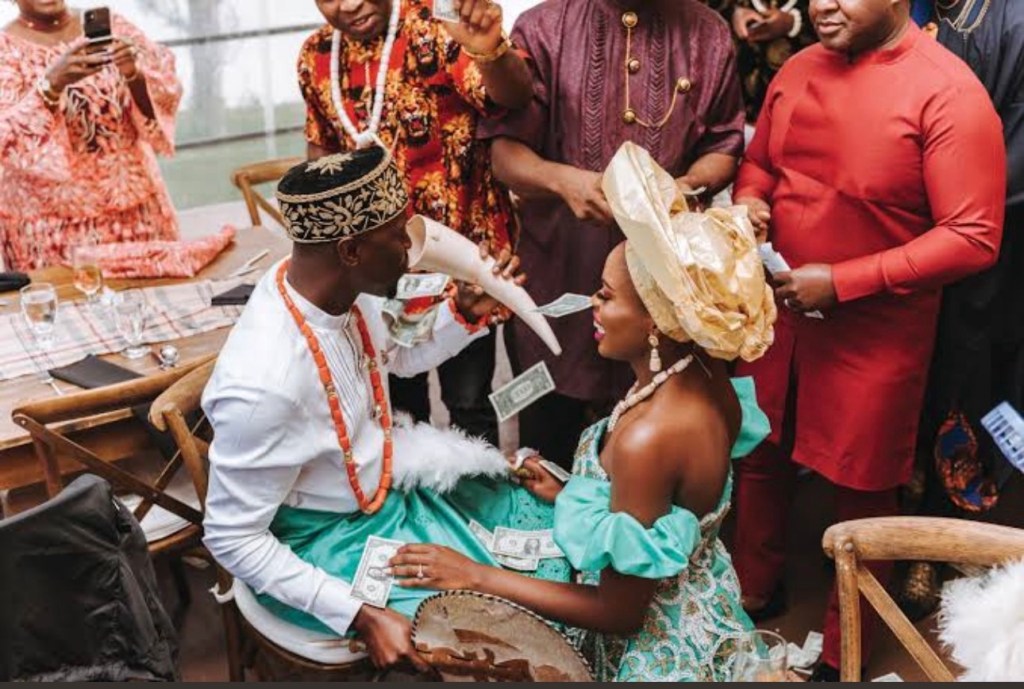
When a customary marriage is dissolved in Nigeria, the distribution of property and assets does not follow the same rules as a statutory (court) marriage. While statutory marriages are governed by Section 72 of the “Matrimonial Causes Act (MCA)” which grants judges wide discretion to divide matrimonial properties equitably, customary marriages are governed strictly by “Native Law and Custom”, subject to constitutional tests of fairness.
The customary law traditionally does not recognize a joint estate. Under the native law and customs of most Nigerian ethnic groups, property belongs strictly to whoever bought it or holds the customary title to it.
However, because this traditional approach often leaves women with nothing, Nigerian courts have evolved their reasoning using constitutional principles.
1. The Traditional Rule: Separate Property and Customary Hardship
Under the native laws of most Nigerian communities (whether Igbo, Yoruba, Hausa, or others), marriage does not merge the economic identities of the husband and wife.
The Husband’s Property: Real property (land, houses) acquired by the husband during the marriage remains exclusively his.
The Wife’s Property: Any personal property, trading stock, or land the wife acquired independently remains hers.
Traditional Hardship: Traditionally, if a woman spent decades helping her husband build his wealth, clear land, or manage businesses, customary law gave her “no automatic legal right” to a share of those assets upon divorce. She was only entitled to take her personal effects and any property she bought completely on her own.
2. How the Courts Have Reformed the Rule
Because the strict application of these traditions can be profoundly unfair, superior Nigerian courts (the High Courts, Court of Appeal, and Supreme Court) now filter customary property disputes through Section 42 of the 1999 Constitution, which prohibits discrimination based on gender.
Today, if a customary marriage is dissolved by a Customary Court or Area Court, a party can claim a share of the assets by proving “Direct or Indirect Financial Contribution”
A. The Principle of Direct Contribution
If a spouse can prove they directly contributed money to buy a piece of land or build a house during the customary marriage, the court will treat the property as a “joint venture” or a “resulting trust”.
Legal Example: If a wife provides the money for the roofing or the foundation of a house built on her husband’s customary land, a Nigerian court will reject any custom that says she has no rights to the house. The court will order that she is entitled to a percentage of the property or monetary compensation equal to her investment.
B. The Problem with “Indirect” (Non-Financial) Contribution
This is where customary law differs heavily from statutory law. In a statutory marriage, a housewife can argue that her indirect contributions, cooking, cleaning, raising children, and managing the home, enabled her husband to acquire wealth, and the court can award her property based on that.
In a “purely customary marriage”, Nigerian courts are still very reluctant to award a share of a husband’s real estate based “solely” on domestic duties. To get a share of land or buildings after a traditional divorce, the claiming spouse usually needs to show a paper trail, receipts, or concrete evidence of direct financial or physical involvement in acquiring that specific asset.
3. The Distinction Between Customary Systems
The way a court handles asset distribution can also depend on the specific type of customary law applicable to the geography or ethnic group:
Customary System – Key Property Rule upon Divorce
Yoruba Customary Law
Generally follows the principle of “Idi-Igi” or “Ori-Ojori” for family inheritance, but upon divorce, a wife is entitled to keep any property she acquired through her own trade (*Aje*). Jointly acquired property is split based on proof of contribution.
Igbo Customary Law
Traditionally, land is heavily tied to patrilineal lineage. A divorced wife traditionally has no right to her husband’s ancestral land. However, modern courts rely on the Supreme Court ruling in “Ukeje v. Ukeje” to strike down customs that completely deny women property rights, ensuring personal acquisitions are protected.
Islamic Law (Maliki Rites)
In Sharia and Area Courts, the concept of “Mut’ah” (a consolatory gift or parting payment) may be ordered for a divorced wife. Furthermore, the court will strictly separate the assets. If a wife contributed to her husband’s business or property, it is treated as a debt or a partnership share (Sharikah) that must be paid back to her.
4. Why the Upper Area Court in “Uzochukwu” Intervened
Tying this back to the case study of Mr. Mmala Uzochukwu: Mr. Mmala wanted to make claims to “some other property” after his traditional ruler supposedly dissolved the marriage.
The Upper Area Court stopped him because, under the law:
1. “The Court Must Verify the Title:” The court cannot divide property until it formally determines who owns what.
2. “The Decree is the Key:” A formal judicial divorce decree acts as the legal clean slate. Once the court formally dissolves the union, it sits as an equitable arbiter to look at the evidence of who bought the property, whose name is on the land receipt/Certificate of Occupancy, and whether any customary rules apply that violate constitutional human rights.
Without a formal court process, any attempt by a traditional ruler to reallocate land or buildings is legally unenforceable if one party objects.
 Centre for Nigeria Progress