

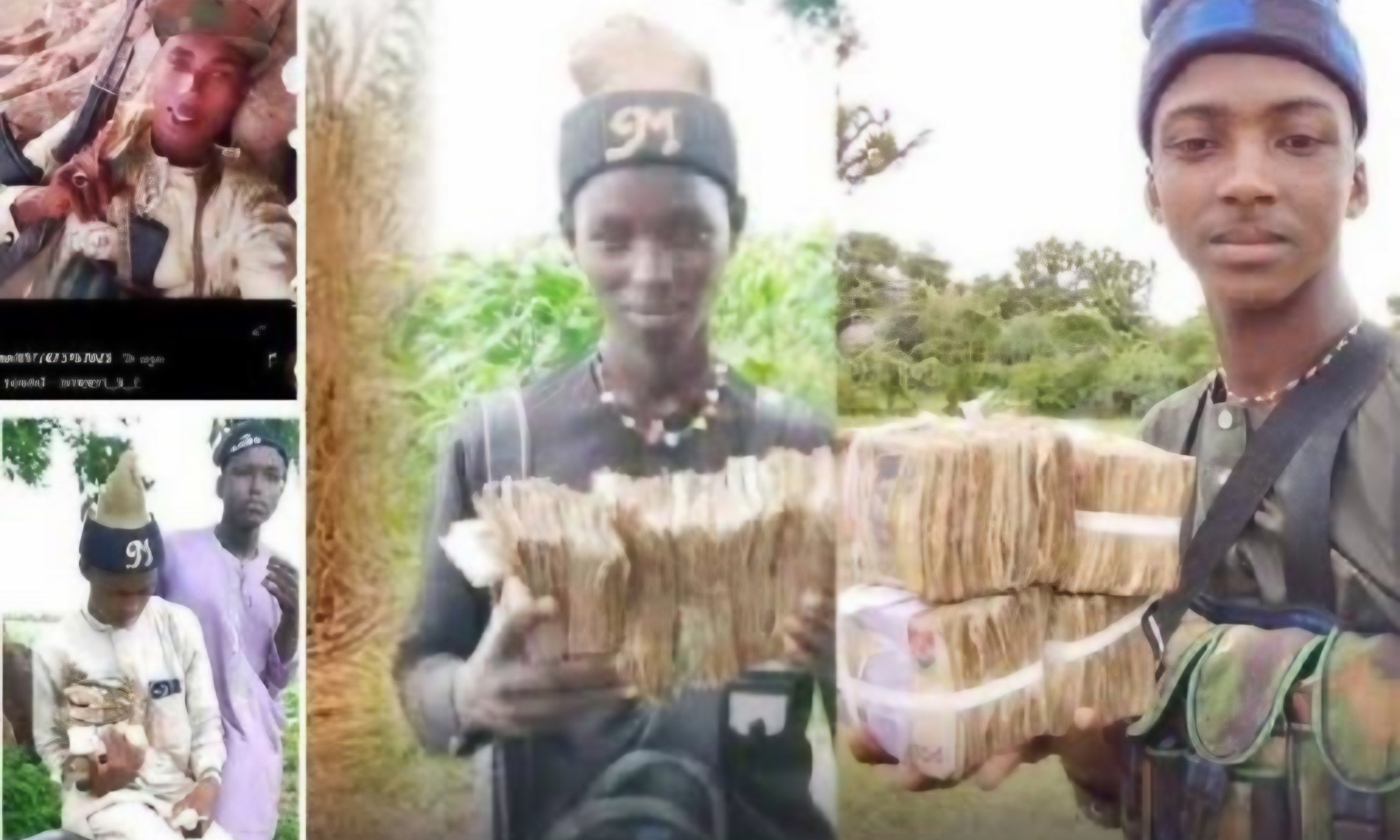
Here is a transcription of an interview of Dr. Hakeem Baba-Ahmed followed by my article analyzing the structured business behind these operations.
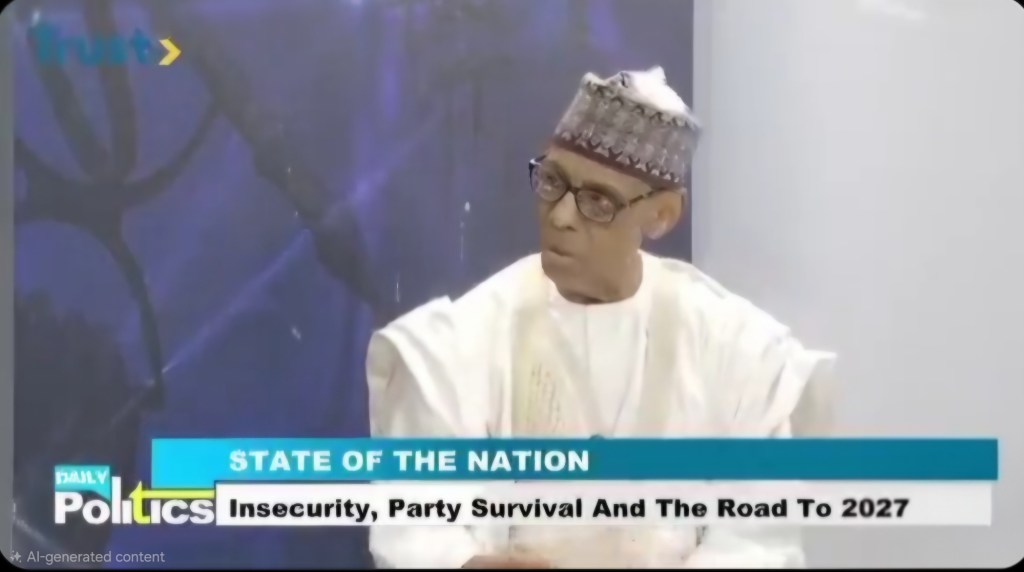
Dr. Hakeem Baba-Ahmed: “Last year, my nephew was kidnapped. That’s my late sister’s son, along with three other people. They went to a farm they had hired… and they were kidnapped just a few miles between Kaduna on the way to Kachia.
They put them up in this… maybe a house, maybe a hotel in the village. In the night, bandits came. One of them tried to run away; they followed him, shot him dead, and dragged his body back so that the other three could see what would happen if they tried to run away. They didn’t. They were taken just a few kilometers into the bush, and they spent 36 days there.”
Interviewer: “36 days?”
Dr. Hakeem Baba-Ahmed: “36 days. My nephew, my sister’s son. At that time, I was the… I was working in the Villa. There was hardly anybody I didn’t speak to. We gave them the coordinates, which were easy to get… For those 36 days, every single day, Mallam Danzad, we spoke with the bandits, and we spoke with our nephew and the two other people. Every single day, with four or five of his uncles. Every day we conversed. Every day they would tell us their condition, and we would negotiate.
And they kept making demands. They knew everything about him. They had done their research. The very day they picked him up, they said, ‘You are Ismaila’s son?’ They said, ‘Your uncle is so-and-so…’ They were talking about me. ‘He is a big man, he works in the Villa, so we are going to get a lot of money.’ They also told him about my other brother, Datti… and they said, ‘So we are going to ask for a lot of money.’
They kept them there. The first time, they told us: ‘Give us 25 million [Naira].’ We looked around for 25 million. And they wanted three motorcycles, a lot of drugs, a lot of medication, rice, all sorts of things. And we sent it to them. They told us where to go.”
Interviewer: “You sent it?”
Dr. Hakeem Baba-Ahmed: “Oh yeah, we sent it to them. But at the same time, we also told everybody. Imagine in that position—I know just about everybody who was in government, and I could walk into their offices and ask for sympathy:
‘Please, it’s my nephew. They are going to kill him if he’s not rescued.’ And people said, ‘Oh, give us the coordinates.’ It was easy to get the coordinates.”
Interviewer: “You gave them?”
Dr. Hakeem Baba-Ahmed: “Yes, we gave them all the coordinates. They would say, ‘Oh, we will spin.’ They spent 37 days. We spent… all in all, between the first day they were kidnapped and when they were released, we had spent close to 175 million Naira.”
Interviewer: “175 million?”
Dr. Hakeem Baba-Ahmed: “175 million Naira. This 175 million was made up of about, I think, 120 million in cash, in three batches. People took… we sent people to them. They gave us directions. In one of the three times that they took money, [the couriers] even ran into some military people who said, ‘You are going in the wrong direction, this is the way to go.'”
Interviewer: “I mean, when the bandits took the money?”
Dr. Hakeem Baba-Ahmed: “Yes, the people we sent to deliver the money got lost, and they said to the military, ‘We are looking for this direction, we’ve been told to come here,’ and they said, ‘This is the wrong way to go [go this way].’ “
Interviewer: “And the military would tell them, okay, take left, take right? This is a serious indictment.”
Dr. Hakeem Baba-Ahmed: “I’m sorry to say this, I regret this, but you see, when we say things like ‘there is a system behind this organization’—and this is last year. Now, what’s worse part of it is, when our nephew was released and we would ask him things like, ‘Well, what did they do with all that money?’ He would tell us. If we had sent money, and it gets to them by 6:00 PM, by 9:00 PM, a whole bunch of their seniors would come. Literally take away everything, leave a little bit—a little bit of money, a little bit of drugs, a little bit of medication—in the camp where our nephew was held.”
Interviewer: “He saw their seniors?”
Dr. Hakeem Baba-Ahmed: “Oh yeah, people would come and collect this money. And they would tell them, ‘We are just safekeepers. There are bosses ahead of us, and they have bosses, and they have bosses.’* This is an industry.”
Interviewer: “Has he explained how they look, the bosses?”
Dr. Hakeem Baba-Ahmed: “No, they never saw the bosses. The people who were holding them were simply… keeping them.”
Interviewer: “Sharing or comparing notes?”
Dr. Hakeem Baba-Ahmed: “No, no, no. They were just keepers of these people. They had senior people ahead of them. And those people had senior people. And the ones who kept them would tell them, ‘Our bosses…’ “
Interviewer: “Is it because you lost confidence in government that you parted with this humongous amount? And don’t you think it’s actually a criminal act to pay ransom?”
Dr. Hakeem Baba-Ahmed: “In retrospect, to be honest with you… we never went public, but we told government. We told everybody in government—I did. And I begged. I begged them. Because I didn’t believe that those people would let them go, in spite of the fact that we were giving them [money].”
Interviewer: “And you were scared he might likely be killed.”
Dr. Hakeem Baba-Ahmed: “Yes. When he was released, I could barely recognize him. He still limps…”
Interviewer: “Up till now?”
Dr. Hakeem Baba-Ahmed: “Yes, from an injury he had. And malnourished. And if we hadn’t given that money, I am sure they would have killed him. In fact, the very last money we sent, close to 100 million, was because they said, ‘This is the last demand we make, and we want it by tomorrow… in 48 hours, or we’ll kill these people.’ And my nephew said, ‘They will kill us.'”
Interviewer: “What did the security people, government, and all that tell you ultimately?”
Dr. Hakeem Baba-Ahmed: “They said, ‘We are trying to rescue them.’ 37 days. ‘We are trying our best.'”
Interviewer: “What do you think serves as an encumbrance for our forces to rescue people from bushes?”
Dr. Hakeem Baba-Ahmed: “There is a system behind this. These are not just riff-raff, Fulani people who have… I think there is a whole organization. There is a huge, a very tight network of these people. They have intelligence, they have access to weapons, they have access to communities. They know. People who will pick a General and take him into the bush, and his wife, and keep him until he dies, for goodness sake. This can’t be…”
The Anatomy
For years, the mainstream narrative surrounding the compounding insecurity in Nigeria has leaned heavily on a convenient trope: that the perpetrators are merely uncoordinated “riff-raff,” desperate herders, or localized bandits operating haphazardly out of the bushes.
However, a chilling eyewitness account from Dr. Hakeem Baba-Ahmed, National Chairman of the People’s Redemption Party (PRP) and former structural insider within the Presidential Villa, strips away this facade.
What lies beneath is not a series of desperate crimes, but a highly sophisticated, corporate-style kidnapping industry.
A Corporate Hierarchy in the Bush
The details of Baba-Ahmed’s personal nightmare, the 36-day abduction of his nephew between Kaduna and Kachia reveal a terrifyingly corporate operation.
When we look closely at how the abduction was executed, it mirrors a multi-tier corporate entity:
Intelligence and Market Research:
The bandits did not pick their targets at random. The moment Baba-Ahmed’s nephew was captured, the cell leaders already knew his lineage, his uncles, and their employment status at the Presidential Villa. They openly told the victim, “Your uncle is a big man… we are going to get a lot of money.”
The “Safekeepers” (Frontline Workers): The armed men holding victims in the forests are merely lower-tier contractors. Victims were explicitly told by their captors, “We are just safekeepers. There are bosses ahead of us, and they have bosses, and they have bosses.”
The Executive Tier (The “Seniors”): Within hours of a ransom drop hitting a camp, a distinct group of “seniors” would arrive to audit and siphon away the bulk of the proceeds. The cash, motorcycles, and logistics were instantly re-routed up the chain, leaving the frontline guards with nominal cuts and basic supplies.
Total Capital Flow:
The 175 Million Naira Ransom
The sheer volume of wealth passing through this shadow economy is staggering. In this single case, the family was forced to secure and deliver 175 million Naira comprising roughly 120 million Naira in cash delivered in three separate tranches, alongside side-demands for motorcycles, foodstuffs, and heavy supplies of pharmaceutical drugs.
“`
[Family Ransom Payment]
│
▼
[Local Captors / Safekeepers] ──► (Retain minor cash / basic supplies)
│
▼ (Within 3 Hours of Delivery)
[The “Seniors” / Auditors]
│
▼
[Upper-Tier Network / Oligarchs]
“`
When operations demand hundreds of millions of Naira per victim, it is no longer petty banditry. It is a highly lucrative macro-economy that requires banking access, money laundering networks, and high-level logistical coordination.
The Failure and Complicity of the State
Perhaps the most harrowing aspect of Baba-Ahmed’s testimony is the total paralysis and implicit redirection of state apparatuses. Despite utilizing top-tier political leverage inside the government villa to provide exact geographical coordinates of the kidnap cell, the state’s response was a hollow echo of “We are trying our best.”
Worse still is the breakdown of security at the ground level. Couriers tasked with delivering the multi-million Naira ransoms recounted getting lost in the bush, only to encounter military checkpoints where personnel allegedly gave them directions to ensure the cash reached the bandits smoothly (“You are going in the wrong direction, take this way”).
Whether born out of systemic fear, a desire to avoid a bloodbath, or sinister collusion, the reality remains unchanged: the state acts less like an enforcement agency and more like a passive traffic warden for illicit cash flows.
Moving Past the “Riff-Raff” Fallacy
Nigeria cannot secure its future by misdiagnosing its disease. The country is not fighting disorganized forest-dwellers; it is up against a tightly networked syndicate armed with advanced intelligence, sophisticated weapon supply chains, and deep community penetration.
As long as the political and military strategy treats kidnapping as a series of isolated criminal acts rather than a heavily subsidized shadow industry with stakeholders at multiple levels of society, the economy of terror will only continue to grow.
 Centre for Nigeria Progress