

There is an old saying in Nigerian governance that has practically become an article of faith: “We don’t have a money problem; we have a spending problem.”
Actually, let’s correct that. Looking at the latest economic acrobatics from Abuja, it is crystal clear that money is absolutely not Nigeria’s problem. The government is swimming in it. It’s the citizens who are drowning.
When the APC administration boldly stepped up to the podium and announced the end of the petroleum subsidy, they painted a picture of a newly liberated economy. The math, they assured us, was simple. The subsidy was a vampire sucking the nation dry, forcing us to borrow endlessly just to keep fuel prices stable. By cutting it off, the government proudly claimed a revenue increase of nearly 100%.
Basic logic—the kind they teach in primary school—dictates that if you stop a massive financial bleed and double your income, your debt should start going down. Right?
Wrong. Welcome to Nigerian Math, where 1 plus 1 equals “We need another foreign loan.”
The Paradox of the Overflowing Empty Pocket
Instead of a downward trajectory for our debt profile, Nigeria’s debt burden has ballooned. To explain this away, the federal government points to increased allocations distributed down to state governors. They have also aggressively expanded the tax net, squeezing every available kobo out of an already gasping private sector.
So, let’s follow the money trail:
- Fuel subsidy? Gone.
- Taxes? Up.
- Government revenue? Doubled.
- National debt? Higher than ever.
It takes a special kind of administrative wizardry to make more money, tax more people, cancel your biggest expense, and still end up deeper in debt.
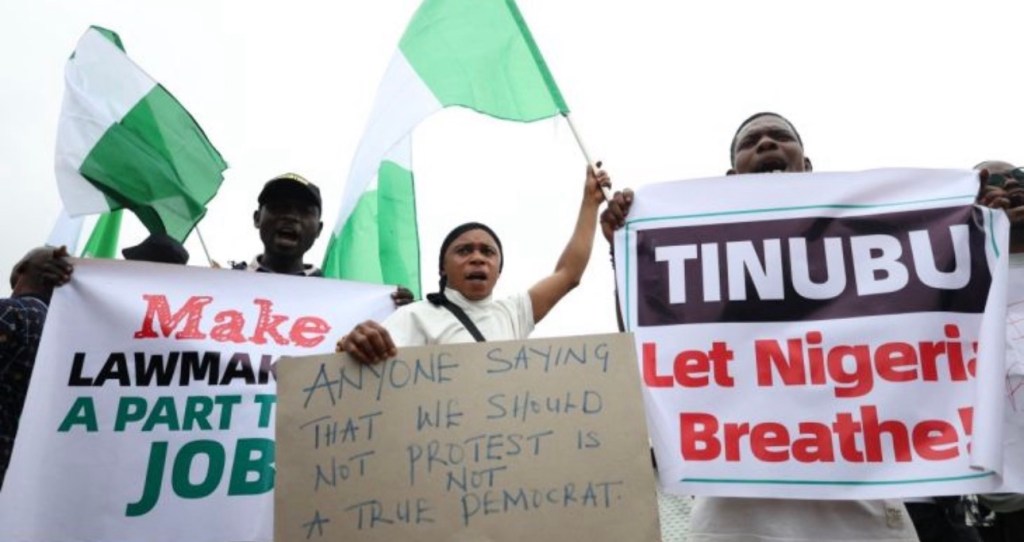
Meanwhile, what is the impact of these brilliant monetary policies on the actual people of Nigeria? Total impoverishment. We are witnessing the worst economic state of the populace since independence. The middle class has been effectively erased, replaced by a desperate scramble for survival. And just to ensure there’s no peace of mind while your wallet is being emptied, insecurity continues to buffer the average citizen from every angle. Head or tail, the Nigerian loses.
Who is the Prosperity For?
This begs a fundamental, painful question: Why would a government do this to its own people?
If the state houses are overflowing with newly recovered subsidy trillions and expanded tax revenues, why are the hospitals still empty of medicine, the roads still broken, and the power grids still collapsing?
The answer is as old as the republic itself. The “reforms” aren’t designed to save the country; they are designed to cushion the lifestyles of those running it. While the average citizen is told to “endure” and “sacrifice” for a better tomorrow, official convoys get longer, political appointee lists get fatter, and luxury allocations for government offices miraculously survive every budget cut.
It turns out the subsidy wasn’t actually eliminated. It was just transferred—from the fuel tanks of ordinary Nigerians to the private accounts of the political elite.

