

One of the easiest ways to understand a President is not to listen to his speeches.
Listen to his spokesmen.
A President’s spokesman is like a family portrait hanging in the living room. It may not be the President himself, but it tells you everything about the owner of the house.
Spokesmen do not accidentally become spokesmen. They are selected, promoted, protected and retained. They are trusted with the most valuable commodity in politics: the President’s voice.
That is why every spokesman eventually becomes a reflection of his principal.
Show me a President’s spokesman and I will show you the President.
Buhari’s School of Political Combat
Muhammadu Buhari’s presidency gave Nigeria many things.
Economic recessions.
Border closures.
Fuel scarcity.
Currency redesign.
And perhaps most memorably, a generation of government communicators who treated public discourse like a street brawl.
The Buhari years produced an extraordinary communications doctrine.
Never apologise.
Never retreat.
Never admit error.
Attack the critic.
Question the motives.
Repeat until exhausted.
The administration’s principal defenders often behaved less like public servants and more like political bodyguards.
Every criticism was evidence of conspiracy.
Every journalist was potentially hostile.
Every opposition figure was allegedly plotting national destruction.
The objective was not persuasion.
The objective was domination.
Listening was optional.
Lecturing was compulsory.
Government communication became a one-way street.
Citizens were expected to receive wisdom from above, preferably without asking questions.
If politics were football, Buhari’s communications team preferred tackling to passing.
The Hall of Fame of Presidential Defenders
No discussion of presidential communications would be complete without acknowledging some of the era’s most colourful practitioners.
Garba Shehu and Femi Adesina often approached criticism with the enthusiasm of men defending a medieval castle under siege.
Whether the subject was insecurity, economic hardship, fuel shortages or the latest government controversy, the response was usually delivered with the confidence of a man explaining to drowning passengers that the ship was experiencing a minor moisture imbalance.
Facts were important.
Government facts were more important.
Alternative facts were often treated as acts of rebellion.
The result was a communications culture in which admitting obvious failures became harder than finding fuel during a fuel scarcity.
Enter the Tinubu Administration
Then came Bola Ahmed Tinubu.
Many Nigerians assumed a new administration would bring a different communications style.
Instead, they discovered that the old vehicle had merely received a new coat of paint.
If Buhari’s team walked so that government spokesmen could run, Tinubu’s team has qualified for the Olympics.
The current administration possesses an extraordinary talent for converting public suffering into evidence of success.
Food prices rising?
A sign reforms are working.
The naira collapsing?
A sign reforms are working.
Businesses closing?
A sign reforms are working.
Citizens struggling?
An opportunity to appreciate how well reforms are working.
The government has become the first institution in history capable of finding positive indicators in every negative development.
If a meteor struck Abuja tomorrow, one suspects somebody would appear on television to explain that the impact demonstrates investor confidence.
Bayo Onanuga and the Art of Dismissal
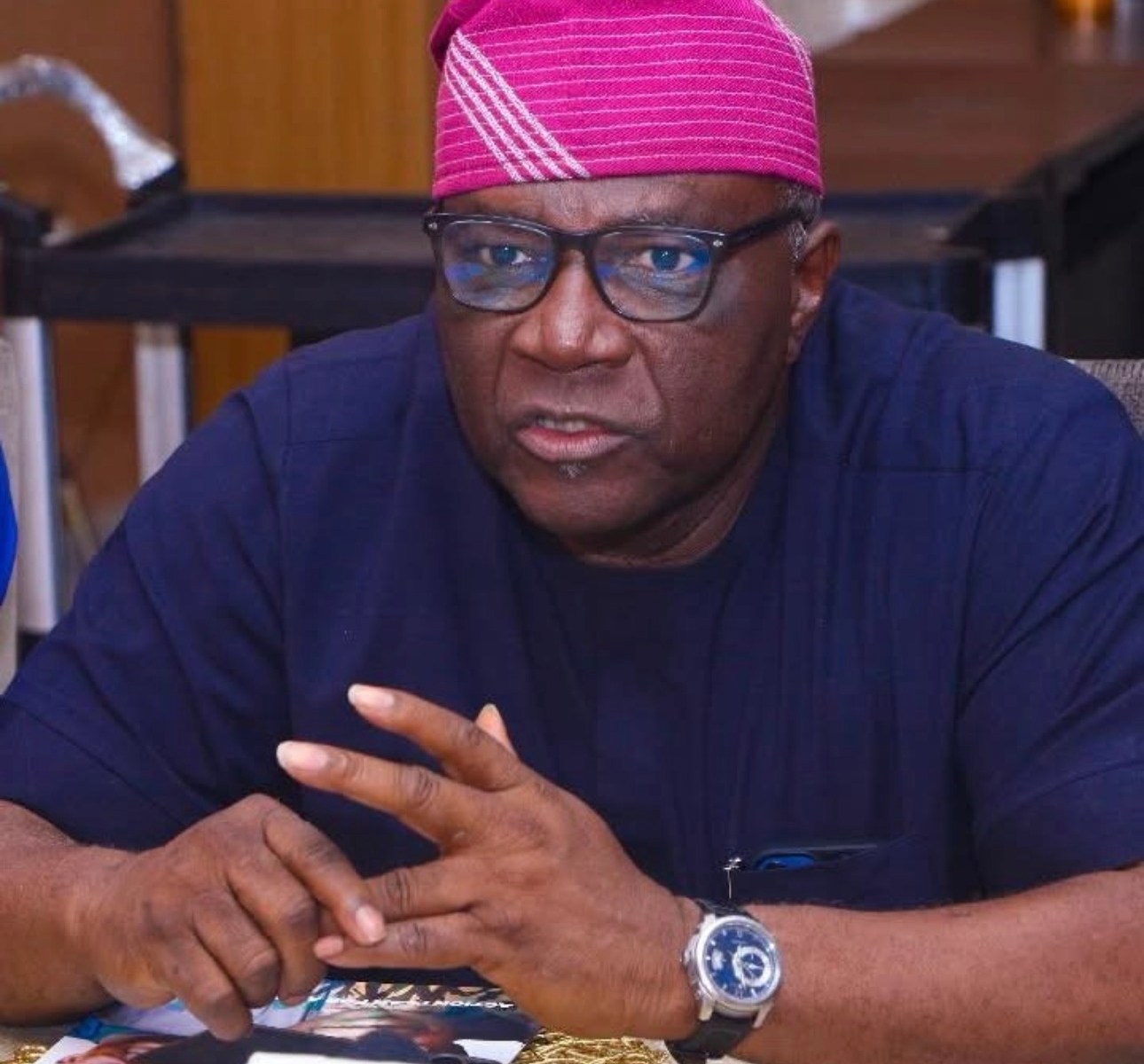
Among the most prominent defenders of the Tinubu administration is Bayo Onanuga.
His public appearances have increasingly become case studies in modern Nigerian political communication.
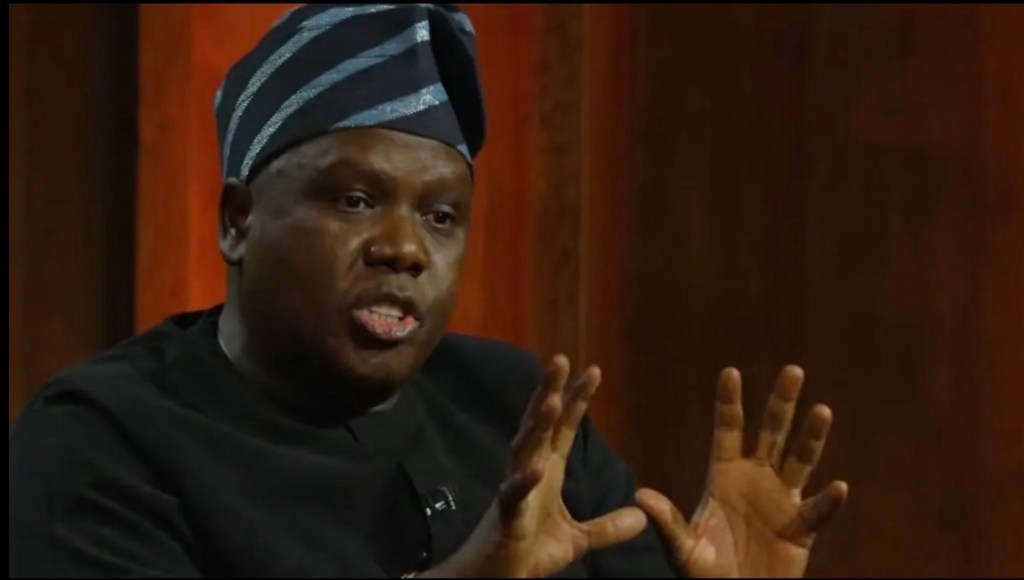
Particularly memorable was his encounter on ARISE Television.
Viewers expecting a dialogue often received something closer to a lecture.
Questions were not always treated as legitimate inquiries deserving answers.
They frequently appeared to be regarded as evidence that the questioner had failed to appreciate the brilliance of government policy.
The underlying tone was familiar.
The government knows.
The public does not.
The government understands.
The people merely complain.
The government sees the future.
The citizens should stop asking difficult questions and enjoy the journey.
It is a fascinating communications strategy.
It assumes that public frustration is not caused by hardship but by insufficient appreciation of hardship.
Daniel Bwala Meets Reality Television
Then came Daniel Bwala’s now-famous encounter with journalist Mehdi Hasan.
Political communication is easy when everyone agrees with you.
It becomes considerably harder when the interviewer arrives carrying receipts.
Hasan did not merely ask questions.
He arrived armed with archived interviews, previous statements, video recordings and documented contradictions.
It was the journalistic equivalent of a tax audit.
Every assertion was examined.
Every inconsistency was highlighted.
Every political evolution received forensic attention.
The interview became less about defending the administration and more about defending previous statements.
For viewers, it offered a valuable lesson.
Confidence is not evidence.
Certainty is not proof.
Volume is not verification.
A spokesman may dominate a local television studio.
He may discover that the wider world demands supporting documentation.
Politics can be like secondary school.
The student who impresses classmates by claiming he invented electricity occasionally encounters an examiner who asks for calculations.
The Patron Saint of Political Communication
Every profession has its patron saint.
Lawyers have Lord Denning.
Scientists have Einstein.
Political communication in modern Nigeria increasingly appears to have adopted MC Oluomo.
The philosophy is simple.
Raise the volume.
Lower the standards.
Repeat until victory is declared.
Why engage in dialogue when monologue is available?
Why persuade when one can intimidate?
Why answer questions when one can attack the questioner?
The tragedy is that this style may win applause from loyal supporters while simultaneously destroying public trust.
A government cannot insult its way into credibility.
Neither can it bully citizens into confidence.
The President Behind the Curtain
The defenders of every administration share one common characteristic.
They sound remarkably like their principal.
This is not coincidence.
It is selection.
Presidents hire people who reflect their instincts.
A spokesman who embarrasses a President rarely survives.
A spokesman who perfectly channels the President’s worldview often prospers.
That is why the behaviour of spokesmen matters.
They reveal the administration’s DNA.
If they are arrogant, arrogance is tolerated.
If they are dismissive, dismissal is rewarded.
If they are combative, combat is encouraged.
The spokesman is the visible symptom.
The President is often the underlying cause.
Listen carefully to Tinubu himself.
His certainty.
His confidence.
His tendency to dismiss criticism.
His belief that the public simply needs more time to appreciate the wisdom of his decisions.
Then listen to his spokesmen.
The resemblance is remarkable.
Democracy Requires Conversation
Democracy is not government by decree.
It is government by consent.
Consent requires trust.
Trust requires communication.
Communication requires listening.
The current trend in Nigerian political discourse often skips that final step.
Government talks.
Citizens listen.
Government talks louder.
Citizens become poorer.
Government explains why poverty is actually progress.
Citizens become confused.
The cycle repeats.
Meanwhile trust continues its long migration out of the building.
Conclusion
The spokesman is rarely the story.
He is the clue.
The real story is the President whose voice he carries.
Buhari’s spokesmen reflected Buhari’s combative approach to criticism.
Tinubu’s spokesmen reflect Tinubu’s confidence, certainty and occasional impatience with dissent.
The messenger always reveals the master.
That is why Nigerians should pay close attention whenever a presidential spokesman takes to the podium.
Sooner or later, the President himself begins speaking through the spokesman.
And sometimes the echo is louder than the original voice.
As Shakespeare might have observed had he been forced to watch Nigerian politics on television: the spokesman doth protest too much, and in doing so tells us everything we need to know about the king.
 Centre for Nigeria Progress