

The Wrong Diagnosis
There is a comfortable explanation for why Nigerian officials behave as though accountability is an imported eccentricity, like fondue or the metric system. The explanation runs roughly like this: Nigerians have an authoritarian political culture, inherited from precolonial kingship and reinforced by military rule, and this culture manufactures leaders who cannot be shamed because shame requires a moral vocabulary the culture never built.
It is a tidy theory. It has the added advantage of being unfalsifiable, since any evidence of impunity simply confirms the cultural diagnosis rather than complicating it. It is also, respectfully, a category error. A governor who diverts council funds through a joint account is not channelling some ancestral conception of “ijoba.” He is doing exactly what the Constitution, until very recently, structurally permitted him to do, and what several governors are still doing regardless of what the Constitution now says.
The Ruling Nobody Obeyed
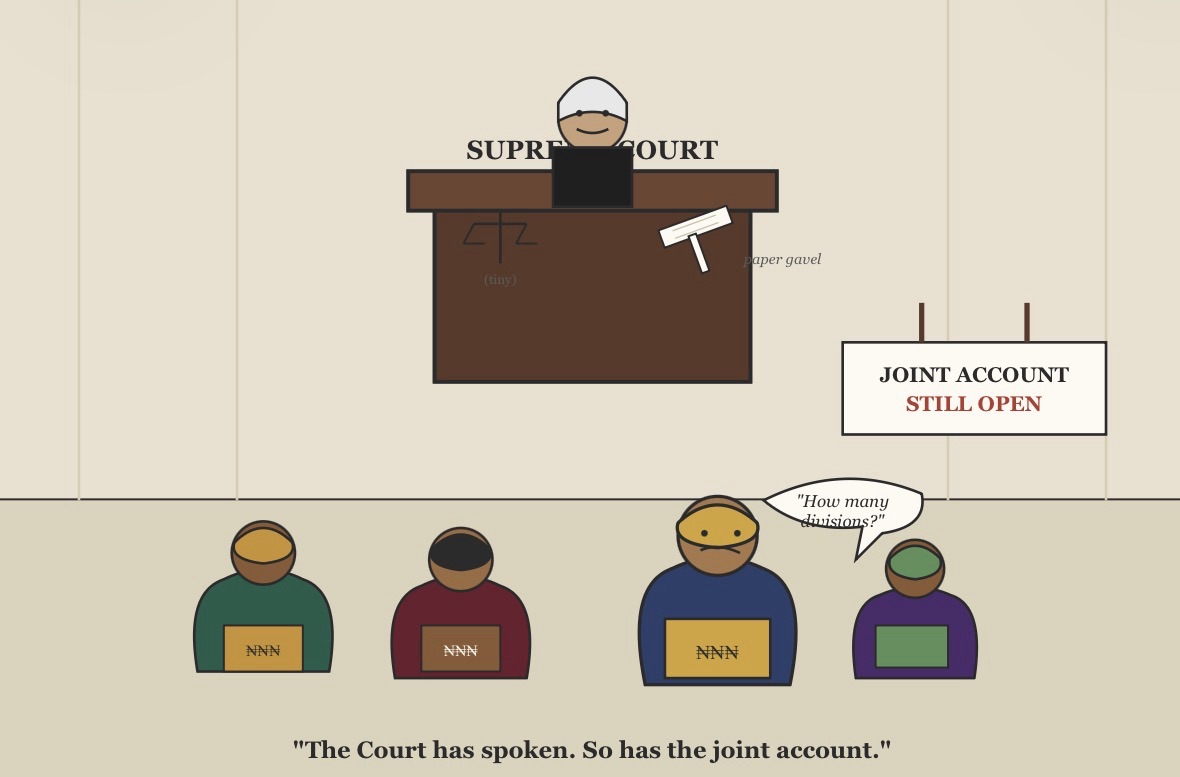
On 11 July 2024, the Supreme Court delivered what was widely, and not unreasonably, described as a landmark judgment. A seven-member panel led by Justice Mohammed Garba used the power of interpretation to give a different meaning to Section 162 of the Constitution, the provision governors had spent a quarter-century treating as an invitation to run local government allocations through a joint state-council account that the court itself called a honeypot of abuse. The judgment did not merely scold. It declared caretaker committees illegal and barred councils run by them from receiving federal allocation, and it ruled that all 774 local governments should receive their statutory allocations directly from the federation account, rendering the old joint-account practice unconstitutional by implication.
What happened next is the actual subject of this article, because it is more instructive than the ruling itself. A full year later, an analysis found that state governors had retained control of council allocations totalling roughly 4.5 trillion naira, continuing to route the money through state governments in open defiance of the judgment. The Central Bank, which had been directed to open individual accounts for each council, had not managed it by the following January in several states. Some governors simply legislated around the ruling: Anambra’s Local Government Law of 2024 required that federal allocations still be placed first into the state joint account before disbursement, which by design contradicted the Supreme Court’s decision.
This is not a culture failing to absorb a moral lesson. This is a compliance mechanism that does not exist. The apex court can announce a constitutional principle; it has no enforcement apparatus of its own to compel 36 governors to relinquish a revenue stream they have relied on for a generation, and everyone in the chain of command knows it.
Impunity as Institutional Design
The Osun funding dispute belongs in the same file, not as a separate scandal but as the same structural gap wearing a different governor’s face: a federal centre with the discretion to withhold or delay statutory transfers, and no independent, self-executing mechanism forcing compliance short of the aggrieved party mounting its own litigation, which takes years the political cycle does not offer.
Joseph Stalin, asked what he made of the Vatican’s likely objections to his plans for Eastern Europe, is said to have replied with a question of his own: how many divisions did the Pope have? It was a crude but accurate summary of how power actually respects moral or legal authority that cannot back itself with force. Nigeria’s governors have absorbed the same lesson without needing to read the biography. The Supreme Court can rule, the Constitution can declare, the communiqués can flow from Abuja, but the governors are, in effect, asking the same question Stalin asked: how many enforcement divisions does the apex court have? How many EFCC raids, how many CBN account freezes, how many arrest warrants follow automatically from a judgment they choose to ignore? At present the honest answer is none, and an institution with no divisions gets treated accordingly, regardless of how correct its judgments are.
Compare this to systems where a court order against the executive is backed by an institution with the standing and the teeth to enforce it swiftly, whether that is a properly resourced anti-graft body with the political insulation to prosecute sitting officials or an electoral and legislative architecture where a defying governor faces real short-term consequences rather than a strongly worded communiqué. Nigeria’s problem is not that its officials lack a folk memory of Athenian democracy. Its problem is that the punishment for ignoring the Supreme Court of the Federal Republic is, at present, approximately nothing.
What the Cultural Theory Lets Everyone Off the Hook For
There is a reason the “authoritarian culture” explanation is popular among precisely the class of person best served by it. If Nigerian impunity is an inherited cultural condition, then no individual governor is especially culpable, no specific statute needs rewriting, and no particular enforcement agency needs to be resourced, restructured, or embarrassed into action. It is everyone’s fault and therefore no one’s, which is a very comfortable place for the people currently sitting on 4.5 trillion naira of local government money to have the argument conducted.
The more useful, less flattering diagnosis is that Nigeria has built, article by article, a constitutional order full of correct pronouncements and empty of enforcement teeth, and that officials are behaving with perfect rationality within that design. Fix the enforcement gap and you will find Nigerian elite behaviour changes considerably faster than Nigerian elite culture ever will.

