

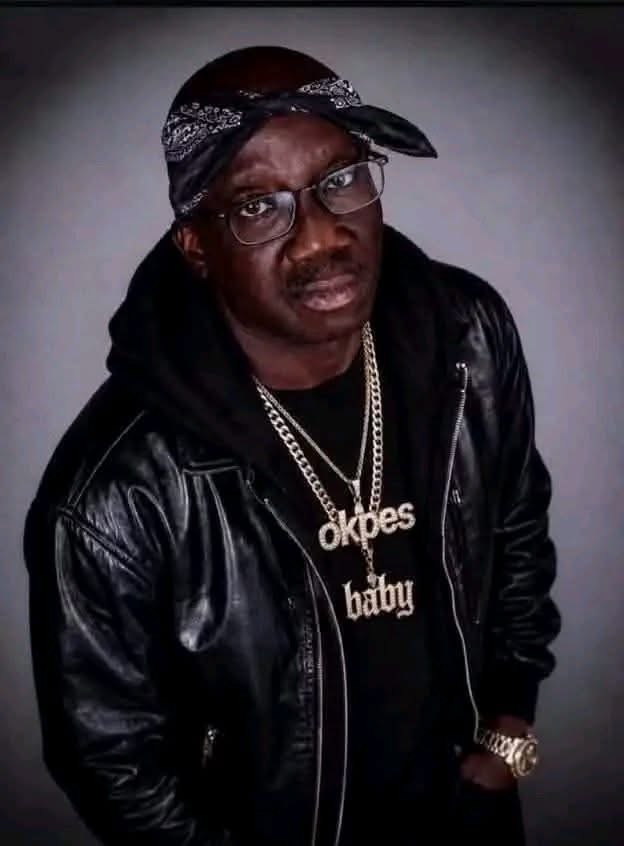
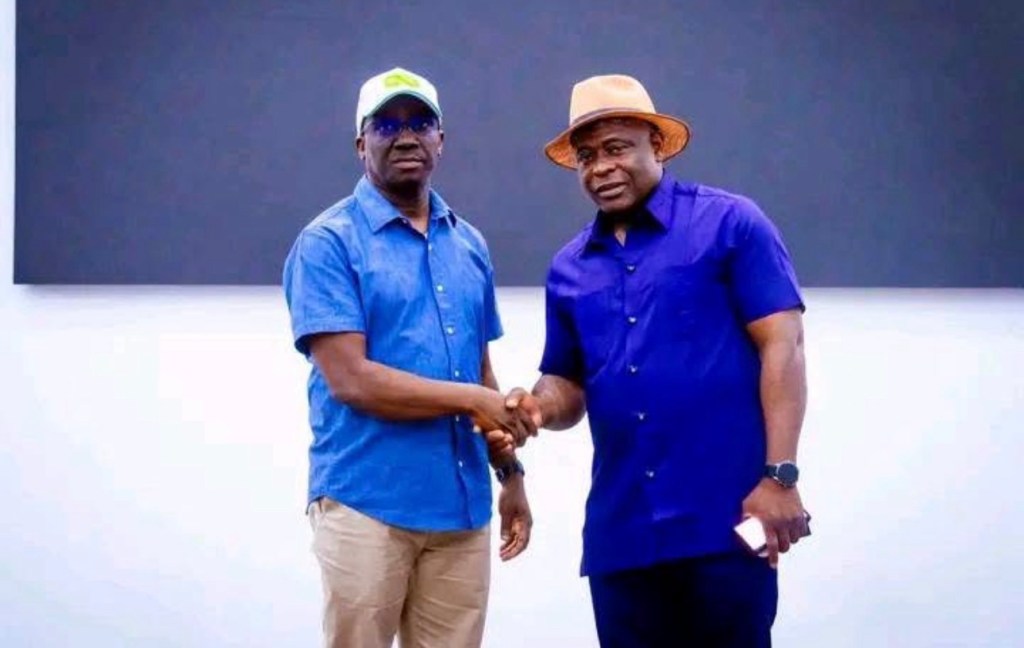
The Governor in Beer Parlour Kit
Governor Monday Okpebholo of Edo State is a man who, on the evidence of a recent photograph shaking hands with new Speaker of the Edo State House of Assembly Yekini Idiaye, appears to have mistaken the office of Chief Executive for a weekend errand run. A branded baseball cap. Clothing better suited to a beer parlour than a state formal meeting. Khaki trousers that suggest safari rather than sovereignty. This is not a man dressing down to meet the people. This is a man dressing as though the people are an inconvenience he is squeezing in between other appointments.
Edo State is not short of institutional memory on this point. Its governors have, at various points in the past four decades, understood that the chair carries weight the man does not automatically inherit, and that clothing is one of the few instruments available to remind everyone, including the occupant, of the difference. Mr Okpebholo’s cap and untucked shirt ensemble suggests either that this memory has lapsed or that he considers himself exempt from it.
The Speaker Who Cosplayed His Own Downfall
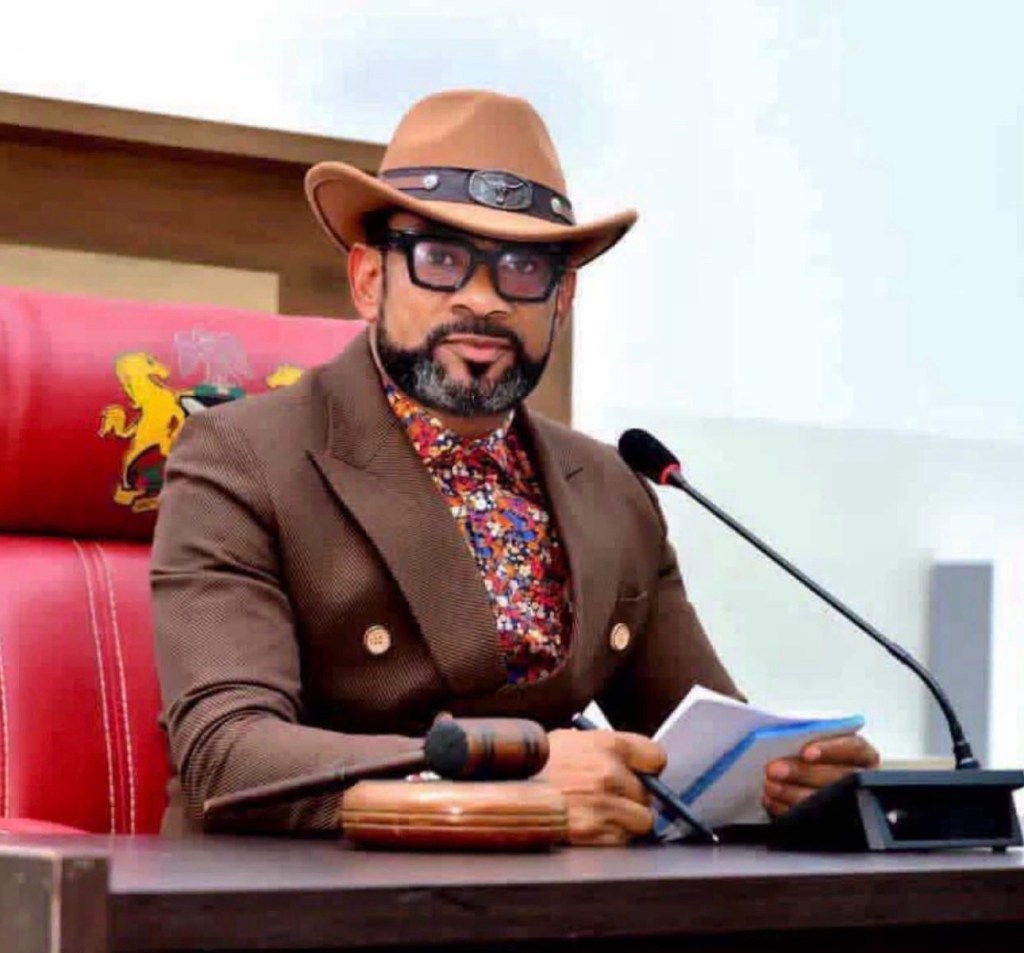
Then there was Blessing Agbebaku, until this week Speaker of the Edo State House of Assembly, photographed presiding over plenary in a felt cowboy hat with a metal band buckle, tinted indoor spectacles, and a floral shirt loud enough to be heard over his own gavel. The chair beneath him bore the coat of arms of the Federal Republic. The hat above him belonged, aesthetically, somewhere between a Stetson showroom and a music video.
It would be unfair to blame the hat for what followed, but it would be equally naive to pretend the hat was incidental. On 16 August 2026, Agbebaku was forced to resign during a plenary session lasting barely thirty minutes, as colleagues moved toward impeachment over allegations of financial impropriety, including claims he inflated the purchase prices of Lexus 570s and Hilux vans bought for members. His successor, Yekini Idaiye, was not shy about the framing, describing the change of guard as an end to a leadership style he characterised as blind and self-interested, and ordering Agbebaku to surrender the official vehicles in question. A six-man probe panel has since been convened to examine the allegations.
One does not wish to overstate the metaphysics of millinery. A cowboy hat did not embezzle anything, if the allegations are ultimately proven. But there is something fitting, almost too neat for satire to improve upon, in a Speaker who spent his tenure dressed for a role in a Western eventually being run out of town by his own posse. The costume, it turns out, was more prophetic than anyone intended.
What the Suit Was Actually For
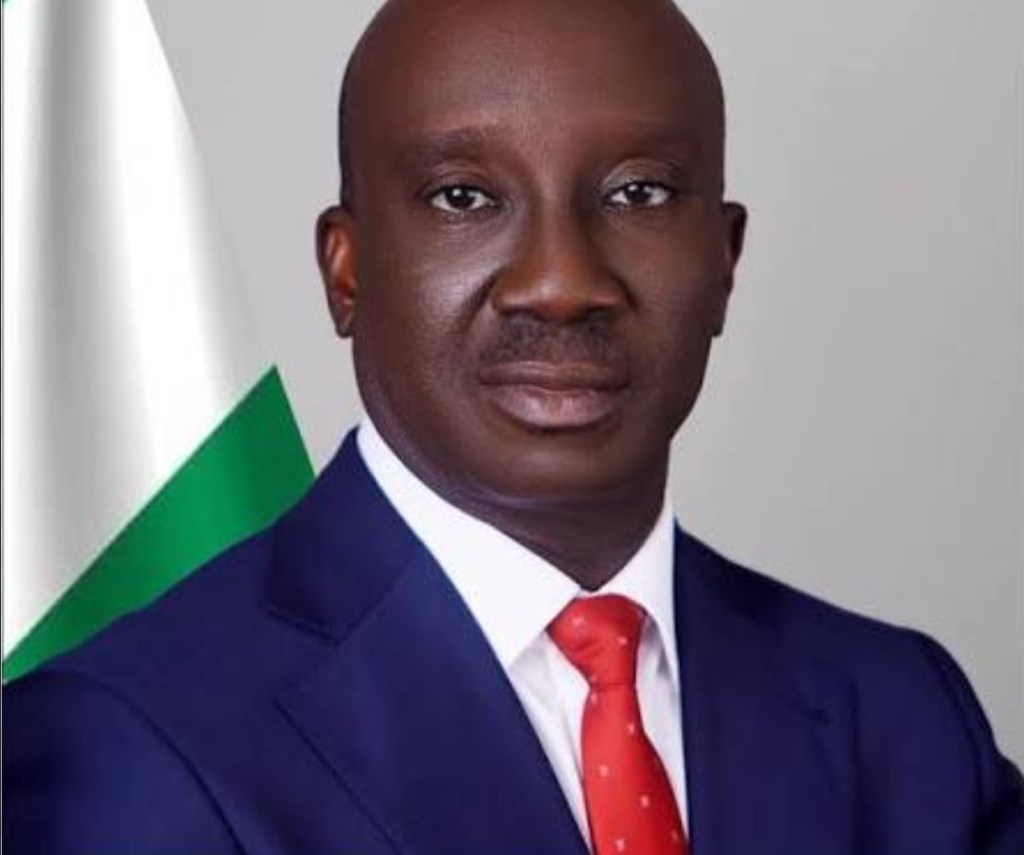
The pressed suit, the tie, the polished shoes: these were never about vanity or discomfort in the Edo heat. They were the last remaining instrument by which an office announced, without needing to say so aloud, that it was larger and more serious than the man temporarily renting it. Strip that away, and what is left is a governor who looks ready to hand out flyers rather than budgets, and a Speaker who looked, in retrospect, exactly as unserious as his final thirty minutes in the chair turned out to be.
Edo State’s political class may find, in the weeks ahead, that the more urgent tailoring problem is not the hat but the accounting. Still, a state that wants its institutions taken seriously again might start with the easier fix. Put the suit back on. The vehicles, meanwhile, are due back at the Clerk’s office.
 Centre for Nigeria Progress