

Long before anyone coined the phrase “godfather,” Lagos was already practising the art. The Awori settled it, the Benin Empire planted a war camp called Eko, and successive Obas spent centuries perfecting the fine Nigerian tradition of succession crises. Then the British arrived in 1851 with superior firepower and a sudden interest in ending the slave trade (or at least controlling the profits). By 1861 they had the Treaty of Cession signed under duress, Lagos was a colony, and the city was on its way to becoming the administrative, commercial and political capital of whatever the British decided Nigeria should be.
For the next century Lagos was the prize: capital of the Colony and Protectorate, then of independent Nigeria until Abuja stole the crown in 1991. Herbert Macaulay turned it into the cradle of Nigerian nationalism. The Action Group under Awolowo made it the Western Region’s intellectual and political headquarters. Meanwhile the federal government and the regions fought over whether Lagos belonged to the West or to everyone. Spoiler: everyone wanted a piece of the port, the money, and the prestige.
Military Interlude and the Birth of the State
In 1967 the soldiers carved Lagos State out of the old Colony and Federal Territory. Military governors came and went with the usual mix of ambition and improvisation. The brief Second Republic interlude produced Lateef Jakande, the only governor who still gets remembered for actually building things for ordinary people rather than for his political network. Then the khaki boys returned, and Lagos muddled through until 1999.
The Tinubu Laboratory Opens for Business
And then came 1999. Bola Ahmed Tinubu won the governorship on the Alliance for Democracy ticket and proceeded to turn Lagos into something unprecedented in Nigerian politics: a durable political machine that outlived his own eight years in office. Revenue reforms (including that eternally controversial Alpha Beta arrangement), infrastructure projects, and an organisational network so thorough that nearly two decades later people still speak of “the structure” as if it were a force of nature rather than a carefully tended patronage system.
What followed was textbook succession politics, Lagos edition. Babatunde Fashola (2007–2015) was the technocratic heir who polished the machine. Akinwunmi Ambode (2015–2019) discovered that loyalty has an expiry date when the godfather decides otherwise. Babajide Sanwo-Olu has since held the fort, proof that the laboratory still works. Critics call it godfatherism. Admirers call it political genius. The honest assessment is that it is both: the most efficient concentration of power any Nigerian state has produced under civilian rule.
The Mirror, Again
Look closely and Lagos political history is a preview of the national script. Weak institutions, strong personalities, opaque wealth, selective application of rules, and elections that sometimes feel more like loyalty tests than free contests. The city that once produced nationalists and progressives now specialises in manufacturing political continuity so complete that outsiders struggle to find an entry point.
Tinubu did not invent these features of Nigerian politics. He simply refined them in the most valuable laboratory available and then took the experiment national. Whether that makes him the most Nigerian of Nigerian presidents or simply the most successful product of a system that rewards exactly this kind of mastery is the uncomfortable question the city keeps asking itself every election cycle.
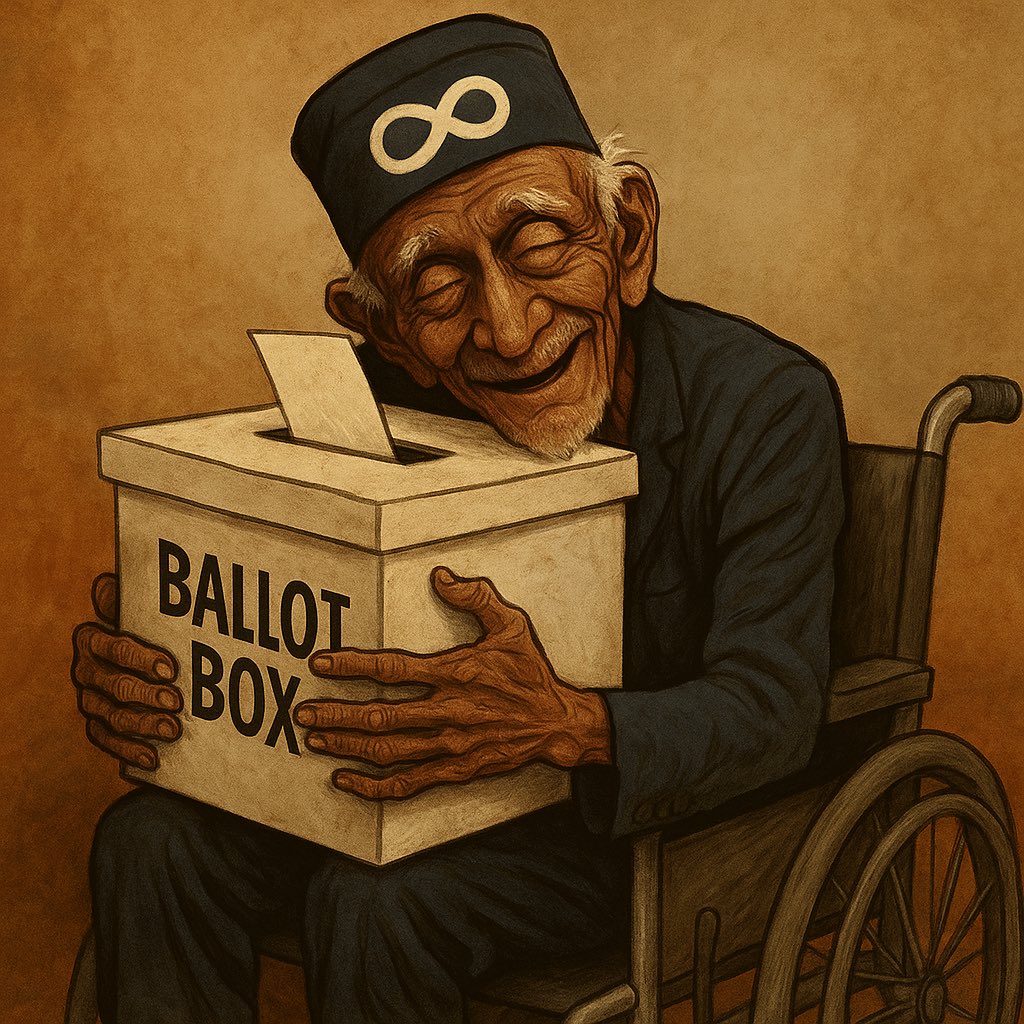
In Lagos, history doesn’t just repeat. It rebrands, consolidates, and asks you to vote for the same network under a slightly different name. And somehow, against all odds and every democratic textbook, it keeps winning.

