

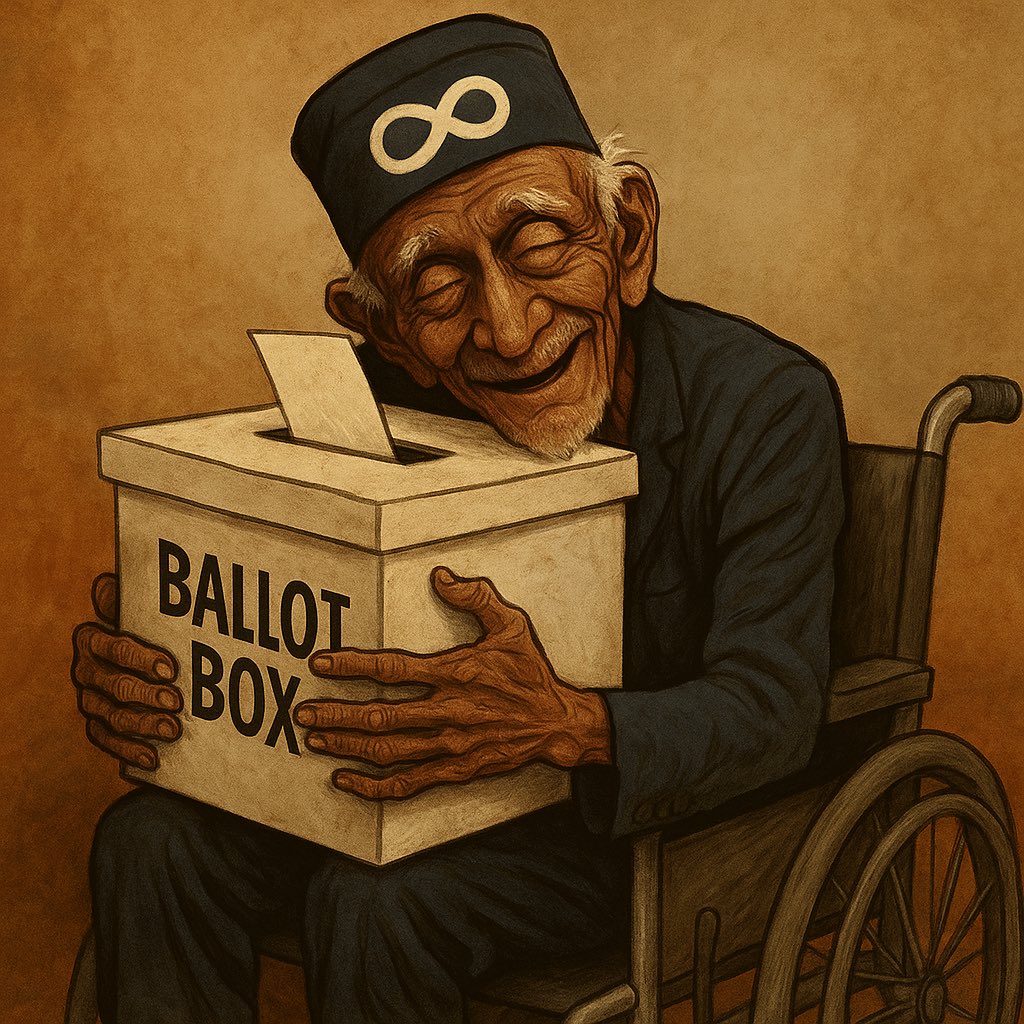
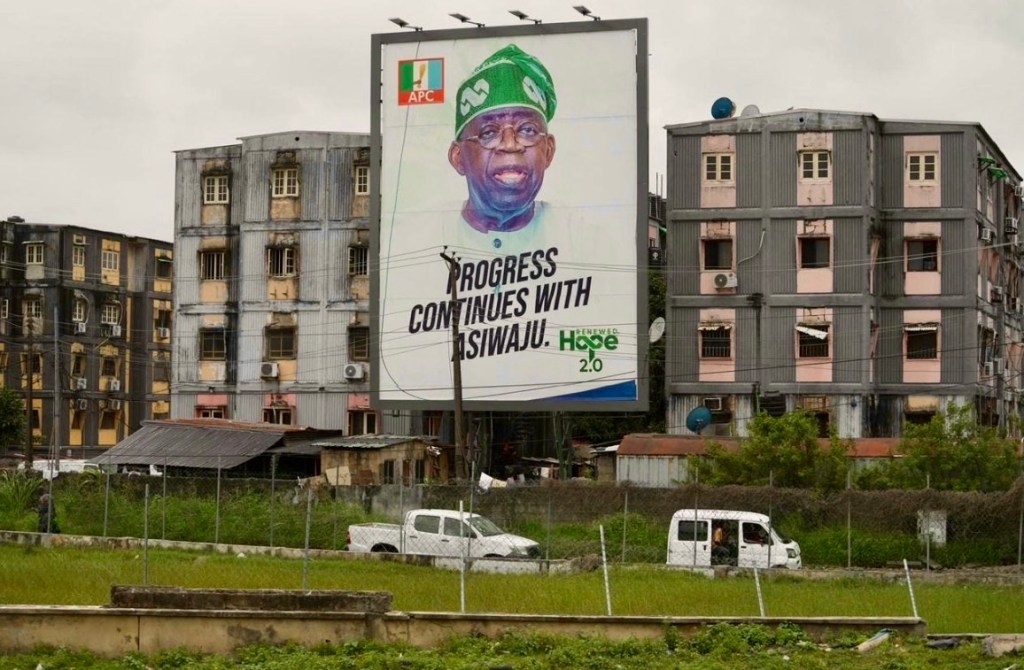
President Bola Ahmed Tinubu won the 2023 presidential election. That should have been the beginning of the story.
Instead, it appears to have been the beginning of another story altogether: how to win 2027.
The Nigerian voter, having spent considerable time queueing at polling stations, arguing about PVCs, fighting over results and eventually accepting that Nigeria had chosen its president, might reasonably have expected the new administration to get on with the business of governing.
But Tinubu’s Nigeria politics has developed a curious habit.
The election ends, the winner is declared, the certificates are presented, the inauguration takes place, the national anthem is played, the speeches are made and, before the champagne has had time to go flat, politicians begin planning the next election.
It is as if Nigerian democracy has become an airport conveyor belt. You arrive at one destination and immediately start checking the departure board for the next flight.
President Tinubu’s administration has increasingly given the impression that 2023 was not the destination but merely the first qualifying round for 2027.
And that raises a rather fundamental question:
Why seek power if the principal purpose of obtaining power is to retain power?
Government or Permanent Campaign?
There is, of course, nothing unusual about an elected politician wanting another term. Politics everywhere is competitive. A politician who tells you he has no interest in remaining in office may simply be a politician who has not yet found the microphone.
The problem begins when the pursuit of reelection becomes the organising principle of government.
Government then stops asking:
What does Nigeria need?
and starts asking:
What will help us win?
Those are not necessarily the same question.
A government genuinely concerned with the long-term interests of the country may have to take decisions that are unpopular today but beneficial tomorrow.
A government primarily concerned with the next election has a different incentive structure.
It wants announcements.
It wants photographs.
It wants defections.
It wants governors.
It wants party structures.
It wants endorsements.
It wants opposition politicians crossing the carpet with the enthusiasm of people discovering that the other side has better air conditioning.
And, above all, it wants to overwhelm the political space.
The Politics of Overwhelming Nigeria
This is where Tinubu’s political strategy becomes particularly interesting.
The objective appears less about persuading Nigerians that the government has transformed their lives and more about making the political landscape so crowded, so noisy and so dominated by the ruling political machinery that opposition becomes difficult.
It is an old political technique.
If you cannot necessarily make everyone love you, make sure nobody else has enough oxygen to be heard.
The strategy is not necessarily to produce universal satisfaction. That would be a rather ambitious project in Nigeria, where even the weather can become a political controversy.
It is to create the impression that the incumbent is everywhere.
In the states.
In the National Assembly.
In the political parties.
In the traditional political networks.
In the defections.
In the endorsements.
In the negotiations.
In the endless procession of politicians announcing that, after years of passionately explaining why the ruling party was destroying Nigeria, they have suddenly discovered that its leadership is actually inspired by the hand of Providence.
Nigeria’s politicians possess an extraordinary ability to experience ideological conversion immediately after discovering where the government sits.
But Where Is the Government Going?
The danger is that politics becomes detached from governance.
A president is elected to exercise the powers of the state for the public good. The Constitution does not say that the principal objective of government is to secure another electoral victory.
Yet once reelection becomes the overriding political obsession, every policy can acquire an electoral calculation.
Who benefits?
Who complains?
Which state gets the project?
Which governor is brought into the tent?
Which politician defects?
Which ethnic bloc is satisfied?
Which region feels neglected?
Which photograph should be released?
Which endorsement should be celebrated?
And somewhere in the background, the actual citizen is waiting patiently for electricity, jobs, security, affordable food, functioning hospitals, decent roads and an economy in which earning money does not feel like participating in an endurance sport.
Power Is Supposed to Be a Means
This is the philosophical problem at the heart of the Tinubu presidency.
Power should be a means to accomplish something. It should not become the accomplishment itself.
You seek political power because you have a programme.
You want to reform the economy.
You want to improve education.
You want to reform healthcare.
You want to make government work.
You want to reduce insecurity.
You want to create productive employment.
You want to strengthen institutions.
You want to leave the country better than you found it.
Then, if the people believe you have done a good job, they may give you another term.
That is how democratic legitimacy is supposed to work.
But if the principal purpose of power becomes the preservation of power, the logic reverses.
The government begins to exist for the next election rather than the next generation.
And that is dangerous.
The 2027 Question
The real question for Tinubu should therefore not simply be whether he can win 2027.
Given Nigeria’s political history, machinery and the weakness of the opposition, that may eventually prove to be a relatively easier question.
The more important question is:
What will he have done with the power he won in 2023?
Because history does not ultimately judge presidents by the number of politicians who joined their party.
It judges them by what happened to the country while they were in office.
Did Nigerians become more prosperous?
Did institutions become stronger?
Did insecurity decline?
Did public services improve?
Did the economy become productive rather than merely more expensive?
Did government become more accountable?
Did the young have a reason to remain in Nigeria rather than regard the passport office as the country’s most successful export agency?
These are the questions that matter.
Winning Is Not Governing
There is an uncomfortable truth about Nigerian politics.
Winning an election is not the same thing as governing a country.
And winning the next election is certainly not proof that the previous administration governed well.
A politician can become extraordinarily successful at politics while the country becomes extraordinarily unsuccessful at development.
That is the great danger of a permanent campaign.
The machinery becomes magnificent.
The slogans become louder.
The endorsements become longer.
The defections become more dramatic.
The billboards multiply.
The politicians become increasingly enthusiastic about the president.
And yet the ordinary Nigerian remains in precisely the same queue, except that everything in the queue now costs more.
Perhaps Nigeria needs to ask a very simple question.
What is the purpose of political power?
If the answer is to transform the country, then govern.
If the answer is to win the next election, then campaign.
But if the government spends four years campaigning to retain the power it spent four years seeking, Nigerians are entitled to ask the most awkward question of all:
After all this effort to obtain power, what exactly is the power for?
Perhaps the greatest achievement of a presidency should not be that the president remains in power.
Perhaps it should be that, after leaving power, the country is strong enough not to need him.
And that, rather than another electoral victory, would be a legacy worth campaigning for.
 Centre for Nigeria Progress