

The latest immigration statistics for the year ending June 2026 have landed, another goldmine for anyone who prefers numbers to narrative. Small-boat arrivals: roughly 33,000, down 23% on the previous year and back roughly where they were in 2022 and 2024. Eritreans now lead the pack (18%), followed by Sudanese, Afghans, Somalis and Iranians. Albanians, the great panic of 2022, have largely left the stage. Asylum claims have fallen 21% to about 86,000 people. The initial grant rate has slumped to 38% – a far cry from the three-quarters success rate that once made Home Office “economic migrant” rhetoric look especially threadbare. The backlog has been slashed. Net migration is down. On paper, competence has replaced chaos.
Yet the political theatre continues as if the data never arrived. Immigration remains the ultimate litmus test, the issue on which every faction must prove its manhood by sounding harsher than the last.
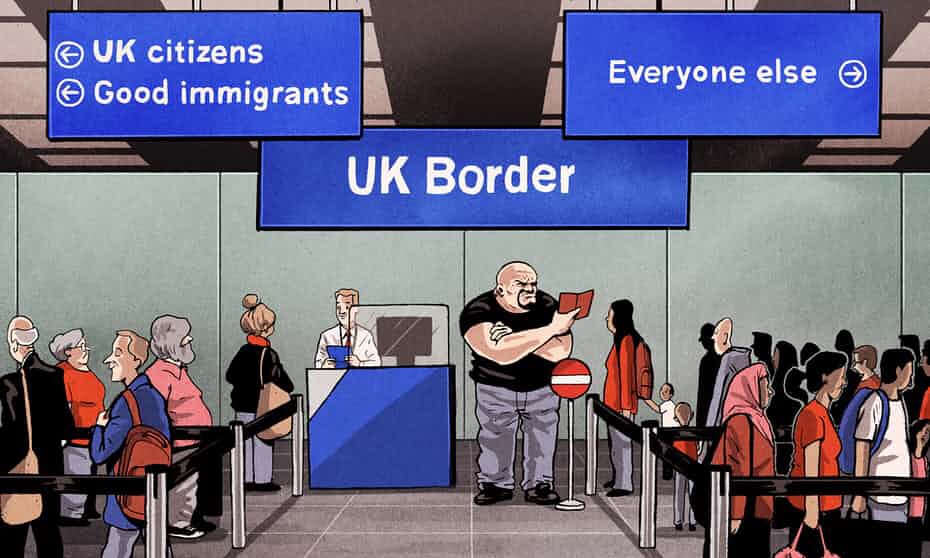
Start with the governing party. Labour, now under the influence of what its enthusiasts call Blue Labour, has rediscovered the virtues of borders, contribution and cultural continuity. Maurice Glasman and his circle once talked of reciprocity and mutuality; today the practical expression is longer waits for indefinite leave to remain (ten years for most, longer still for care workers), tighter salary thresholds, the closure of the social-care visa route, and a Home Secretary, Shabana Mahmood, who is celebrated by Blue Labour as one of their own. The message is clear: we are the grown-ups who will control the numbers without the cartoon villainy of the right. Starmer’s earlier “island of strangers” rhetoric may have been walked back, but the policy direction has not. Blue Labour’s version of socialism now includes the firm insistence that the working class should not have to compete with an endless supply of cheap imported labour, nor watch its neighbourhoods change faster than the state can manage.
The Conservatives, still licking their wounds, have responded in the only way they know: by trying to outbid Labour on toughness while claiming the moral high ground of experience. Ten-year settlement waits, higher thresholds, more deportations – the usual menu, served with the air of a party that once promised to “take back control” and then spent years discovering that control is harder than the slogan. Their difficulty is that the public has heard this song before, and the numbers under their watch told a different story.
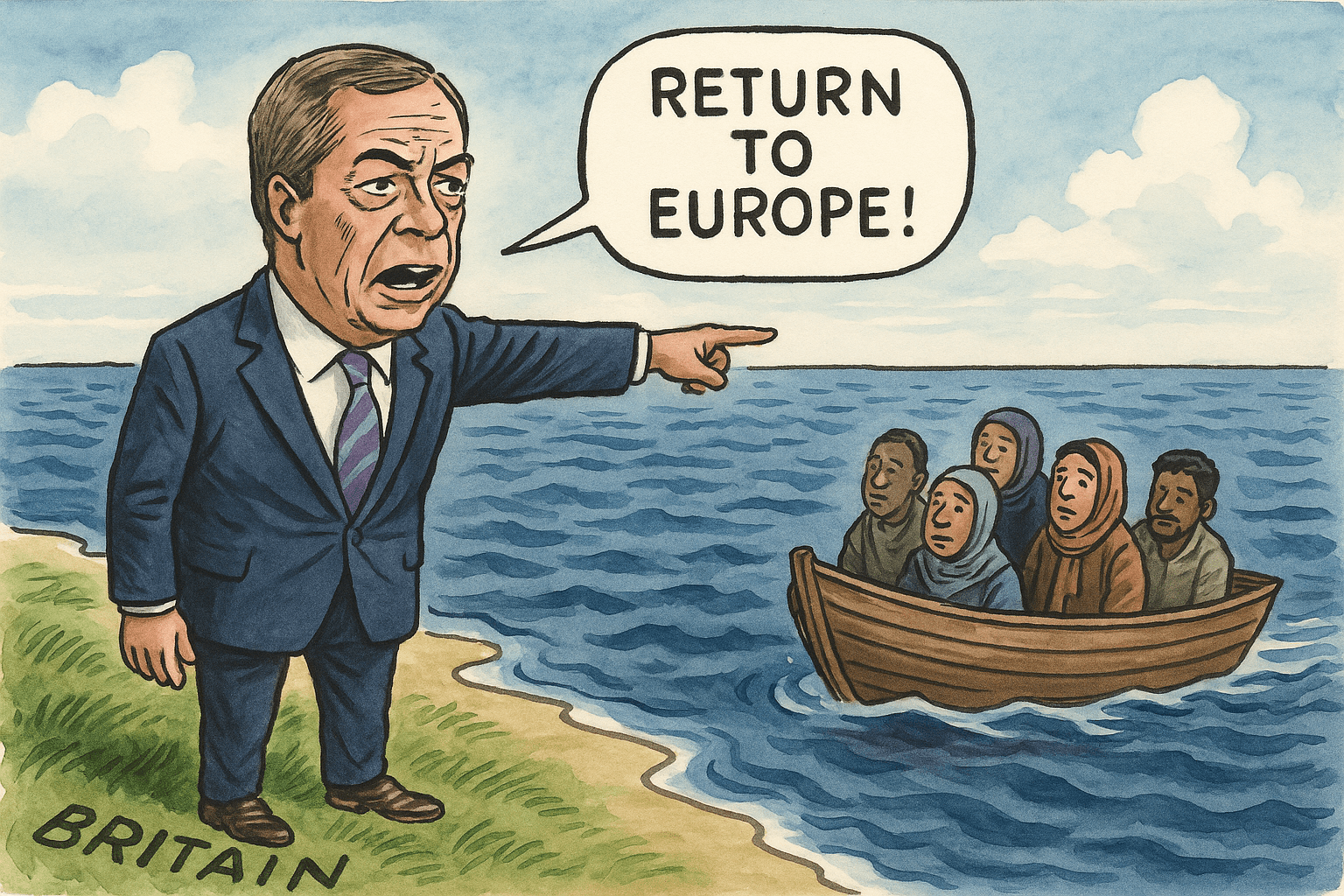
Then there is Reform UK, for whom immigration is less a policy area than a brand identity. Nigel Farage’s pitch remains magnificently uncompromising: stop the boats within 100 days of taking office by deploying the Royal Navy; leave the ECHR; abolish indefinite leave to remain and force even long-settled migrants to reapply every five years under stricter rules; deport a million people over a full parliamentary term. A memorandum with France’s National Rally is brandished as proof that, this time, the French will finally take people back. The small print, of course, is that the policy chief has already conceded the full five years will be needed to “fix the borders,” and that the 100-day pledge is more theatre than logistics. Still, the theatre works. In the competition to sound most determined, Reform currently holds the loudest megaphone.
What the statistics stubbornly refuse to do is validate the purest version of any of these stories. The grant rate has fallen, yes, but not because the people arriving suddenly became less deserving; procedural and legislative changes have raised the bar. Small-boat numbers have eased, yet remain stubbornly high by pre-2018 standards, and almost everyone who arrives that way still claims asylum. Legal routes for those in genuine danger remain limited, which is why Afghans, Eritreans and Sudanese continue to feature prominently. The old claim that most Channel arrivals were simply economic migrants jumping a queue never quite matched the data; the new claim that the system is now fully under control is equally optimistic.
The deeper problem is the one Kenan Malik identified years ago and which has only grown more entrenched. Facts arrive, but they are immediately conscripted into competing narratives. For Blue Labour, the numbers prove that a socially conservative left can deliver competence and fairness. For the Tories, they prove that Labour is still soft and that only the centre-right understands sovereignty. For Reform, any residual arrivals prove that nothing short of naval interdiction and mass deportation will do. The actual human beings – the former Afghan judge still in hiding, the Eritrean who has fled indefinite national service, the Sudanese escaping civil war – become props in a domestic culture war.
There is no queue to jump because the legal routes remain narrow by design. There is no simple “bogus” majority because the grant rates, even after recent tightening, still show substantial recognition of protection needs. And there is no five-year magic wand that will simultaneously seal the Channel, process claims at speed, deport hundreds of thousands, and leave the labour market and public services unscathed.
The statistics remain available to anyone who wants them. The narratives, however, continue to be written by parties who treat immigration less as a complex policy challenge than as a purity test. In that contest, the truth is usually the first casualty – and the last thing anyone bothers to update.
 Centre for Nigeria Progress