

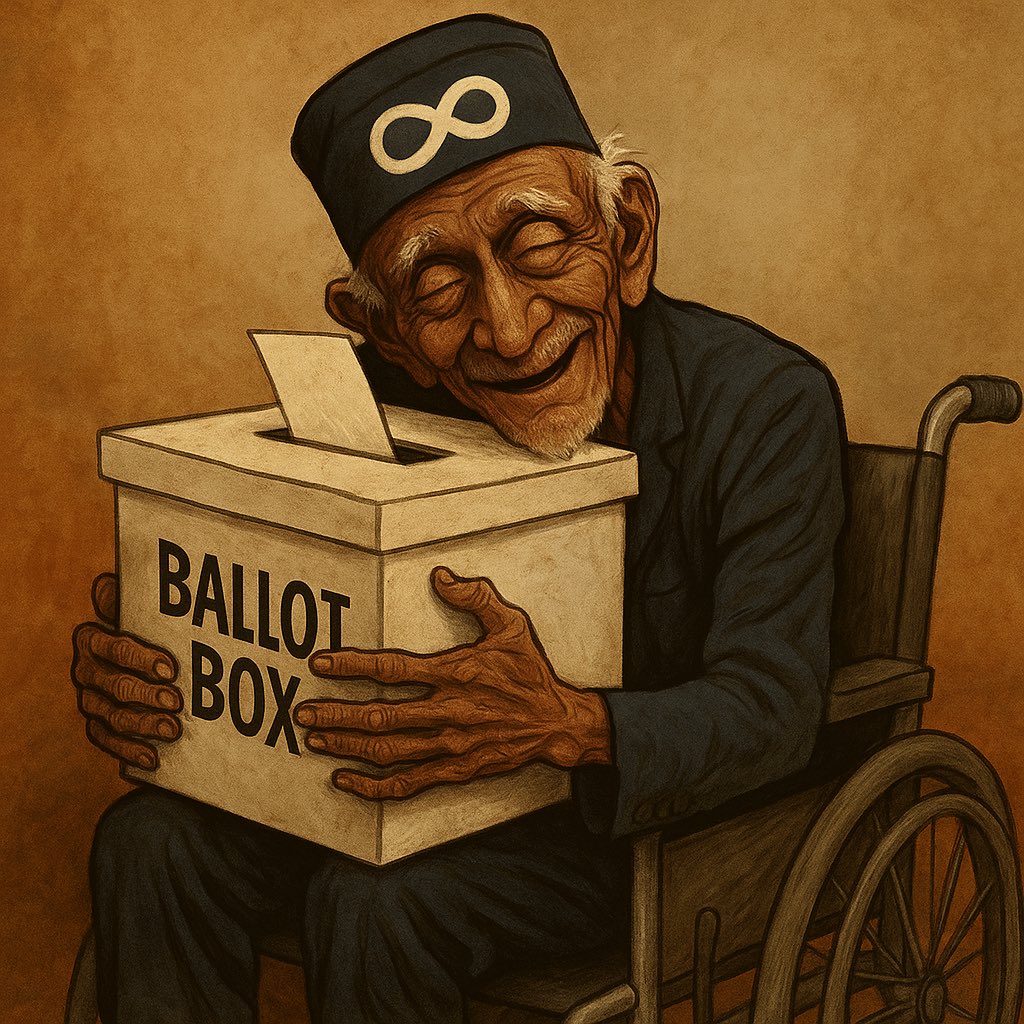
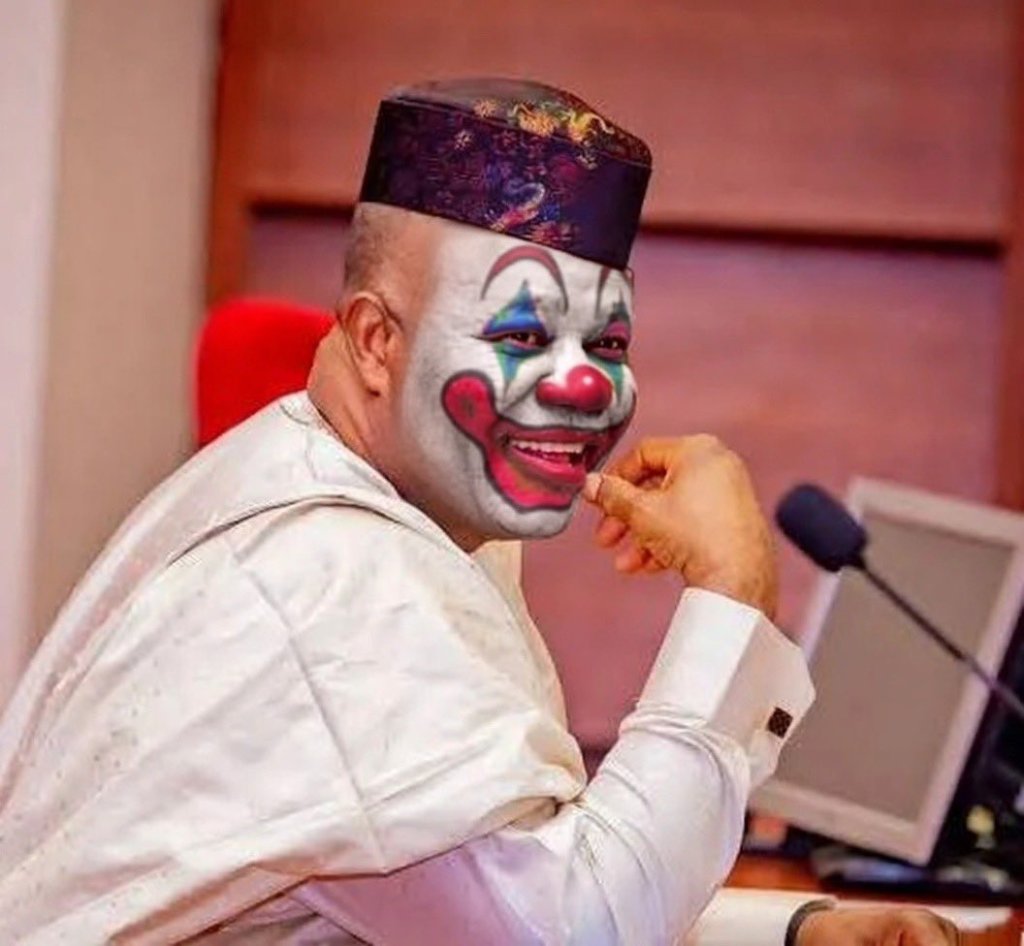
When your elected officials subcontract their jobs to the celestial being, then you know you marked the wrong column
There are many ways to prepare for an election.
You can register voters.
You can strengthen electoral institutions.
You can secure polling stations.
You can reform the security agencies.
You can prosecute those who finance terrorism.
You can improve intelligence gathering.
You can make sure that citizens are not kidnapped on their way to the polling booth.
Or, apparently, you can get on a plane to Italy and ask St. Padre Pio to handle it.
That, at least, appears to be one of the latest additions to Nigeria’s expanding catalogue of governance strategies.
Ahead of the 2027 presidential and general elections, Senate President Godswill Akpabio visited the Prayer Ground of St. Padre Pio at San Giovanni Rotondo in Italy, where he prayed for peaceful elections and an end to banditry and terrorism in Nigeria.
According to reports, Akpabio said he and his delegation had gone to seek God’s blessings for themselves, their families and Nigeria, which he described as being ravaged by banditry and terrorism. He also said the visit was his tenth to the prayer ground and spoke about his personal devotion to Padre Pio. (The Guardian Nigeria)
There is absolutely nothing wrong with praying.
A citizen can pray.
A priest can pray.
A president can pray.
A senator can pray.
Indeed, the entire Nigerian Senate can hold hands, close its eyes and pray until the National Assembly building develops a halo.
Faith is a constitutional freedom.
But there is a rather important distinction between praying while doing your job and praying instead of doing your job.
That is where the story becomes interesting.
The Constitution Did Not Elect God to the Senate
Nigeria’s Constitution does not say that once elected, legislators should transfer their responsibilities to divine intervention.
The National Assembly was not created as a prayer fellowship.
The Senate President was not elected as Nigeria’s Chief Prayer Coordinator.
The security agencies were not established so that their commanders could submit prayer points to St. Padre Pio.
And INEC was certainly not created to conduct elections by divine proxy.
Nigeria is a constitutional republic.
That means public power is exercised through institutions, laws, policies, budgets, security agencies, courts and elections.
The Constitution gives the National Assembly legislative and oversight responsibilities. The executive has responsibility for the administration of the country and national security apparatus. Security agencies have operational responsibilities. INEC has electoral responsibilities.
God may be asked to bless all these activities.
But He has not been appointed Chairman of the Federal Executive Council.
At least, not yet.
And I am fairly certain there is no government gazette announcing the appointment.
Prayer Is Not a Security Strategy
Nigeria’s security crisis is not merely a spiritual problem.
It is also an intelligence problem.
It is a policing problem.
It is a military problem.
It is a border-control problem.
It is a weapons-trafficking problem.
It is a criminal-justice problem.
It is an economic problem.
And, depending on which part of Nigeria one is discussing, it is also a governance problem.
Bandits do not need a theology seminar before kidnapping a farmer.
Terrorists do not consult a prayer calendar before detonating a bomb.
Criminal networks do not stop at a checkpoint because somebody has just completed a novena.
They respond to incentives, intelligence, money, weapons, territory and the probability of being caught.
That is why a functioning state must combine prayer with intelligence, policing, prosecution, border security, community protection and effective justice.
Otherwise we risk turning the Almighty into Nigeria’s unpaid consultant.
And even the Almighty deserves a proper procurement process.
The Strange Journey of Government Responsibility
There is something particularly revealing about the location of this particular prayer.
Nigeria is facing terrorism and banditry.
The Senate President travels to Italy.
Not to negotiate with a terrorist group.
Not to inspect an intelligence facility.
Not to meet European authorities about illicit financial flows.
Not to study how another country approaches organised crime.
He goes to a religious site to pray for Nigeria.
Again, there is nothing inherently objectionable about that.
But imagine the political symbolism.
The Nigerian state has enormous powers.
It has a military.
It has police forces.
It has intelligence agencies.
It has laws.
It has courts.
It has a legislature with enormous constitutional powers.
It has taxation powers.
It has budgets running into trillions of naira.
And yet, when the country is confronted by insecurity, one of its most senior constitutional officers is telling Nigerians that he has travelled to Italy to “drop” his intentions at a holy ground for divine intervention.
One begins to wonder whether government has quietly introduced a new department:
Ministry of Divine Intervention and Other Matters Beyond Our Pay Grade.
Permanent Secretary: St. Padre Pio.
Minister: Prayer.
Director-General: Providence.
Annual budget: classified.
The 2027 Election Makes This Even More Interesting
The timing deserves attention.
The visit comes as political activity surrounding the 2027 elections intensifies.
And elections are precisely the sort of national undertaking where prayer is welcome but institutions are indispensable.
A peaceful election requires more than asking heaven for peace.
It requires politicians willing to accept electoral rules.
It requires electoral officials who can act independently.
It requires security agencies that protect voters rather than political interests.
It requires political parties that respect the law.
It requires courts capable of resolving disputes.
It requires citizens who can vote without fear.
And perhaps most importantly, it requires political actors who understand that democracy does not mean “my candidate must win because we prayed harder.”
It means that citizens choose and the rules determine the winner.
Prayer cannot substitute for electoral integrity.
Neither can propaganda.
Neither can political godfatherism.
Neither can a convoy of SUVs.
Neither can a mountain of campaign posters.
And certainly not the increasingly familiar Nigerian practice of assuming that heaven has already signed the result sheet.
When Politicians Pray, What Are Citizens Supposed to Do?
This is the awkward question.
If those entrusted with public power are praying for an end to banditry, who is actually responsible for ending it?
The bandits?
The citizens?
The saints?
Or the government?
If the Senate President is praying for peaceful elections, who is responsible for creating the conditions for peaceful elections?
God?
Or the politicians who control the machinery of the state?
There is an uncomfortable answer.
Both prayer and government have their places, but they are not interchangeable.
A government official can pray before going to work.
He cannot pray instead of going to work.
A judge can pray for wisdom before hearing a case.
He still has to read the evidence.
A soldier can pray before going into battle.
He still needs ammunition.
A policeman can pray before confronting a criminal gang.
He still needs intelligence.
An election official can pray for a peaceful election.
He still needs credible electoral machinery.
That is the difference between faith and abdication.
Perhaps We Should Read the Ballot Paper More Carefully
There is a joke hiding here, but it is not entirely a joke.
When citizens go to the polling station, they are not merely choosing a person to occupy a chair.
They are transferring public responsibilities.
They are saying:
Here is the Constitution.
Here is the budget.
Here are the institutions.
Here are the security agencies.
Here are the roads, hospitals, schools, electricity systems and public finances.
Now govern.
They are not saying:
Here is the Constitution. Please take it to Padre Pio.
Perhaps that is where Nigeria’s political theology has become confused.
We have created an extraordinary political culture in which politicians campaign as though they possess the power to solve every problem, govern as though the problems are somebody else’s responsibility, and pray as though the remaining problems belong exclusively to God.
That is a very convenient division of labour.
Politician gets the office.
God gets the blame.
The citizen gets the bill.
Even Heaven Should Not Be Asked to Audit Government
There is also something else worth considering.
Prayer should not become a political escape hatch.
When a government fails to protect citizens, the appropriate democratic response is not merely to increase the volume of the prayer meeting.
It is to increase the volume of accountability.
Where security fails, ask why.
Where intelligence fails, investigate.
Where money disappears, audit.
Where officials fail, hold them accountable.
Where criminals are identified, prosecute them.
Where politicians finance violence, expose them.
Where electoral malpractice occurs, punish it.
And where institutions fail, reform them.
Then pray.
Pray before.
Pray during.
Pray afterwards.
But do the work.
Nigeria Needs Less Celestial Contracting
There is an old African understanding that God helps those who help themselves.
The Nigerian political version appears to be evolving into something rather different:
Government helps itself, and God is expected to help Nigeria.
That cannot be the operating philosophy of a constitutional democracy.
Faith is personal.
Public office is public.
The two can coexist beautifully, provided neither is used to evade responsibility.
Senator Akpabio is entitled to his faith, his devotion to Padre Pio and his belief in divine intercession. His reported account of his wife’s recovery is a deeply personal matter of faith, and he has said that the experience strengthened his devotion to Padre Pio. (The Guardian Nigeria)
But the Nigerian Republic cannot be run on personal testimony alone.
A nation of more than 200 million people cannot outsource national security to miracles.
It cannot outsource electoral integrity to intercession.
It cannot outsource accountability to providence.
And it certainly cannot outsource governance to heaven.
By all means, let the politicians pray.
But after Amen, they should pick up the Constitution.
Then pick up the budget.
Then pick up the security brief.
Then pick up the Electoral Act.
Then get back to work.
Because if your elected representatives have reached the point where they are subcontracting their constitutional responsibilities to the celestial realm, there is one question the Nigerian voter should perhaps ask before 2027:
Did I actually mark the right column?
Or was there a box somewhere on the ballot paper labelled:
“Let God handle it”?
If there was, Nigerians may have been voting for the wrong office all along.

