

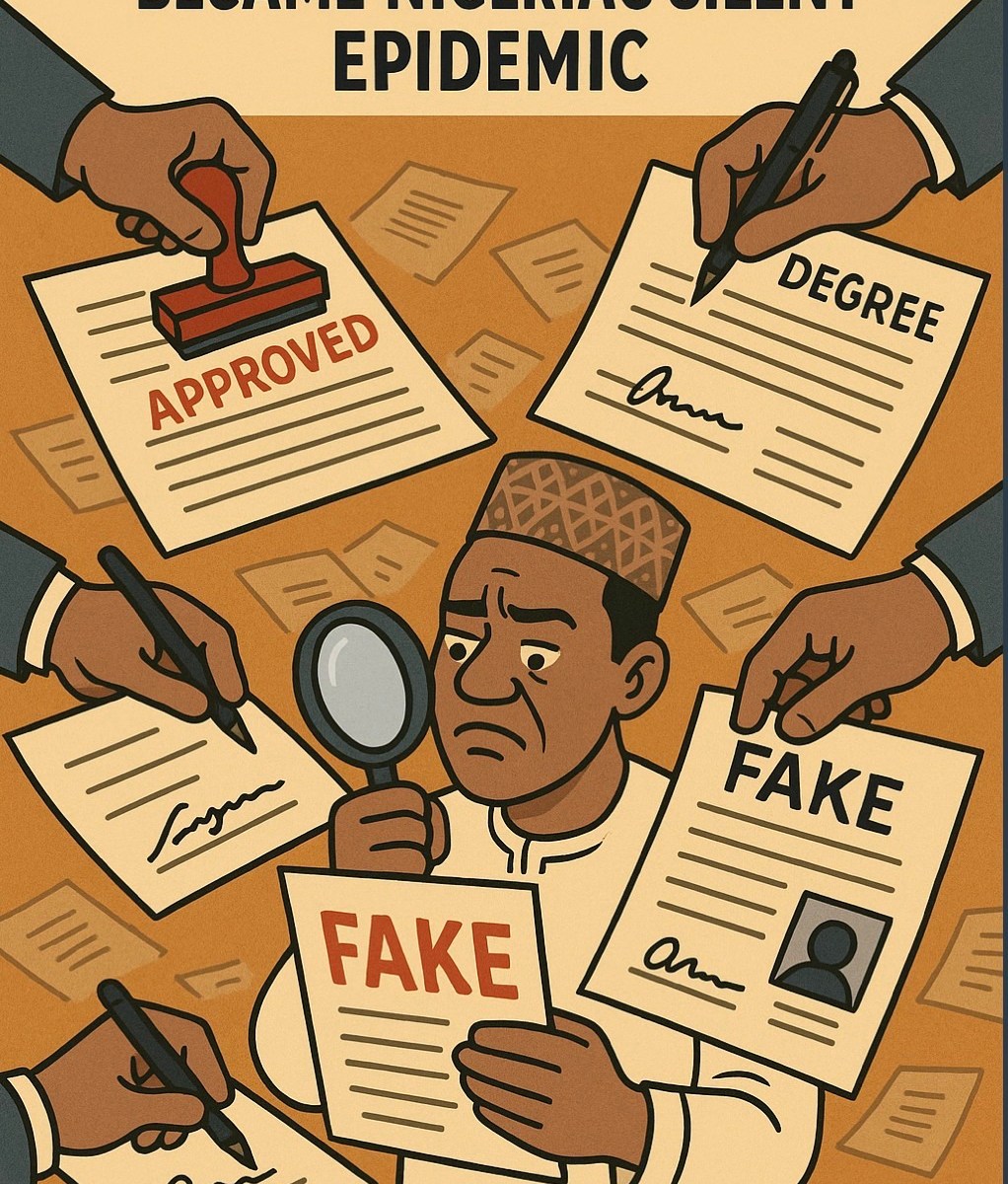
Some months ago, in an essay titled “The Forged Nation, Forged nation, ” I argued that document falsification in Nigeria was not merely a crime but a symptom proof that a country’s institutions had grown so brittle that a laminated lie could walk further than the truth. I did not expect the state to volunteer itself as the case study.
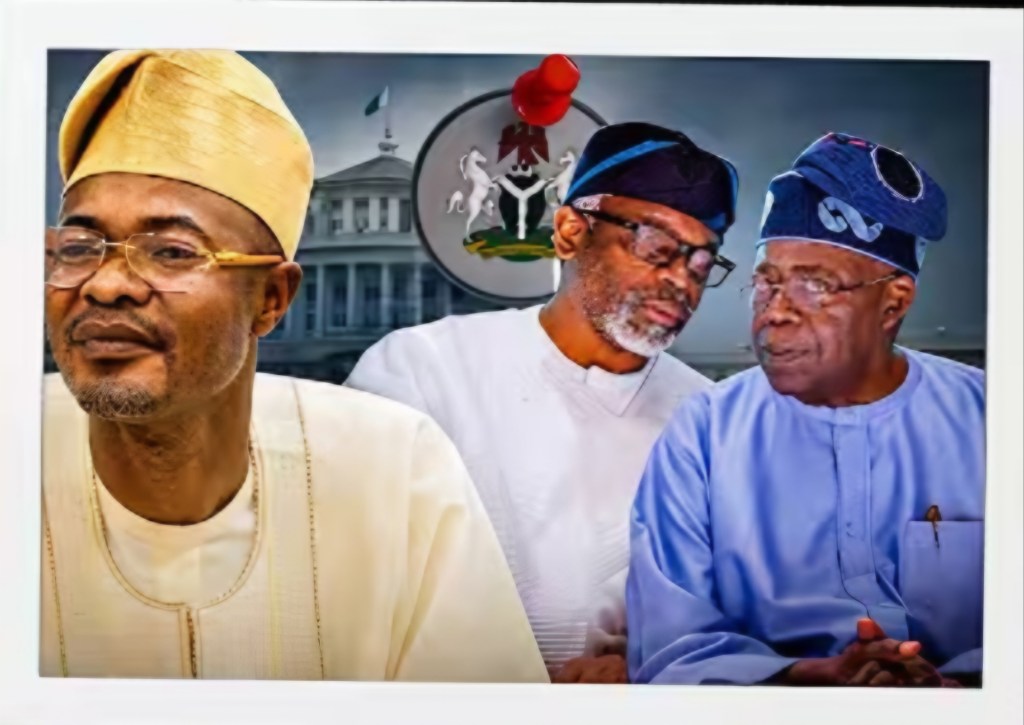
Consider the tale of Prince Adeniyi Adeyemi Matthew, a man who by the Presidency’s own account conjured an entire federal agency out of thin air, gave it a name almost indistinguishable from a real one, secured office space inside the Federal Secretariat, hosted ambassadors at a hotel in Asokoro, opened accounts at the Central Bank, and somehow attracted a line item worth over a billion naira in the 2026 budget. All of this, the Presidency now insists, rested on a forged appointment letter dressed up with a fake presidential signature and the Chief of Staff’s borrowed authority.
It is, on its face, a story about one man’s audacity. Except Adeyemi has declined to play the role of lone fraudster written for him. He says the appointment was real, that money changed hands with people much closer to power than himself, and that the Chief of Staff’s office wanted a cut of the take-off grant. The Presidency calls this the fantasy of a con artist cornered by the law. Perhaps it is. But a coalition of civil society groups, an opposition party, and a very persistent human rights lawyer have all asked the same inconvenient question: how does a fictitious agency get a budget allocation, a staffing waiver for over three hundred positions, and a Central Bank account, all without a single principal officer of government noticing? Nigeria’s bureaucracy is famous for many things, but frictionless efficiency toward the non-existent is not usually one of them.
Then there is Godwin Emefiele, formerly the man whose signature could move the nation’s foreign reserves, now a defendant answering to twenty counts including forgery and criminal breach of trust. Among the more colourful episodes in his trial is the small matter of $6.23 million in cash, withdrawn from a CBN vault in February 2023, allegedly on the strength of a letter claiming the blessing of then-President Muhammadu Buhari. The former Secretary to the Government of the Federation has told the court that his own signature on the approval documents was not his. Emefiele, for his part, says the same about his. Between the two men, an entire chain of presidential authorisation has apparently evaporated, leaving behind cash that walked out of a CBN branch and into private hands, and a paper trail that both signatories now disown as somebody else’s handiwork.
Here is where the pattern I described earlier reveals its cruellest twist. In “The Forged Nation,” I wrote about the ordinary Nigerian who forges a WAEC certificate because the honest path is slower, costlier, and rigged against him anyway. That is corruption born of desperation. What we are watching now is corruption born of confidence the discovery, by people who already sit inside the citadel, that “the document was forged” has become the establishment’s own universal alibi. It is heads-we-govern, tails-it-was-forgery. When the money moves smoothly and nobody asks questions, the documents are authentic instruments of state business. The moment a court, a journalist, or a rival faction starts asking where the money went, the same documents are retroactively declared the work of unknown forgers, and the men whose offices produced them discover they were victims all along.
This is not merely convenient. It is a structural innovation on the theme I wrote about before. The roadside forger sells legitimacy to those the system has excluded. The state, it turns out, has learned to sell illegitimacy to itself as an alibi, on demand, whenever the heat rises. A letterhead becomes real when it releases funds and fictional the instant it invites scrutiny. Buhari’s signature was good enough to move $6.23 million out of a vault; it became a forgery only once the money could not be found. Gbajabiamila’s office was authoritative enough to be worth impersonating; whether it was impersonated or complicit depends entirely on which press statement you read that week.
None of this absolves the men currently in courtrooms and custody. Adeyemi may well be exactly the audacious impostor the Presidency describes. Emefiele may yet be found to have presided over the very fraud he now attributes to forgers. Courts, not columnists, will settle guilt. But the pattern sitting above both cases deserves its own indictment: a governing culture in which “forged” has become less a forensic finding than a political reflex, deployed the instant a document becomes inconvenient rather than the instant it is proven false.
I closed my earlier essay by suggesting that the future of Nigeria depends not on the documents its citizens hold, but on the integrity they embody. I stand by that. I would only add, a few months and two spectacular scandals later, that the citizens were never really the problem. It is rather harder to embody integrity when the very officials who denounce forgery from the podium keep discovering, with impeccable timing, that the signature at the bottom of the incriminating page was never quite theirs.

