


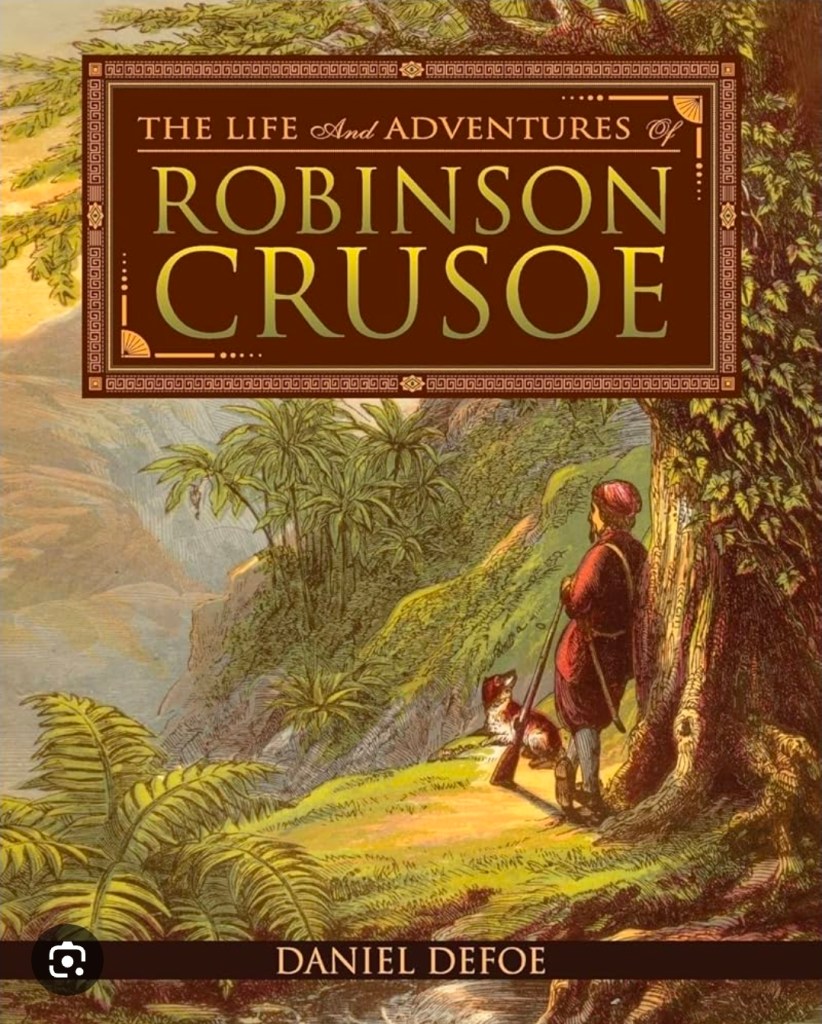
For over three centuries, Daniel Defoe’s Robinson Crusoe (1719) has been celebrated as the ultimate tale of human grit, rugged individualism, and economic triumph. Crusoe steps onto a deserted island with nothing but a shipwrecked musket and transforms it into a tidy, profitable mini-empire. He claims ownership of the land, tames the wildlife, and, most famously, “civilizes” a native islander whom he casually renames Friday. For generations, this was read as a grand adventure.
But in 1986, South African Nobel Laureate J.M. Coetzee looked at Crusoe’s island and saw something entirely different: the blueprint for colonial trauma.
In his brilliant, unsettling postmodern novel Foe, Coetzee hacks into Defoe’s literary classic, strips away its romantic myths, and delivers a fierce post-colonial critique that completely upends the original story.
The Story Defoe Left Out
Foe introduces us to Susan Barton, a castaway who washes ashore on the infamous island. There, she encounters “Cruso” (spelled without the ‘e’) and Friday. But this isn’t the heroic duo from your childhood textbook. Coetzee’s Cruso is a bitter, tight-lipped old man who has built absolutely nothing of lasting value just a series of useless stone terraces. He has no desire to keep a journal or document his life.
The real shock, however, is Friday. In Coetzee’s retelling, Friday has been brutally mutilated: his tongue has been cut out.
When Cruso dies on the voyage back to England, Susan takes Friday to London. Determined to monetize their survival story, she tracks down a prominent author named Daniel Foe. But as Susan and Foe battle over how the book should be written, the narrative shifts from a simple island adventure into a psychological thriller about power, history, and who gets to hold the pen.
Cannibals vs. Ghosts: The Key Differences
The contrast between the two works exposes the exact moment literature shifted from celebrating empire to deconstructing it.
In Defoe’s world, the island is a blank slate to be conquered, commercialized, and shaped by human ingenuity. Coetzee completely strips away this romance, rendering the island a barren, psychological prison of monotony where nothing grows and nothing is achieved.
The authors’ goals are diametrically opposed as well. While Defoe writes to praise human resourcefulness and divine providence under British expansion, Coetzee writes to expose how mainstream history systematically silences the marginalized.
The Symbolism of the Tongueless Friday
In Defoe’s original novel, Crusoe’s first act of “benevolence” is teaching Friday to say the word “Master.” It is a tidy, comfortable depiction of colonialism where the subjugated person eagerly accepts the culture and language of the oppressor.
Coetzee violently shatters this comfort. By rendering Friday literally speechless, Foe forces the reader to confront a grim historical truth: colonialism did not invite a polite dialogue. It systematically erased indigenous languages, cultures, and histories. Friday’s silence is not passive; it is a heavy, defiant void that Susan and Foe desperately try to fill with their own assumptions, desires, and words.
“As long as any choice remains, it is better to live than to die,” Susan remarks in the novel, trying to understand Friday’s compliance. But Friday’s true thoughts remain entirely his own, locked away where no white storyteller can exploit them.
Writing History, Gripping Power
Ultimately, Foe is a book about the politics of storytelling. Coetzee shows us that the original Robinson Crusoe was never just an innocent adventure; it was a piece of cultural propaganda that justified the domination of foreign lands.
By linking the two texts, we see how the post-colonial era refuses to let old classics sit comfortably on the shelf. Foe acts as the ultimate literary equalizer it takes the master’s tools, enters the master’s house, and lets the silence of the oppressed echo louder than any empire ever could.

