

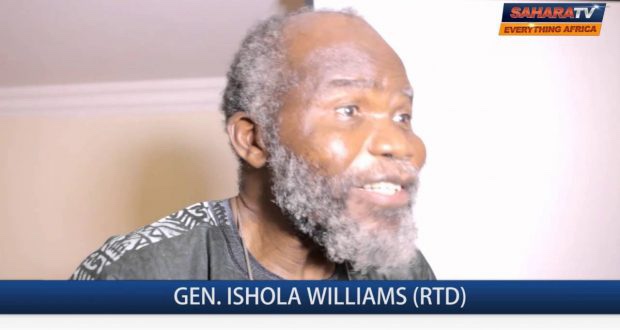
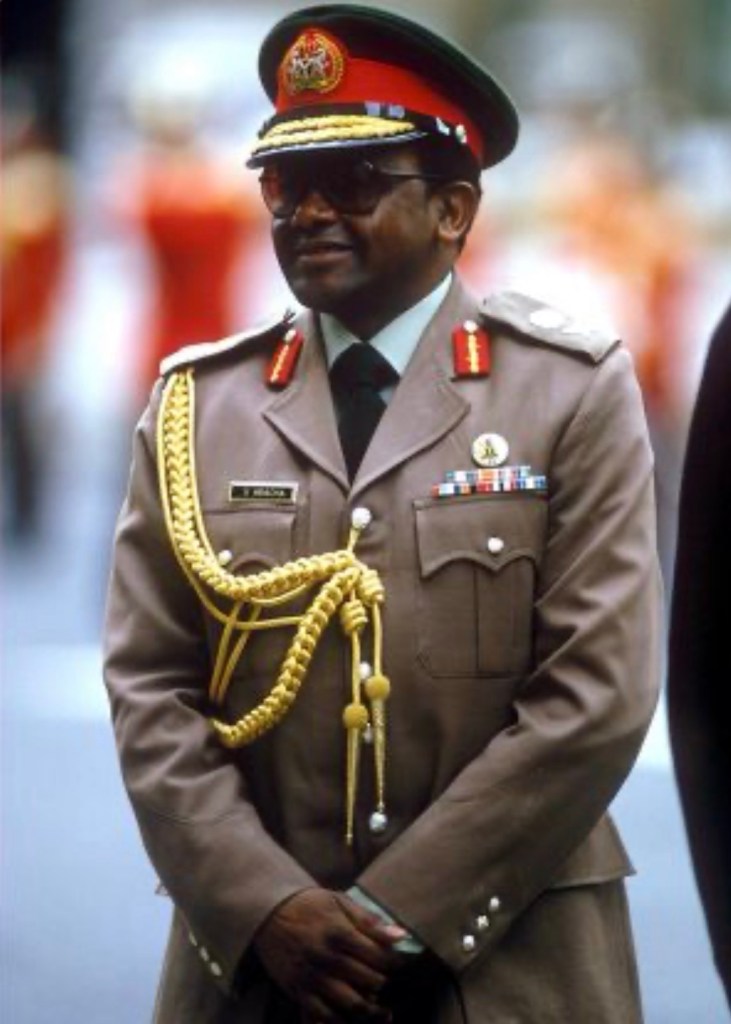
In 1993, during the dark days following the military takeover that brought Sani Abacha to power, one Nigerian Army officer took an unusual step. Instead of consolidating his position within the new regime, he walked away.
That officer was retired General Ishola Williams.
More than three decades later, Williams remains an anomaly in Nigeria’s military elite. In a country where former generals often transition into billionaires, powerbrokers, or political godfathers, he jokingly describes himself as “Nigeria’s poorest army general.”
But his story says something far larger about Nigeria: how a system built around patronage, corruption, and elite capture has consumed enormous public resources—especially in the military—while insecurity continues to deepen.
A Different Kind of General
Williams resigned from the Nigerian Army in protest against the military regime of Abacha, which he considered immoral. That decision effectively cut him off from the networks that later turned many officers of his generation into powerful political and economic actors.
Today he lives a modest life, far removed from the luxury that many Nigerians associate with retired generals.
He moves without heavy security, runs civil society initiatives, and works in a modest office. In his words, wealth has little to do with money.
For him, wealth means good health, useful ideas, and communities where people are not suffering.
In Nigeria’s context, that philosophy almost sounds revolutionary.
The Nigerian System: Deals Before Integrity
Williams offers a blunt diagnosis of Nigeria’s political economy.
According to him, wealth in Nigeria rarely emerges from innovation or enterprise. Instead, it comes from access to government power.
Contracts. Patronage. Political deals.
He argues that almost everyone who becomes wealthy in Nigeria does so through government connections, directly or indirectly. Banks depend heavily on government deposits. Businesses depend on state contracts. Political parties function largely as vehicles for sharing power and resources.
In his words, Nigeria’s parties are often nothing more than “chop and let us chop” alliances.
That systemic dependence on government money, he says, creates a culture where corruption becomes normalized.
The Military Elite and the Corruption Ecosystem
Williams also challenges the idea that military officers are somehow separate from society.
They are part of Nigeria’s elite networks. Their families expect wealth. Their communities expect financial support. Social pressure demands visible success—big houses, foreign education for children, and constant displays of status.
And when those expectations collide with public office, corruption becomes the easiest solution.
That dynamic helps explain why allegations of corruption have repeatedly surfaced around senior officials in Nigeria’s security sector.
Nigeria has spent billions of dollars on defence and security over the past decade, yet the country still faces widespread insecurity—from insurgency in the northeast to banditry in the northwest and separatist tensions in the southeast.
Despite this massive expenditure, results on the ground often remain limited.
The contrast between huge security budgets and persistent insecurity has raised uncomfortable questions about where the money actually goes.
The Cost of Insecurity
Nigeria’s security crisis has become one of the most expensive in its history.
Year after year, defence spending rises. Equipment is purchased. New operations are launched.
Yet communities continue to face attacks, kidnappings, and displacement.
Critics argue that part of the problem lies in the political economy of insecurity itself—where war becomes a source of contracts, procurement deals, and emergency spending.
When enormous funds flow into a system already weakened by corruption, accountability becomes difficult.
The result is a tragic paradox:
Nigeria spends vast sums fighting insecurity, yet insecurity itself appears financially profitable for parts of the elite.
Religion, Wealth and Hypocrisy
Williams is equally critical of Nigeria’s social culture around wealth and religion.
He observes that Nigeria is a deeply religious society—but not necessarily a spiritual one.
Pastors fly private jets while congregants remain poor. Politicians speak publicly about faith while looting public funds. Religious leaders rarely challenge the wealth accumulation of political elites.
To Williams, this contradiction exposes a deeper problem: a nation struggling to build a culture of integrity.
Without that moral foundation, institutions remain weak.
Why Revolution Is Unlikely
Despite widespread public frustration, Williams believes Nigeria is unlikely to experience a revolution.
In his view, Nigerians often tolerate corruption because it feeds local patronage systems. Communities celebrate “their” successful elites—even when the source of wealth is questionable.
Real political change, he argues, would have to begin at the local government and state levels, where citizens directly see how public funds are spent.
Until that happens, systemic reform will remain difficult.
The Real Meaning of Wealth
For Williams, personal wealth is not measured in bank accounts.
In a nation where many former generals occupy mansions and wield enormous influence, he remains a quiet outlier—an officer who walked away from power and refused to participate in the system.
Instead, it lies in the ability to live honestly and contribute to society.
That choice has made him poor by Nigeria’s elite standards.
But in another sense, it may make him one of the richest men in the room.

