

There is a clean, structural reason Nigerian election season feels less like a celebration of democracy and more like a high-stakes tactical thriller. We built an election system where the referee is hired by one of the teams, trained by one of the teams, and paid out of a purse controlled by one of the teams.
Every four years, we put on our collective shocked face when the referee makes a controversial call.
If you trace the lineage of Nigeria’s election reform debates back to their source, you always end up at the exact same location: a stack of paper sitting on a shelf since December 2008. It is officially titled the Report of the Electoral Reform Committee, but everyone simply calls it the Uwais Report.
It remains the most comprehensive, sensible, and repeatedly ignored manual for fixing Nigerian democracy ever produced.
Born Out of a Moment of Rare Honesty
To understand why the Uwais Report is so good, you have to understand the sheer awkwardness of how it was born.
The 2007 general elections were, by almost all credible accounts, an operational disaster. European Union observers called them among the worst they had witnessed anywhere in the world. Ballot boxes disappeared, logistics collapsed, and turnout figures in some regions defied basic math.
When President Umaru Musa Yar’Adua was sworn into office following that election, he did something almost unprecedented for a sitting head of state. During his inaugural address, he looked into the cameras and admitted that the very election that brought him to power was deeply flawed.
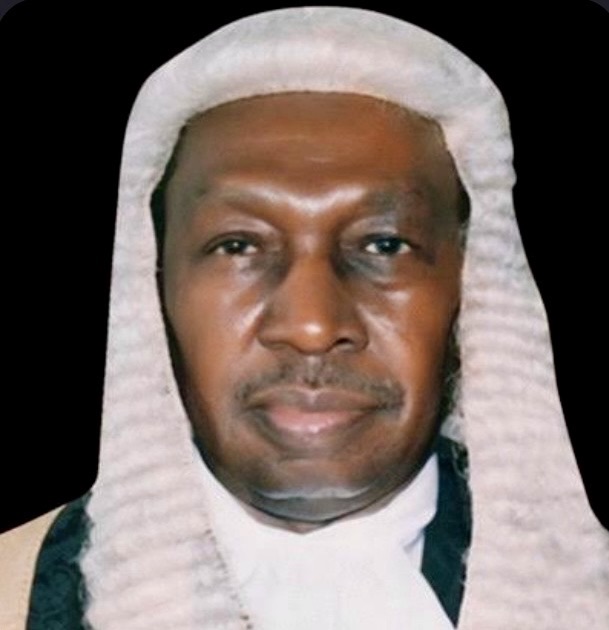
Instead of sweeping it under the rug, Yar’Adua appointed retired Chief Justice of Nigeria, Justice Muhammadu Lawal Uwais, to head a 22-member panel of legal minds, scholars, and civil society veterans. Their mandate was simple: figure out why our elections break, and tell us how to fix them so it never happens again.
The committee didn’t just sit in an air-conditioned room in Abuja. They spent over a year traversing the country, receiving nearly 1,500 public submissions and listening to over 900 oral presentations across all six geopolitical zones. When Justice Uwais handed over the final six-volume report in late 2008, it wasn’t just a government document it was a national consensus.
The Big Five: How to Actually Fix the Referee
The brilliance of the Uwais Report wasn’t that it called for “better logistics” or “more voter education.” It recognized that the problem was structural. If you don’t fix the incentives, the behavior will never change.
The report proposed five game-changing structural shifts:
1. Fire the President as the Umpire’s Boss
Under the current system, the sitting President appoints the Chairman and commissioners of the Independent National Electoral Commission (INEC). Even if a President picks a saint, the perception of bias is baked into the recipe from day one.
The Uwais Fix: Strip the President of this power entirely. Hand the selection process over to the National Judicial Council (NJC). Vacancies would be advertised publicly, candidates screened by an independent judicial body, and the final pick confirmed by the Senate.
2. Unbundling the Monolith
Right now, we expect INEC to act as a logistics company, a law enforcement agency, a regulatory body, and a constitutional court all at once. It conducts elections, registers political parties, monitors internal party primaries, and is supposed to arrest and prosecute ballot snatchers and vote buyers.
The Uwais Fix: Break up the workload. Create dedicated, specialized agencies:
- An Electoral Offences Commission to handle the investigation and prosecution of election crimes.
- A Political Parties Registration and Regulatory Commission to monitor party finances and internal democracy.
3. No Swearing-In Until the Court Case Is Over
For years, the political meta in Nigeria was simple: get declared the winner by any means necessary, get sworn into office, and use the massive machinery of state power and public funds to fight off your opponents in court for the next three years.
The Uwais Fix: Nobody takes the oath of office until all legal challenges and tribunal petitions are fully resolved. If the election is disputed, the case gets decided before anyone gets the keys to the government house.
4. Direct, Unfettered Funding
If an electoral body has to go cap-in-hand to the Ministry of Finance every time it needs money for ballot papers, it isn’t truly independent.
The Uwais Fix: Place INEC’s budget on a first-line charge directly from the Consolidated Revenue Fund. The executive branch shouldn’t have the power to starve the electoral umpire of resources.
5. Room for Independent Candidates
Why should a citizen be forced to join a political party just to serve their community? The report recommended amending the constitution to allow independent candidates to run for office, alongside adopting elements of proportional representation to ensure smaller parties get legislative representation matching their share of the popular vote.
The Cherry-Picking Problem
So, what happened to this master blueprint? Political expediency happened.
Successive administrations have treated the Uwais Report like an à la carte buffet picking the lightweight operational fixes while aggressively ignoring the structural changes that would curb executive power.
Financial autonomy for INEC? Granted via the Electoral Act of 2010. Strict time limits on election tribunals? Passed into law. Independent candidacy? Finally introduced after years of constitutional tinkering.
But the central pillar of the entire report taking the power of appointing the INEC leadership away from the Presidency has been rejected by every single political administration since 2008. No sitting president, regardless of party banner, has willingly handed over the remote control to the electoral agency.
Similarly, the proposed Electoral Offences Commission remains stuck in legislative limbo, meaning electoral offenders continue to operate with near-total impunity because INEC lacks the bandwidth to prosecute them.
The Verdict
The tragedy of Nigerian electoral reform isn’t a lack of ideas; it’s an abundance of unheeded advice.
Every time a political party finds itself in opposition, it suddenly quotes the Uwais Report like scripture. The moment that same party wins power, the Uwais Report becomes an inconvenient artifact of a bygone era.
Until we have the political courage to implement the core engine of the Uwais recommendations specifically insulating the election umpire from the executive branch and creating real legal consequences for electoral crime we will keep changing the software of our elections while leaving the hardware fundamentally broken.
Justice Uwais and his team gave us the blueprint nearly two decades ago. The manual is still sitting on the shelf, fully assembled, waiting for someone to actually read it.

