


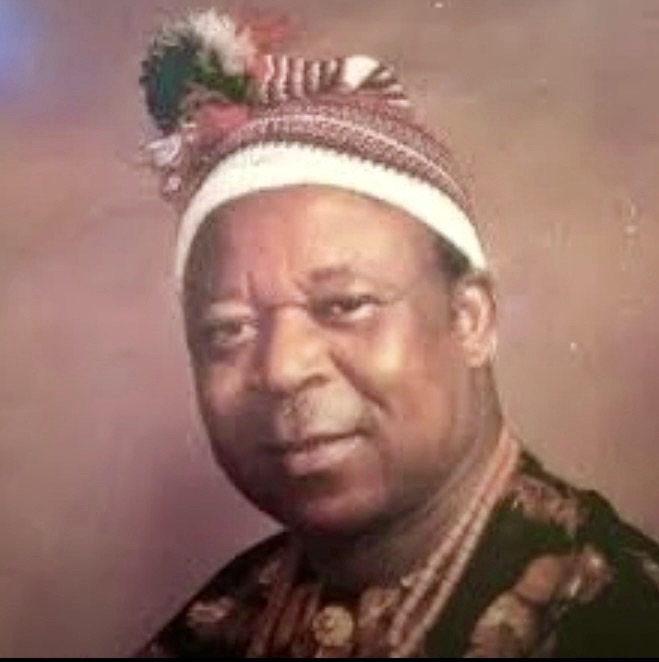
The late Sam Mbakwe, first civilian governor of Imo State and a man whose impatience with mediocrity remains legendary, once declared that he would gladly invite the British back to rule Nigeria for another fifty years. Other politicians have echoed the sentiment over the decades, usually after another round of epileptic power, collapsed roads, or the discovery that the latest “transformation agenda” had transformed mainly the bank balances of its authors. The quip is usually delivered with a sigh, half-joke, half-confession: better the colonial taskmaster who at least kept the trains roughly on time than the indigenous ones who treat the national timetable as optional reading.
It is a peculiar form of nostalgia. One does not ordinarily pine for the man who once occupied your house, sold the furniture, and left you the bills. Yet the impulse resurfaces whenever the Nigerian state performs its signature act of spectacular underachievement. The question then becomes unavoidable: was there a ledger left open when the Union Jack came down in 1960? Did the books balance, or are we still waiting for someone to square the accounts?
Let us attempt a rough audit, conducted with the same cheerful disregard for sentimentality that characterised the colonial enterprise itself.
On the credit side, the British left certain durable instruments. A common law tradition that still limps along in the courts, occasionally surprising litigants with the notion that evidence matters. Railways that once connected the interior to the ports (before successive Nigerian governments converted them into museums of deferred maintenance). An administrative structure that, for all its arrogance, imposed a degree of predictability where previously there had been the more colourful unpredictability of local warfare and slave-raiding. English as a working language of government and commerce, a practical gift that continues to pay dividends in a multi-ethnic polity that would otherwise require simultaneous translation at every federal meeting. Mission schools and the early universities that produced the first generation of Nigerian professionals, many of whom later proved that education alone does not guarantee good governance.
These were not acts of pure altruism. Colonies were expected to pay their way. The amalgamation of 1914 was an accounting decision more than a romantic union of peoples; the richer South was conscripted to subsidise the poorer North so that the imperial treasury need not dig deeper into its pockets. Cash crops, minerals, and later oil were extracted with the efficiency of a well-run trading post. Indirect rule preserved existing hierarchies where convenient and invented new ones (the warrant chiefs of the East remain a case study in colonial improvisation) when the existing order proved insufficiently obedient. The ledger was kept in sterling, and the profits flowed outward.
On the debit side, the costs were structural and lasting. Borders drawn with a ruler and a preference for administrative convenience over ethnographic coherence. A political culture that taught elite collaboration with external power rather than accountability to local populations. An economy oriented toward primary export rather than industrial deepening. The psychological residue of a system that ranked human beings by proximity to the metropolitan centre. None of this is unique to Nigeria; it is the standard colonial package. What is distinctive is how thoroughly successive Nigerian regimes have managed to turn the inheritance into an even more impressive liability.
The politicians who yearn aloud for British return rarely propose reintroducing the actual colonial civil service ethic of relatively clean administration and long-term planning. They want the mythical efficiency without the accompanying discipline. They want the trains that ran, not the railways that were built to serve external markets. They want the order, not the responsibility. It is rather like hiring a former landlord to manage your affairs after you have spent decades converting the property into a series of short-term rental scams and then complaining that the roof leaks.
The ledger, if one insists on keeping one, was never going to be squared by nostalgia. Colonial rule was a business arrangement dressed in the language of civilising mission. Independence transferred the title deeds, not the capacity to manage the estate. The subsequent sixty-plus years have been an extended masterclass in how not to keep accounts: oil revenues treated as personal allowances, institutions hollowed out for patronage, public trust converted into private cash. When today’s leaders invoke the colonial past as the root of all current dysfunction, they perform a neat accounting trick of their own, shifting the entire deficit onto a closed chapter while the current books remain gloriously unbalanced.
Mbakwe’s quip was less a serious policy proposal than a cry of exasperation from a man who had tried to govern and discovered that the machinery was already seized. Similar remarks from later politicians usually signal the same frustration, coupled with a convenient refusal to examine their own balance sheets. Britain did not leave Nigeria with a perfect set of books. It left a functioning if extractive system, certain useful tools, and a political class trained more in the arts of collaboration than of self-government. What followed was not the inevitable working-out of colonial destiny. It was a series of deliberate choices by people who knew the difference between a ledger and a blank cheque.
If there is still an open account, it is not with London. It is the one Nigerians keep with themselves: the gap between the resources available and the results delivered, between the rhetoric of nation-building and the practice of elite capture. Squaring that ledger requires neither an invitation to the former coloniser nor another round of historical grievance. It requires the unglamorous work of keeping proper books in the present. The British, whatever their sins, at least knew how to do that. The question is whether their successors ever will.

