
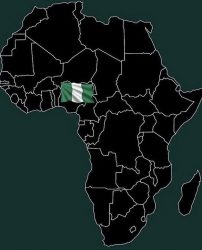
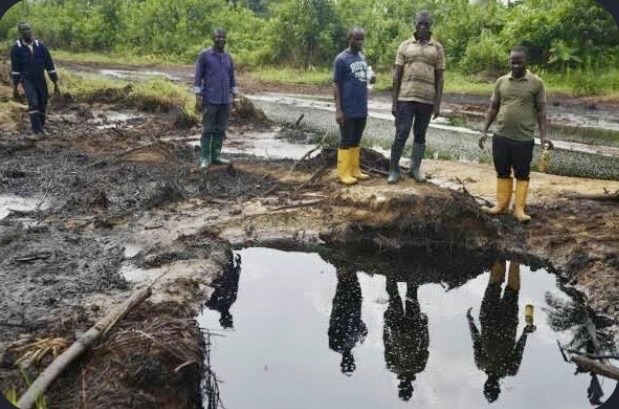
For decades, Nigerians have been told a simple story: Nigeria is poor because it has failed to properly manage its oil wealth. Others argue that the country simply lacks sufficient refining capacity, infrastructure, or competent leadership. While these explanations contain elements of truth, they often miss the deeper and more uncomfortable reality.
Nigeria’s poverty is not primarily the result of a lack of oil resources. Nor is it solely the consequence of corruption or poor governance. The more fundamental problem lies in the ownership architecture of the petroleum industry itself an arrangement that has, for nearly seventy years, ensured that the greatest share of value generated from Nigerian oil flows elsewhere.
The real prize was never the barrel of oil.
It was the contract.
Oloibiri: Where the Rules Were Written
When commercial quantities of oil were discovered in Oloibiri in present-day Bayelsa State in 1956, the discovery was celebrated as the beginning of Nigeria’s journey toward prosperity.
However, embedded within that moment was a structure that would define the future of the industry.
The colonial licensing system granted rights to multinational oil companies that possessed the capital, technology, and expertise required for exploration and production. While the Nigerian state formally retained sovereignty over the resource, operational control largely remained in foreign hands.
The arrangement created a distinction that still exists today. Nigeria owned the oil beneath the ground in theory, but others controlled the extraction process, investment decisions, production schedules, logistics, marketing channels, and ultimately the flow of profits.
The result was that ownership on paper often differed from ownership in practice.
Governments Came and Went. The Contracts Remained.
Nigeria has experienced military governments, civilian administrations, constitutional transitions, coups, democratic elections, and countless policy pronouncements.
Yet one thing remained remarkably stable.
The underlying contractual architecture governing petroleum operations survived almost untouched.
Joint ventures, production-sharing contracts, financing arrangements, stabilization clauses, and long-term operating agreements continued regardless of political change.
Perhaps the most prominent example was the Shell Petroleum Development Company (SPDC) joint venture structure involving the Nigerian National Petroleum Company (NNPC), Shell, Total, and Agip.
Presidents changed.
Ministers changed.
Governors changed.
The contracts endured.
This continuity was not accidental. Complex international agreements are specifically designed to provide investors with certainty across decades. While this stability is often necessary for large-scale energy investments, it also means that citizens frequently have limited influence over how the economic benefits are distributed.
As a result, political debates often focused on personalities while the underlying financial architecture remained largely untouched.
OPL 245: The Billion-Dollar Lesson
No case illustrates the power of contractual and financial structures better than OPL 245.
The oil block, widely regarded as one of Africa’s most valuable offshore petroleum assets, became the centre of one of the largest corruption investigations in modern energy history.
In 2011, approximately $1.1 billion was paid as part of a settlement involving Royal Dutch Shell, Eni, the Nigerian government, and Malabu Oil and Gas.
The transaction generated investigations in multiple jurisdictions, including Italy, the United Kingdom, Nigeria, and the Netherlands.
Years of litigation followed.
Yet despite extensive allegations and global scrutiny, courts ultimately acquitted the principal defendants in the most prominent criminal proceedings.
The significance of OPL 245 extends beyond the legal verdicts.
The case demonstrated how vast sums of money can move through highly sophisticated legal and financial structures while accountability becomes extraordinarily difficult to establish.
The lesson was profound: control over contracts and legal mechanisms often determines outcomes more than control over the underlying resource itself.
What Norway Did Differently
Nigeria and Norway discovered commercially significant petroleum resources at roughly similar periods in the twentieth century.
Their outcomes could not be more different.
Norway approached petroleum development with a clear philosophy: the resource belonged to the people, and the state would maintain substantial control over its development.
The country established a strong state presence through what became Equinor, maintained high levels of transparency, and directed petroleum surpluses into what is now the world’s largest sovereign wealth fund.
Today, Norway’s Government Pension Fund Global is valued at approximately $2 trillion.
The fund owns stakes in thousands of companies worldwide and generates returns that benefit future generations long after the oil is depleted.
Norway did not simply extract oil.
It converted finite natural resources into permanent financial assets.
Alaska’s Direct Ownership Model
The American state of Alaska adopted a different but equally revealing approach.
Through the Alaska Permanent Fund, a portion of oil revenues is invested on behalf of citizens.
The earnings generated by the fund are used to pay annual dividends directly to residents.
The principle is simple.
Oil wealth belongs to the people.
Therefore, the people should receive a direct share of the returns.
The model does not eliminate inequality or solve every economic challenge, but it creates a visible connection between natural resources and citizen welfare.
Nigeria, despite earning hundreds of billions of dollars from petroleum exports over decades, has never established a comparable mechanism.
The Dangote Refinery: A Potential Game Changer Facing Old Constraints
The emergence of the Dangote Refinery has generated understandable excitement.
For the first time, Africa possesses a refinery of sufficient scale to significantly alter petroleum trade flows across the continent.
The project offers the possibility of reducing imports, conserving foreign exchange, creating jobs, and improving domestic fuel security.
Yet even this transformational project illustrates the persistence of the ownership problem.
Despite being located in Nigeria, the refinery has frequently faced challenges securing adequate domestic crude supplies on commercially competitive terms.
Existing production commitments, financing agreements, forward sales arrangements, and contractual obligations often mean that Nigerian crude is already spoken for before it reaches domestic refiners.
Consequently, the refinery has at times been compelled to import crude oil despite sitting in one of the world’s major oil-producing nations.
The irony is difficult to ignore.
A country that exports crude oil and imports refined products may now find itself operating a world-class refinery that still struggles to access local feedstock.
Again, the issue is not the barrel.
It is the paper behind the barrel.
When the Giants Leave
Recent divestments by major international oil companies reveal another important reality.
Companies such as Shell, ExxonMobil, Eni, and others have increasingly reduced their exposure to Nigeria’s onshore operations.
These transactions are frequently portrayed as a transfer of ownership from foreign entities to Nigerian firms.
While there is some truth to that narrative, the picture is more complex.
Many of the assets being sold are mature fields carrying significant environmental liabilities, security challenges, and declining production profiles.
Meanwhile, the multinational companies continue to retain substantial interests in offshore and deep-water operations where margins are often higher and operational risks lower.
In effect, some of the most challenging assets are being transferred while the most attractive opportunities remain protected.
This is not unusual corporate behaviour.
It is rational business strategy.
But it again highlights the importance of understanding ownership structures rather than simply celebrating changes in labels.
The Real Question
Nigeria’s oil history forces a difficult question.
Who truly owns a resource?
Is ownership determined by constitutional declarations?
By physical possession?
By legal title?
Or by control over production, financing, logistics, marketing, and contractual rights?
The answer often determines who captures the wealth.
For decades, public debate has focused on corruption, ethnic politics, military rule, civilian rule, subsidy regimes, and regulatory reforms.
These are important issues.
But they may obscure a more fundamental challenge.
The architecture of ownership itself.
Conclusion: Follow the Paper
Nigeria’s tragedy is not that it lacks resources.
It is that the systems governing those resources have frequently allowed value to be captured elsewhere.
The history of Nigerian oil demonstrates that natural wealth alone guarantees nothing.
Oil did not make Norway rich.
Institutions did.
Oil did not create Alaska’s citizen dividends.
Ownership structures did.
The lesson is simple but profound.
The barrel was never the prize.
The contract was.
Until Nigeria fundamentally addresses the legal, financial, and ownership architecture that determines who controls production, profits, and investment decisions, the contradiction will remain: immense resource wealth existing alongside widespread poverty.
For seventy years, Nigerians have been taught to follow the oil.
Perhaps it is finally time to follow the paper.
This piece is written as an analytical opinion article. For publication, you may wish to add references to specific figures on cumulative oil revenues, the history of the SPDC joint venture, recent IOC divestments, and the latest developments involving the Dangote Refinery to strengthen the factual foundation while preserving the central argument.

