


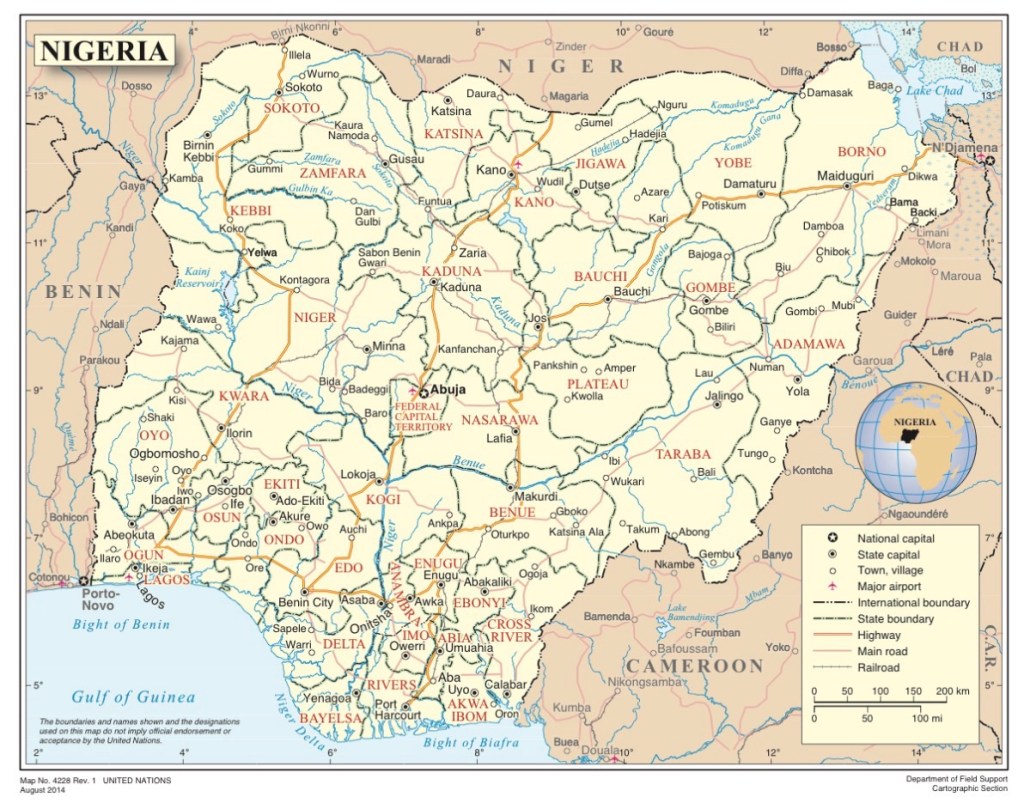
Nigeria proudly describes itself as a federal republic operating three tiers of government: the federal, state and local government levels. On paper, this structure is designed to create what political theorists often call a “laboratory of democracy” a system where governance is tested, refined and made responsive at different levels of government. In practice, however, Nigeria’s experiment with federalism has largely failed at the state level, with local governments becoming little more than administrative appendages of powerful governors.
The greatest casualty of this failure has been grassroots democracy.
Section 7 of the 1999 Constitution guarantees a system of local government run by democratically elected councils. Yet across Nigeria, governors routinely dissolve elected local governments, refuse to conduct local elections, or install caretaker committees and transition committees that answer not to the electorate but to the governor’s office.
This practice has become so widespread that it is treated almost as a normal feature of governance rather than what it truly is: a direct assault on constitutional democracy.
According to studies published by the Commonwealth Local Government Forum (CLGF), democratically elected local government is absent in many states despite constitutional guarantees. The result is that local councils, which should serve as the closest and most accountable level of government to ordinary citizens, have been transformed into patronage networks controlled from state capitals. (CLGF)
The irony is that Nigeria’s democratic culture cannot mature if democracy itself is denied at the level closest to the people. Local governments should serve as training grounds for future political leaders, centres of civic participation, and platforms for communities to influence policies affecting their daily lives. Instead, many have become political estates managed by governor-appointed loyalists.
The various State Houses of Assembly have also failed in their constitutional responsibilities. Rather than serving as independent institutions capable of checking executive excesses, many function as extensions of governors’ offices. Laws are often passed to legitimise unconstitutional arrangements, while oversight functions are rarely exercised against executive encroachments on local government autonomy.
Equally troubling is the role of the judiciary.
For years, Nigerian courts have often retreated behind procedural doctrines such as locus standi. Citizens seeking to challenge unconstitutional conduct are frequently told that they must demonstrate a personal legal injury before being granted standing to sue. The consequence has been a severe limitation on public-interest litigation and constitutional development.
When a governor unlawfully dissolves an elected local government council or refuses to conduct elections, the damage is suffered by democracy itself. Yet because the injury is viewed as collective rather than personal, many potential legal challenges struggle to proceed. This narrow interpretation of standing has weakened one of the most important safeguards against executive abuse.
However, a significant judicial breakthrough arrived on 11 July 2024 when the Supreme Court of Nigeria delivered a landmark judgment on local government autonomy.
The Supreme Court ruled that governors have no constitutional authority to seize, retain or control funds allocated to local governments from the Federation Account. The court further declared that caretaker committees are unconstitutional and reaffirmed that local governments must be administered by democratically elected officials. The judgment ordered that allocations intended for Nigeria’s 774 local government areas should be paid directly to them rather than being intercepted through state-controlled structures.
Justice Emmanuel Agim, delivering the lead judgment, condemned what the court described as a decades-long practice whereby state governments systematically undermined the constitutional status of local governments. The court recognised that state governments had exploited constitutional ambiguities to weaken the third tier of government and frustrate effective grassroots administration.
Unfortunately, the judgment has not translated into full compliance.
Nearly two years after the ruling, implementation remains inconsistent across several states. Reports indicate that many governors continue to exert control over local government finances through various administrative mechanisms, while some states still operate systems that effectively undermine the autonomy envisioned by the Supreme Court. Constitutional loopholes, political resistance, and entrenched interests continue to obstruct meaningful reform.
This resistance exposes a deeper contradiction in Nigerian politics. Many governors passionately advocate for greater federalism, resource control, and even state police. Yet the same political actors often resist granting meaningful autonomy to local governments within their own states. They demand decentralisation from Abuja while centralising power in their own hands.
The health of any democracy is measured not merely by presidential elections or gubernatorial contests, but by the extent to which ordinary citizens can influence decisions affecting their daily lives. Roads, primary healthcare, sanitation, markets, local schools, and community development projects are issues that should primarily be managed by functioning local governments.
A democracy that exists only in Abuja and state capitals is not a complete democracy.
Nigeria’s democratic laboratory must therefore be rebuilt from the ground up. Genuine local government autonomy, regular local elections, independent finances, and robust judicial protection are essential if representative government is to flourish. The Supreme Court has provided a constitutional roadmap. What remains uncertain is whether Nigeria’s political class is willing to follow it.
Until local governments become accountable to voters rather than governors, the promise of federalism will remain largely theoretical, and Nigeria’s democracy will continue to operate with one of its most important foundations deliberately weakened.
 Centre for Nigeria Progress