


There is a specific, quiet corner in Abuja where Nigeria’s most brilliant ideas go to die. It isn’t marked by a monument, but by dust. It is the graveyard of panels, commissions, and committees a place where billions of Naira and thousands of hours of expert labor are neatly bound into volumes, submitted in front of flashing cameras, and promptly forgotten.
At the heart of this national amnesia are three monumental documents:
Pius Okigbo Panel Report
Oputa Panel Report
Steve Oronsaye Report
Uwais Report
Individually, they represent blueprints for financial transparency, historical healing, and structural efficiency. Collectively, their fate ungazetted, lacking official White Papers, and starved of implementation reveals a troubling reality: a nation seemingly unwilling to plan for its future while actively running away from its past.
The Diagnostics:
What the Reports Actually Found
To understand why these documents are so dangerous to the status quo, we have to look past the bureaucratic titles and into the specific realities they uncovered. They weren’t just academic exercises; they were mirrors held up to the state.
1. The Pius Okigbo Panel Report (1994): The Parallel Budget
Empaneled to audit and reorganize the Central Bank of Nigeria (CBN), the late, legendary economist Dr. Pius Okigbo uncovered a massive structural vulnerability. Between 1988 and 1994 spanning the Gulf War oil windfall roughly $12.4 billion in oil revenues vanished into extra-budgetary “dedicated accounts.”
The report explicitly noted that these accounts had become a “parallel budget” controlled entirely by the Presidency, outside the oversight of any central planning ministry or the public. Money that should have built enduring national infrastructure was instead frittered away on highly questionable items, including millions of dollars for presidency travel, superficial public relations documentaries, and military ceremonial uniforms. By burying the Okigbo report, Nigeria didn’t just hide stolen funds; it institutionalized the practice of off-budget spending and unaccountable resource management that plagues our fiscal system to this day.
2. The Oputa Panel Report (1999): The Anatomy of Impunity
Officially titled the “Human Rights Violations Investigation Commission” , this panel was led by the revered Supreme Court Justice Chukwudifu Oputa. Modeled after South Africa’s Truth and Reconciliation Commission, it was tasked with documenting the atrocities, political assassinations, and systemic torture of Nigeria’s military regimes from 1966 to 1999. Over three years, it received over 10,000 petitions and held public, televised hearings that bared the nation’s soul.
The final report didn’t just name perpetrators; it provided a masterclass in institutional decay, detailing how the police, the military, and the judiciary itself were weaponized against citizens. It recommended sweeping reforms of the security apparatus, compensations for victims, and the prosecution of specific high-ranking officers. However, powerful interests legally challenged the commission’s power to compel testimony, and the government chose the path of least resistance: it shelved the report. By refusing to gazette the Oputa report, Nigeria chose an unholy peace over actual justice, directly paving the way for the culture of state impunity and institutionalized brutality that triggered the #EndSARS protests decades later.
3. The Steve Oronsaye Report (2012): The Bloated Leviathan
Chaired by former Head of Civil Service Stephen Oronsaye, this 800-page report targeted Nigeria’s unsustainable cost of governance.
In 2012, the committee looked at the 541 federal statutory and non-statutory agencies and stated a simple, terrifying truth: the government was spending nearly all its revenue feeding itself, leaving almost nothing for the capital development of the country.
The report recommended reducing statutory agencies from 263 to 161 scrapping 38, merging 52, and reverting 14 back to ministry departments. It estimated that streamlining the bureaucracy would save the nation over ₦862 billion in just three years by eliminating overlapping functions (like merging the ICRC and BPE to consolidate infrastructure concessions, or folding NACA under the CDC). Despite occasional political theater including modern announcements from the presidency pretending to kickstart its execution real, systemic implementation remains stalled.
The bureaucracy continues to expand, swallowing up scarce revenues while the nation borrows to pay salaries.
4. Uwais Report 2008
The tragedy of Nigerian electoral reform isn’t a lack of ideas; it’s an abundance of unheeded advice.
Every time a political party finds itself in opposition, it suddenly quotes the Uwais Report like scripture. The moment that same party wins power, the Uwais Report becomes an inconvenient artifact of a bygone era.
Until we have the political courage to implement the core engine of the Uwais recommendations specifically insulating the election umpire from the executive branch and creating real legal consequences for electoral crime we will keep changing the software of our elections while leaving the hardware fundamentally broken.
Justice Uwais and his team gave us the blueprint nearly two decades ago. The manual is still sitting on the shelf, fully assembled, waiting for someone to actually read it.
The Anatomy of Inaction: No Gazette, No White Paper
In bureaucratic terms, if a report is not gazetted and does not have an official White Paper (the government’s statement of accepted recommendations), it effectively does not exist. It has no teeth, no legal backing, and no path to implementation.
White Paper (noun): An official government document that outlines policy and indicates which recommendations of a panel the state intends to implement. Without it, a report is merely an expensive opinion piece.
This deliberate inaction is a feature of our political system, not a bug. Keeping reports in this legal limbo allows leadership to achieve two things simultaneously:
The Appearance of Reform:
“Look, we set up a panel! We are handling the issue.”
The Preservation of the Status Quo:
“We never legally adopted the findings, so nothing actually has to change.”
The Case for Revisit and Implementation
The standard excuse for ignoring these documents is that they are “outdated.” This is a sophisticated lie. You cannot outgrow a diagnosis if you never treated the disease. Here is why revisiting and fully implementing these reports is an absolute necessity for Nigeria’s survival:
I. Fiscal Survival in an Era of Scarcity
Nigeria is facing a severe debt-servicing crisis and dwindling revenue margins. We can no longer afford the luxury of a bloated government. Implementing the structural core of the Oronsaye Report is no longer a choice; it is an economic imperative. Merging redundant agencies and cutting administrative fat is the only way to free up capital for healthcare, education, and crumbling infrastructure. You cannot look citizens in the eye and ask them to endure economic hardships while maintaining a top-heavy, wasteful governance architecture.
II. Dismantling the Structure of Opacity
The systemic loopholes exposed by the Okigbo Report where state revenues bypass the central treasury via special vehicles or opaque accounts remain the primary mechanism for corruption in Nigeria. Revisiting Okigbo’s structural recommendations for the Central Bank and revenue tracking is essential to establishing a single, transparent ledger for the nation. Until the structural flaws identified by Okigbo are legally addressed and plugged, every anti-corruption fight will remain an exercise in treating symptoms while ignoring the cancer.
III. True National Reconciliation and Security
Nigeria’s current security crises from regional agitations to deep-seated distrust of state law enforcement are rooted in historical grievances. The Oputa Report provided a roadmap for institutional accountability. By pretending the past didn’t happen, we have allowed structural injustices to pass down through generations.
Implementing its recommendations on security sector reform and accountability is the only way to build a professional security apparatus that commands the trust of the populace, rather than their terror.
Conclusion: Governance by Design, Not by Accident
When a nation consistently buries its own diagnostic reports, it sends a clear message to its citizens and the world: **we are comfortable with the rot.**
A country that refuses to correct its past misdeeds is doomed to repeat them. A country that is unwilling to plan for its structural reality is simply drifting. To leave these reports buried is to accept that Nigeria is a country incapable of self-correction.
Revisiting them, issuing clear White Papers, and driving them through legislative gazetting is how we transition from a nation that merely survives day-to-day crises to a nation that consciously designs its own future. It’s time to dig them up, gazette them, and finally do the hard, uncomfortable work of building a functional nation.


@lawakhigbe.com
#alttext
Right image:
A ragged, soiled, national flag of Nigeria.
Left image:
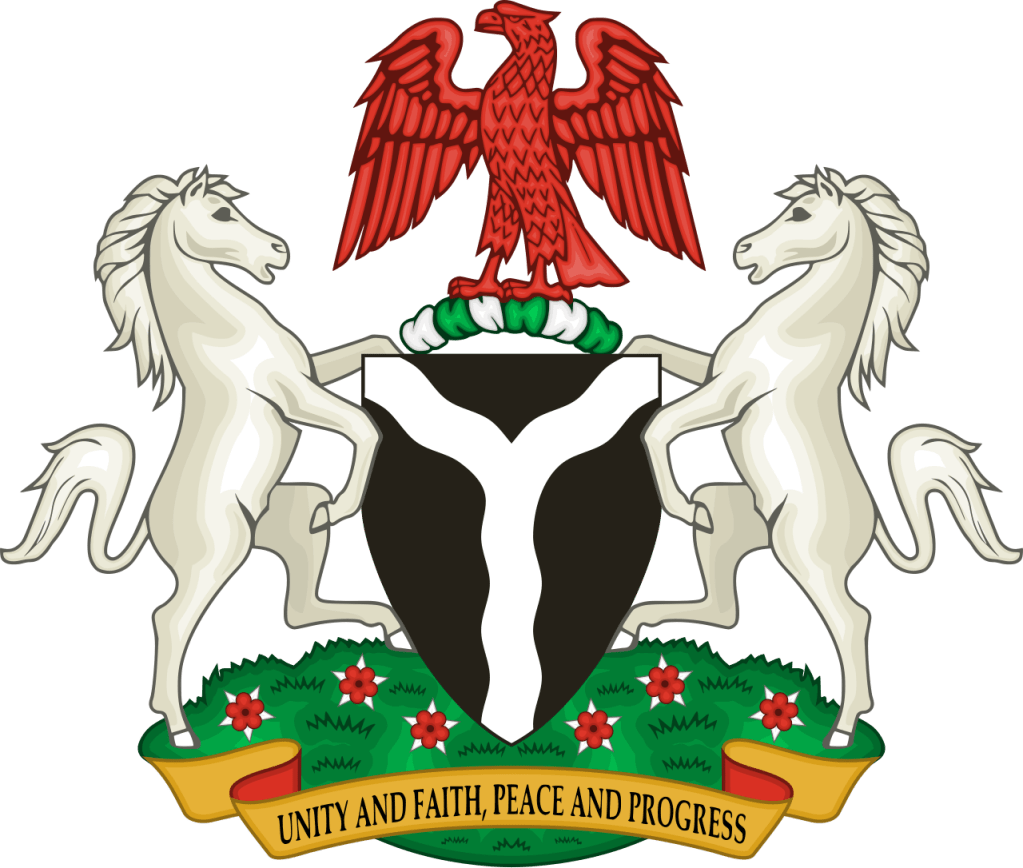
The the Coat of Arms of Nigeria with a red eagle, a black heart shield with a wavy 'Y' symbol, two white horses rampant and facing inward, and the motto, "UNITY AND FAITH, PEACE AND PROGRESS".
LikeLiked by 1 person
Remote Reply
Original Comment URL
Your Profile
Why do I need to enter my profile?
This site is part of the ⁂ open social web, a network of interconnected social platforms (like Mastodon, Pixelfed, Friendica, and others). Unlike centralized social media, your account lives on a platform of your choice, and you can interact with people across different platforms.
By entering your profile, we can send you to your account where you can complete this action.